 When we say “Zinda Hai Bhutto Zinda Hai,” some people mock it due to their biased and narrow-minded thinking, oblivious to their own absurdity. These individuals are ignorant about history. They do not know that in political history, there have been several great leaders who have gained a lot of popularity, leading revolutions that altered the course of time. History has, however, discredited some of their political ideologies, rendering them politically irrelevant.
These leaders rallied popular support on the basis of extremism and provocation, but the anarchy they created ended up destroying them-and their parties and followers. They included right-wing and left-wing politicians, nationalist and religious leaders, and even military opportunists.
There are some political figures in the past whose ideologies continue to thrive and are very relevant today. They included right-wing and left-wing politicians, nationalist and religious leaders, and even military opportunists.
There are some political figures in the past whose ideologies continue to thrive and are very relevant today. It can be said that they continue to exist spatially and temporally through their political thinking and approach. One such leader is Shaheed Zulfikar Ali Bhutto. He possessed a deep understanding of history and shaped his political vision based on historical experiences.
Shaheed Bhutto’s political vision rests on three fundamental principles. The first is that a nation’s foreign policy should always prioritize the interests of its country and people. The second principle emphasizes resolving fundamental issues internally by ensuring the rights of deprived and oppressed classes, nationalities, and groups. This includes recognizing their right to resources, strengthening them economically, and granting them all basic human rights, including civil liberties.
The third fundamental principle asserts that achieving the first two principles requires a long and patient democratic struggle-one that is peaceful, sustainable, and serves as a precursor to gradual progress and victories.
The path of democratic struggle is superior to the path of destructive adventure or chaos. Adventure and chaos serve the interests of imperialist and anti-people forces, as they deprive the people of the gains achieved through peaceful democratic struggle. This is why such forces always fear those who choose the path of peaceful democratic resistance and make them the target of their oppression.
The unparalleled sacrifices of the Bhutto family, along with the leaders and workers of the PPP, stand as proof of this struggle. The PPP’s commitment to peaceful democratic resistance and sacrifice continues to this day. If Pakistan today has a federal parliamentary democratic constitution, a functioning democracy, and federal units with certain rights, it is due to Shaheed Bhutto and the Pakistan Peoples Party, which upheld his political vision.
According to Shaheed Bhutto’s vision, the PPP remains a people’s representative party and continues its struggle. That is why Bhutto remains alive today.
In order to acquire a full appreciation of Shaheed Bhutto’s political ideology and vision, it is necessary to read his writing, interviews, and speeches at length.On November 30, 1967, in the inaugural session of the Pakistan People’s Party, Shaheed Zulfikar Ali Bhutto had laid out the “Basic Documents” he had written, which were later ratified by the party. These documents defined the party’s key principles: Islam as religion, democracy as a political system, socialism as economic order, and the people as the final authority.
To further elaborate on these foundational principles, Shaheed Bhutto wrote a comprehensive program for the Pakistan People’s Party in April 1968. In this document, he remarked:
“Pakistan is caught in a whirlpool. When we look back on the last 20 years of our national life, we see a dangerous trend that has emerged alongside international and subcontinental challenges. It would be unreasonable to assume that this crisis is merely a routine issue of the present era or a result of a natural process. This dominant evil trend must be reversed.”
A scholar and political leader like Shaheed Zulfikar Ali Bhutto was born once in centuries. He viewed situations through an international and historical lens with a deep and insightful approach rather than a superficial one. When he founded the Pakistan People’s Party, the global communist movement was at its peak, and socialist revolutions were unfolding. However, Shaheed Bhutto looked beyond the present-he foresaw the eventual outcome of these movements.
Instead of advocating for a communist dictatorship, he firmly declared democracy as his political path-a vision that socialist states themselves would later adopt, but only after enduring great upheaval. He situated socialism not as a political one but as an economic system, clarifying this difference in the party’s program and founding documents.
Shaheed Bhutto had contended that capitalism in Pakistan was distinctly different from that of Europe and other developed countries. In all those nations, capitalism existed together with democracy and civil rights, while in Pakistan, wealth lay in the control of only 22 families that used the system for their exploitative ends. These elites resisted democratic rights, promoted dictatorship, and intentionally checked industrial development. They did not run their factories at maximum capacity, hindered future industrialization, and diverted state capital by way of loans, and averted the creation of jobs and drove the peasants to deep poverty.
The foundational documents of the PPP did not oppose private investment outright but set clear conditions for it: “Private investment will be allowed only on the principles of ability, efficiency, and legitimate profit-making, not through the patronage of elite families or corrupt bureaucratic factions. Private investment will be profitable only to the extent that the working class is an equal partner in its benefits.”
Shaheed Bhutto was a staunch proponent of socialism but rejected the notion that it could be imposed through mere orders or dictatorship. He believed that achieving a classless and socialist society, free from capitalist exploitation, required a gradual, historically guided process. This transformation, he argued, could only be realized through democracy under a people-centric political program.
Another great achievement of Shaheed Bhutto was not only providing Pakistan with a federal parliamentary democratic system through the 1973 Constitution but also addressing the sense of deprivation by granting maximum autonomy to the federal units.
He also established a neutral foreign policy for Pakistan, which he elaborated on in his book Myth of Independence. He opposed sacrificing Pakistan’s interests for the sake of American policies and consistently advocated for stronger ties with China. However, he also emphasized that Pakistan’s national interests should remain the priority in its relations with China.
Shaheed Bhutto provided each crisis with historically proven solution through emphasizing that people indeed hold the power. Shaheed was a firm believer in that, for in times of crisis, it was the only way to use as a panacea to reference the people. This is Bhuttoism-an idea that other ideologies have failed to surpass thus far.
Unfortunately, Pakistan strayed from Bhutto’s vision. Instead of strengthening democracy, the country was drawn into the power struggles of global forces, military regimes were imposed, and ethnic, linguistic, regional, religious, and even so-called political extremism was deliberately promoted to counter the PPP. Today, Pakistan finds itself once again trapped in the same destructive cycle that Shaheed Bhutto warned about in his book If I am Assassinated.
After Bhutto’s judicial assassination, Shaheed Mohtarma Benazir Bhutto carried forward his political philosophy, ultimately sacrificing her life to rescue the country from crisis. Now, Bilawal Bhutto Zardari is advancing this philosophy, staying true to Shaheed Bhutto’s words by forging connections with the people and aligning himself with their aspirations.
Shaheed Bhutto remains alive and continues to lead because he chose to die at the hands of a dictator rather than at the hands of history. His political philosophy has stood the test of time, proving its relevance and correctness. Given the challenges Pakistan faces today, it is imperative to once again turn to the vision of Shaheed Bhutto.
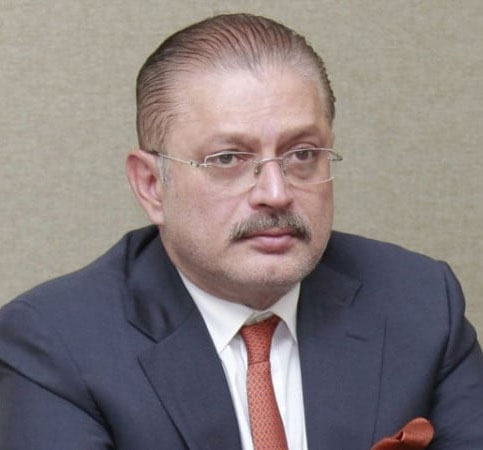
The writer is Sindh Senior Minister & Minister for Information and Transport, Government of Sindh