

The treatment of Muslims in Myanmar is a flagrant violation of international law. The UN high commissioner for human rights has described the ongoing atrocities in Myanmar as a ‘textbook example of ethnic cleansing.’ Myanmar has ratified various international conventions on international human rights law, international humanitarian law, and international criminal law. But now it appears to be in violation of its international obligations.
Myanmar (then Burma) voted for the adoption of the Universal Declaration of Human Rights in 1948 (UDHR), which sets out the basic principles of international human rights. In addition, the Convention on the Prevention and Punishment of the Crimes of Genocide, 1948 (ratified in 1956), the Geneva Conventions, 1949 (ratified in 1992), the Convention on the Rights of Children, 1989 (ratified in 1991), Charter of the United Nations and Statute of the International Court of Justice, 1945 (ratified in 1948) are some of the instruments that oblige Myanmar to comply with international law.
Article 5 of the UDHR states, “no one shall be subjected to torture or to cruel, inhuman or degrading treatment or punishment”. Article 2 of the Convention on the Prevention and Punishment of the Crimes of Genocide states, “killing members of a group; causing serious bodily or mental harm to members of the group; deliberately inflicting on the group conditions of life which are calculated to bring about its physical destruction in whole or in part” qualifies as genocide.
Myanmar voted for the adoption of the Universal Declaration of Human Rights in 1948, which sets out the basic principles of international human rights. In addition, the Convention on the Prevention and Punishment of the Crimes of Genocide, the Geneva Conventions, the Convention on the Rights of Children, Charter of the United Nations and Statute of the International Court of Justice oblige Myanmar to comply with international law
The International Court of Justice further observes that the principles underlying the Convention being recognised by civilised nations are binding on UN member States, notwithstanding the signing of a specific treaty to that effect. Successive Burmese governments having carried out the genocide of the Muslim population and are thus liable under the Convention and the UDHR.
Moreover, large-scale military actions which include killings, rape, torture, and arson against the population violates international law. International law becomes more significant in the context of Myanmar, since it has signed relatively fewer international treaties.
For example, the Convention against Torture and Other Cruel, Inhuman or Degrading Treatments or the Additional Protocols to the Geneva Conventions is not ratified by Burma, it is yet obliged to comply with those provisions of the convention that have acquired the status of customary international law. These norms include prohibitions on torture, apartheid, and genocide. States are not allowed to violate those norms in any case. The atrocious acts being inflicted on the Rohingya Muslims, apparently at the behest of the Myanmar government are thus liable to be prevented and punished under the customary international law.
Furthermore, the torture and humiliation of those taking no active part in hostilities is prohibited under the Geneva Conventions. Those who are found to be in violation of these prohibitions are liable to be held responsible as war criminals by the International Criminal Court (ICC).
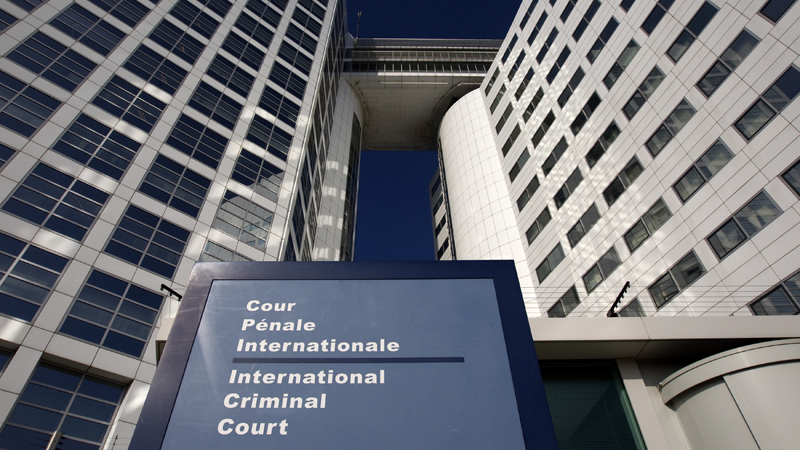
The Rome Statute of the International Criminal Court came into force in 2002.It acts as an evaluation tool for international criminal law violations. Under Article 5 of the Rome Statute, the ICC can investigate and prosecute genocide, crimes against humanity, war crimes, and crimes of aggression. The statute can also be used in situations where state parties are unable or unwilling to take action themselves. However, as Myanmar is not a state party to the Rome Statute, the ICC can investigate and conduct a trial of the above crimes when the UN Security Council (UNSC) refers investigation of these crimes to the Prosecutor under Chapter VII of the UN Charter.
So far, the UN and some other states have condemned the persecution of the Rohingya, but mere condemnation is not enough. Will condemnation (without effective action) make the lives of the Rohingya community better? In my opinion, the situation in Myanmarrequires immediate actionfrom the international community.
The UN should intervene more actively and impose target sanctions and arms embargos. The UNSC should refer the investigation of the crimes being committed in Rohingya to the ICC. Under Article 41 and 42 of the UN Charter, economic and diplomatic relations should be cut immediately. The UNSC should launch necessary military action to halt the ongoing violence in Myanmar’s Rakhine state. Slow action from the UNSC will only fortify the apprehension of critics who argue that the Rohingya issue may go unattended, as it went in the Rwandan genocide.
The ongoing war crimes in Myanmar cannot be allowed to go unchecked any further. A people are being subject to murder and rape on the basis of their ethnicity and religion. It is the responsibility of the international community and international legal institutions to halt the massacre of the Myanmar’s Muslim population.
The writer is a lawyer, he can be contacted at [email protected]
Published in Daily Times, September 28th 2017.