 Kazuo Ishiguro, the Japanese-born British novelist, is a master of telling the delicate story of someone who is enamoured of suppressing his feelings.
He is a phenomenal and inimitable storyteller. Ishiguro develops a story from the very humdrum lives of ordinary people, but when he develops a story, the story becomes unique in its own right. His captivating plots and enthralling themes are yet another source of intrigue for the reader.
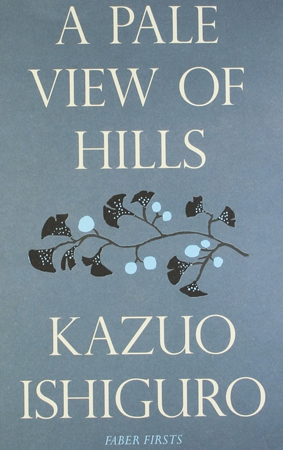
He received £1000 as an advance for his first novel, a pale view of the Hills, by Fabers&fabers. The novel was published in 1982. A pale view of the Hills was hailed as “a first novel of uncommon delicacy…, an extremely quiet study of extreme emotional turbulence” by the Times Literary Supplement and has been translated into at least 13 languages.
The novel is about a middle-aged widow from Japan who is now residing in England with her English husband. Etsuko is reminiscing about her days in Japan in the wake of her daughter’s suicide in Manchester, England. Etsuko was initially married to a Japanese man with whom she spawned Keiko. Later, after years she moved to England with Keiko and married there. From her English husband, she had Niki, her second daughter.
A pale view of the Hills is about the unreliability of memory and how memory plays with the human mind by making a human feel guilty and angry at past iterations. Superficially the novel seems to be very psychological, but enigmas of philosophy, history, and wars are very entrenched in the novel. Etsuko believes that her daughter has committed suicide because she decided to move to England. Her daughter Keiko led a very solitary and lonely life in England until she died. Ostensibly, she faced challenges to identify with the culture that England proffered to her.
The novel begins with Niki’s visit to her mother to console her for her daughter’s demise. What piques the reader’s curiosity is the steep flashback of Etsuko to a woman named Sachiko, who was her neighbour in Japan, when she feels nudged by the presence of Niki and her mention of Keiko. Japan, in this novel, is pulverised by atomic bombs and is poised to emerge again with a new system. Etsuko remembers Sachiko and Sachiko’s troubled daughter Mariko. Reminiscing about Sachiko seems to be an effort of Etsuko to reassess her past life and take a profound stock of what she has done. We get to know that Sachiko is a very nonchalant mother who is anxious to find her American lover, who has promised to take them to the US. Like the daughter of Etsuko, Sachiko’a daughter had had a very troubled childhood in Japan.
Events that surface in the novel when Etsuko remembers her days in Japan are very mundane and, at times insipid. But the way Ishiguro describes these events stands them out. The reader perpetually feels that he is living with the characters. A small child who suddenly encounters a ghost and no one believes her gives the reader a crude feeling of deja vu.
Moreover, Ishiguro in this novel is restrained, and an eerie unease permeates throughout the novel. Relationships between all characters are informed by tension. Etsuko and her husband are at loggerheads over a cornucopia of things. Sachiko and her daughter are not connecting. Niki and Etsuko in England seem to be drifting apart. Hence, it feels like no one understands each other and tries to make sense of the mess that war, death, and desire have entailed.
Memory is the most overwhelming theme in this novel. On a very fine day, Etsuko and Sachiko, with her daughter leave for an expedition. Mariko suddenly draws a butterfly which she saw a few days ago. Her memory is adored by a woman with them who now herself seems to be struggling with memory. “A butterfly! It must have been very hard to draw it so well. It couldn’t have stayed still for very long.” ” I remembered it,” said Mariko.” I saw one earlier on.”
The women nodded, then turned to Sachiko.” How clever your daughter is. I think it is very commendable for a child to use her memory and imagination. So many children at this age are still copying out of books.”
Ogata-San, Etsuko’s father-in-law, laments how people forget too soon these days. To whom we owe a huge debt of knowledge or wisdom, we forget. “Men these days forget so easily to whom they owe their education,” Ogata says when one of his students passes by, ignoring him as though he has never existed. Hence, memory seems to be a defining characteristic in the lives of almost all characters in this novel.
Ishiguro exceptionally hammers out plots that are very simple yet elegant in tone and abstruse in content. In the pale view of the hills, Ishiguro skilfully demonstrates how war can affect human lives and haunt human relationships in future times. Etsuko lives in Japan which is traumatised. Her daughter is born in a world that has just come out of a gory war. Trauma seems to follow her throughout her life. England has a different culture and English were the adversary of Japan just a few years back when this novel began. Life of a Japanese in England becomes solitary by default on account of the war, even though the British have forgotten about the ruinous days of the war and have extended an effusive welcome to the Japanese.
Grief is another major theme in this novel. As trauma and disaster necessitate an insalubrious deluge of grief, Etsuko is under spectral and mysterious circumstances throughout her life. The death of her daughter Keiko breaks her down and kind of makes her feel responsible for the circumstances that have steered Keiko to commit suicide. Niki, her second daughter from her English husband, does not understand her. The reason can be that she belongs to a completely different generation structured by a different ethos. The paucity of communication between mother and daughter amplifies and, at times, aggravates their relationship. Ishiguro masterly delves into the very details of a mother and a daughter’s strained relationship.
It, however, would be insightful to add a few more points on Kazuo Ishiguro as a novelist and how he writes his novels. A pale view of the Hills was his first novel, but it was very interesting and different. What intrigued me was the prodigy of Ishiguro to write a story from the perspective of a female character. He has impeccably shaped the character of Etsuko and fastidiously written the details of the fallibility of memory and the emotion of grief. Ishiguro has adeptly suppressed the emotions of grief and remorse of Etsuko and then cleverly represented them. The dreamlike situation that pervades this novel is another feat that Ishiguro has achieved. More often than not, the dreamlike situation makes the novel insipidly boring, but Ishiguro has dodged this with his skills of storytelling.
The very title of the novel, a pale view of the hills, suggests a number of the layers of the novel. A pale view signifies a declining memory. Perhaps Etsuko, quite late in her life, standing before a window and looking at a pale view of hills, faces many memory lapses while remembering her days in Nagasaki and the time she spent with her husband, Jiro. Perhaps life for Etsuko was a few hills, the view of which was pale hence blurry and hazy. All in all, this novel is a fantastic investigation and introspection of our lives in terms of memory and the choices or decisions that we’ve made. Like Etsuko, many other women held themselves accountable for the pain that their daughters suffer, all due to the decisions that they make without thinking about how they will impact their daughters. Ishiguro reassures us about the values and choices that we make in our early life and the key role of memory in future in bringing back those hideous or fine moments.
The writer is a student, based in Turbat. He Tweets at @shahabakram6 and can be reached at [email protected]