• Skip to primary navigation
  • Skip to main content
  • Skip to primary sidebar
  • Skip to footer
Trending:
  • Kashmir
  • Elections
Saturday, June 6, 2026

Daily Times

Your right to know

  • HOME
  • Latest
  • Iran-Israel war
  • Gilgit Baltistan Election
  • Pakistan
    • Balochistan
    • Gilgit Baltistan
    • Khyber Pakhtunkhwa
    • Punjab
    • Sindh
  • World
  • Editorials & Opinions
    • Editorials
    • Op-Eds
    • Commentary / Insight
    • Perspectives
    • Cartoons
    • Letters to the Editor
    • Featured
    • Blogs
      • Pakistan
      • World
      • Lifestyle
      • Culture
      • Sports
  • Business
  • Sports
  • E-PAPER
    • Lahore
    • Islamabad
    • Karachi
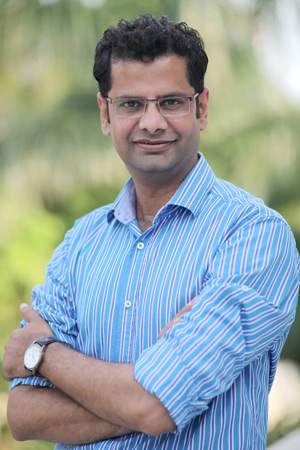
Zia Ur Rahman

Zia Ur Rahman

<em>The writer is media and communications professional with experience as elections observer both in Pakistan and outside</em>

Ramadan: From Mercy to Salvation

Published on: June 15, 2016 6:09 PM

Ramadan is the ninth month in the Islamic calendar and followers of Islam all over the world mark it by fasting from dawn to dusk throughout the holy month.

The month is significant for Muslims as the first verses of the Holy Qur’an were revealed to Prophet Muhammad (PBUH) during this time. For the same reason, Ramadan is also known as month of the Qur’an.

Readings of the holy book increase during this month. Fasting is obligatory for every Muslim except for the one who is sick or are on a journey.

The Noble Prophet Muhammad (PBUH) said: “It (Ramadan) is the month, whose beginning is mercy, its middle, forgiveness and its end, emancipation from the fire (of hell).” (Bihar al-Anwar, Vol 93, Pg: 342)

The start of Ramadan is dependent on the sighting of the moon as the Islamic calendar follows the lunar cycle. As a consequence, the beginning of the holy month shifts about 11 days every year.

‘Ramadan Mubarak’ and ‘Ramadan Kareem’ are two of the phrases which Muslims use to greet each other to mark the month. The purpose of fasting is for the observers to become closer with Allah. They abstain from food, drinks and other prohibited activities during their fast in order to increase their spirituality.

During Ramadan there is a greater emphasis on the five daily prayers – Fajr (morning), Zhuhur (midday), Asr (late afternoon), Maghrib (evening) and Isha (night) – and a voluntary prayer, Taraweeh (late night) which becomes part of the daily routine.

Fasting remains the main focus during Ramadan. It begins with a pre-dawn meal called ‘Suhur’ and is concluded with the call for the evening prayer with a meal known as ‘Iftar’. The platter for ‘Iftar’ ranges from a few dates to a lavish spread, depending upon the local customs and food preferences.

Although fasting is meant for all Muslims who have reached puberty, exceptions are made for pregnant women, the elderly and physically ill. However, some children choose to fast in preparation for later years.

There are three Ashra’s of Ramadan with separate prayer for each.

The word Ashra is an Arabic word meaning ten.

The first Ashra is from 1 to 10 Ramadan, second Ashra is from 11 to 20 Ramadan, while the third one is from 21 to 30 Ramadan.

According to a narration, Almighty Allah has divided Ramadan in three parts the first ten days reflect the mercy of Almighty Allah; the other ten days represent forgiveness of Almighty Allah, while the last ten days represent safety from the fire of Hell.

The holy month of Ramadan is divided into three parts:

Rahmat: “Mercy of Allah”

Maghfirat: “Forgiveness of Allah”

Nijaat: “Salvation”

Although the complete month of Ramadan is a blessed one and it overflows with Grace and Mercy. A Muslim is also blessed with a night “Lail-tul-Qadr” which is better than thousand months. Lail-tul-Qadr also falls in the last Ashra. Most of the Muslims also practice Itikaf in the last ten days.

The daily life of Muslims changes during this month and most Middle East countries make special arrangements to facilitate the fasting of their citizens. Office hours are reduced and most eateries shut shop during the fasting hours. Charity is an obligation on Muslims and it also gains more significance during Ramadan.

It is incumbent upon all Muslims, who meet the necessary criteria, to give zakat – 2.5 per cent of their savings in charity. The zakat is supposed to be given before the end of Ramadan.

The end of Ramadan, which is also the first day of the month of Shawwal, is celebrated as Eid-Ul-Fitr. On this day, the faithful congregate for a morning prayer at an ‘Eidgah’ a designated place for Eid prayers, before the feasting begins at their homes.

Eid-Ul-Fitr is a one day celebration. Special cuisines are prepared to mark the day, as friends and relatives dressed at their best. Eid gifts, known as Eidi are commonly given to the children.

Filed Under: Blogs

Submit a Comment


Primary Sidebar


Latest News

Nora Fatehi to perform at FIFA opener

Israeli strikes kill 10 despite ceasefire push

Lebanese president tells Iran to stay out

4.9-magnitude quake felt in Lahore

HEC tightens rules for foreign degrees

Pakistan

4.9-magnitude quake felt in Lahore

Naqvi calls for joint SCO security strategy

US-Iran peace could unlock $20bn for Pakistan

Momina Iqbal’s PECA complaint lands MPA in case

AJK elections slated for July 27; EC issues code

More Posts from this Category

Business

SBP reserves climb to $17.19 billion

Govt unveils fixed tax scheme for traders

Govt introduces fixed tax scheme for small traders nationwide

Gold and silver prices decline after market correction

Bitcoin slump deepens as investors chase AI opportunities

More Posts from this Category

World

Israeli strikes kill 10 despite ceasefire push

Lebanese president tells Iran to stay out

Iran ties peace deal to Lebanon ceasefire

More Posts from this Category


Footer

Home
Lead Stories
Latest News
Editor’s Picks

Culture
Life & Style
Featured
Videos

Editorials
OP-EDS
Commentary
Advertise

Cartoons
Letters
Blogs
Privacy Policy

Contact
Company’s Financials
Investor Information
Terms & Conditions

Facebook
Twitter
Instagram
Youtube

© 2026 Daily Times. All rights reserved.

Manage Consent
To provide the best experiences, we use technologies like cookies to store and/or access device information. Consenting to these technologies will allow us to process data such as browsing behavior or unique IDs on this site. Not consenting or withdrawing consent, may adversely affect certain features and functions.
Functional Always active
The technical storage or access is strictly necessary for the legitimate purpose of enabling the use of a specific service explicitly requested by the subscriber or user, or for the sole purpose of carrying out the transmission of a communication over an electronic communications network.
Preferences
The technical storage or access is necessary for the legitimate purpose of storing preferences that are not requested by the subscriber or user.
Statistics
The technical storage or access that is used exclusively for statistical purposes. The technical storage or access that is used exclusively for anonymous statistical purposes. Without a subpoena, voluntary compliance on the part of your Internet Service Provider, or additional records from a third party, information stored or retrieved for this purpose alone cannot usually be used to identify you.
Marketing
The technical storage or access is required to create user profiles to send advertising, or to track the user on a website or across several websites for similar marketing purposes.
  • Manage options
  • Manage services
  • Manage {vendor_count} vendors
  • Read more about these purposes
View preferences
  • {title}
  • {title}
  • {title}
We use cookies to ensure that we give you the best experience on our website. If you continue to use this site we will assume that you are happy with it.