
Crimean-Congo haemorrhagic fever (CCHF), a tick-borne viral haemorrhagic fever, is endemic to certain parts of Africa, Russia, Central Asia and Pakistan. Due to its deadly complications and highly infectious nature, CCHF virus can be considered the Asian Ebola virus. In Pakistan, CCHF is endemic in rural Balochistan, and most cases reported in Pakistan originate from this area. In 1976, the first case of Congo fever virus surfaced in Pakistan. During 1976-2010, 14 cases were reported. Since then, this deadly CCHF virus has increased. Six cases were also reported in Karachi this year.
 There is no specific treatment or vaccine against CCHF, and it is an emerging zoonotic disease in many countries. Recently, the incidence of CCHF is increasing rapidly in the countries of the World Health Organisation-Eastern Mediterranean Region (WHO-EMR). Pakistan is on number four in the overall CCHF ranking cases in WHO-EMR.
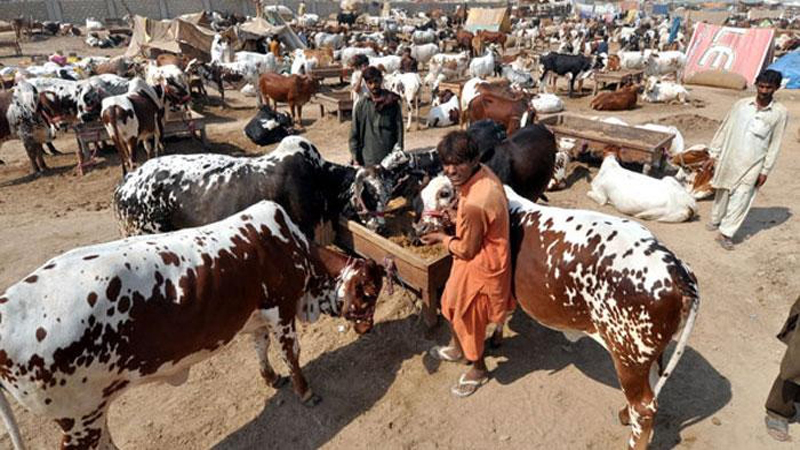
Health officials in Pakistan have urged people to beware of livestock bearing ticks that spread a deadly fever ahead of the Muslim festival of sacrifice next week. Government has issued annual safety guidelines, as hundreds of thousands of goats, cows and sheep are being transported and readied for slaughter during the Eid-ul-Azha festival. The increase in the handling of animals and fresh meat during the festival raises the risk of humans catching the tick-borne viral disease, CCHF. The disease causes no symptoms in livestock, but spreads to people from ticks or through contact with infected animal blood or tissues during and immediately after slaughter.
According to the World Health Organisation (WHO), it is endemic in Africa, the Balkans, the Middle East and Asian countries because of the presence of ticks. The disease is fatal in up to 40 percent of cases. It can also spread between humans from close contact with blood, secretions, organs or other bodily fluids.
The guidelines issued by the Pakistan Agricultural Research Council state that livestock farmers, abattoir workers, butchers, veterinary and para-veterinary staff is at particularly high risk of acquiring the disease. Suggested precautions include keeping away from animals with ticks, disposing of offal properly and ensuring that limbs are fully covered when going to markets. Wearing brightly coloured clothes can also help in spotting ticks. Tick-repellent sprays should also be used, and slaughter areas should be thoroughly disinfected.
Health officials in Pakistan have urged people to beware of livestock bearing ticks that spread a deadly fever ahead of the Muslim festival of sacrifice next week
The guidelines also say that meat should not be handled with bare hands, children should be kept away from animals, and only professional butchers should be used for slaughter.
In Afghanistan, health officials have said that they have seen a rise in CCHF cases recently, as the drought has forced farmers to move livestock from rural parts of the north and west to other parts of the country. The first six months of this year saw 125 cases and 18 deaths in Afghanistan.
CCHF was first noticed in Crimea among soldiers and agricultural workers in 1944. In 1969, it was recognised that the virus causing the disease was identical to a virus isolated from a child in the Congo in 1956.
Usually, symptoms appear one to nine days after the tick bite. If in direct contact with infected animal blood or tissues, symptoms usually appear after five or six days. Initial symptoms include a sudden high fever, aching muscles, abdominal, back and joint pain, headache, vomiting, diarrhoea, dizziness, sore eyes and throat, and red spots on the palate. Other symptoms may include jaundice, mood swings, confusion, aggression, and sensitivity to light. The infection progresses to haemorrhaging (bruising, nosebleeds, blood in the urine and feces, and bleeding from the gums), which usually starts two to four days after the initial symptoms, and lasts approximately two weeks. CCHF may be fatal. Treatment includes supportive care of symptoms and eliminating secondary infections. We can prevent ourselves from this deadly virus by getting measures.
Keep away from animals that have ticks. Only select tick-free animals for sacrificial purposes; apply anti-tick sprays on animals before bringing them to an animal market. Do not handle or try to pick ticks with bare hands from animals. Offal and leftover of animals must be disposed off properly; burying and disposing of offal should be left to municipal corporation staff. When going to animal markets, always wear full sleeve and bright colour clothes. It is easy to identify ticks on bright colours. Use a tick repellent spray before visiting an animal market. Avoid unnecessary visits to animal markets. It is better to have domestic animals for sacrificial purposes. Do not handle meat with bare hands. Keep children away from animals. After animal slaughtering, wash the area thoroughly using disinfectants.
Among the communicable and non-communicable diseases in Pakistan, CCHF is one of the most fatal infections. Rapid climate change, produced by industrial, occupational and agricultural activities to support the ever-growing human population, has been considered the single most causative basis for emergence or re-emergence of CCHF in Pakistan. It has biannual peaks between the months of March-May and August-October.
We suggest that the government of Pakistan should focus its efforts on vertical programmes for the control of zoonotic diseases, coordination and closer integration of health departments, collaboration with intergovernmental organisations such as WHO for Animal Health, implementation and monitoring of policies for effective surveillance, fostering of collaboration among infectious disease researchers, informative campaigns that target the general public or animal handlers in the weeks before the festival, and vector control programmes. Collaborative efforts among endemic countries will further strengthen the CCHF virus control programme. WHO is working with partners to support CCHF surveillance, diagnostic capacity, and outbreak response activitiesin Europe, the Middle East, Asia and Africa.
The writer is a retired doctor of the Sindh Health Department