
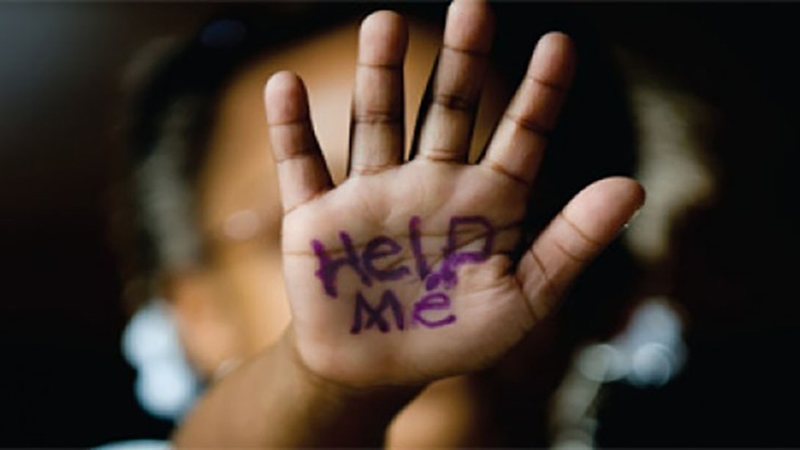
The provincial government of Punjab has reacted strongly to the tragic Zainab murder-rape case. However, the reactive approach it has taken will hardly be helpful in preventing such crimes. Punishing serial killers will not help us much. What we need is a comprehensive preventive approach; stemming from administrative, legal and educative measures if we wish to make this country safe for children. This piece attempts to outline a set of measures that can be taken in this regard.
Firstly, the legal regulatory framework that governs children’s right to protection must be strengthened. For too long, our governments and people have ignored their obligation towards translating children’s constitutional rights into legal provisions. The laws pertaining to children remained completely archaic until the 18th constitutional amendment. The subsequent devolution of legislative powers to the provinces however, helped speed up the provincial governments’ response as clearly exhibited by the number of legislations enacted post devolution. The laws pertaining to the elimination, prohibition and abolition of child labour, right to free education and child protection have invoked remarkable legislation within the provinces. However, this is all pointless while the implementation of provisions conferred in these laws remains limited. Let’s attempt to understand that what we could do better to improve our regulatory framework meant to safeguard our children.
Establishing a National Commission on the Rights of the Child (NCRC) as a constitutional apparatus that could invoke a stronger statuary commitment towards protection of children is absolutely necessary.
Our constitution firmly enshrines elements that owe such responsibilities, it manifests such connotations sparsely however. The onus of protecting every child living within its constitutional jurisdiction already falls on the state structures. What we need at this point in time is a stronger legal framework that urges reforms to espouse the ability to safeguard and take good care of our children. It is the time that we confer upon indiscriminate constitutional obligation of every citizen and societal institution, to act as a collateral guardian of the children and that every citizen and societal institution must act earnestly as state’s arm in ensuring protection, health and education of the children. This constitutional disposition will pave the way for the desired administrative, legal and mass awareness [educative]actions that are needed more now than ever before. Most importantly, this will urge the legislators and policy makers to strengthen the legal framework that governs children’s right to protection, health and education. Secondly appropriate budget allocations to improve service delivery in areas pertaining to children’s wellbeing is needed. A constitutional body is also expected to be more accountable as well as empowered enough to pull together relevant federal and provincial functionaries for a daring response, which the children’s plight in this country calls for.
Those who argue that we have more pressing needs than taking good care of children should cite a developed economy which had achieved higher social development patterns without investing in human development, particularly in areas concerning child protection
The provincial child protection bureaus as provincial chapters of the NCRC must be re-positioned appropriately. This will further enable the NCRC in extending its outreach to the children, thereby ensuring a timely and appropriate response, not only rehabilitation of children but also bringing culprits to justice. Having a constitutional NCRC will also pave ways for strengthening of a dedicated institutional justice system [courts] for speedy trials and court decisions and orders.
An enhanced institutional mandate will also help mobilise the NCRC for unification of legal provisions that ought to be in place for compliance of our international obligations towards the UN Convention on the Rights of the Child.
Crimes against children need to be made a cognisable offence. An explicit collateral responsibility of the children will further desire [more strongly] the legal reforms in order for letting the abuse and crimes against children become a cognisable offence. This will allow the police and ancillary services to undertake quick forensics in case of abuse and crimes against children, instead of waiting for cumbersome legal procedures to be completed. This legal empowerment will also pave the way for law enforcement agencies to take proactive charge of such crimes, and endeavour to prevent hence, instead of waiting to be reported.
Most importantly, such a legal mandate will empower the police, and the adjoining law enforcement agencies, to take action against the supply chains profiting from child beggary, abuse and pornography. Since reports suggest that child related crimes are being carried out for the commercial benefit of certain sociopathic individuals, it is time that we test our proclaimed intelligence capabilities to intercept such networks and bring them to justice. This will require the state institutions to deploy a zero tolerance policy against such criminals. By instituting a special administrative arrangement under the auspices of a constitutional NCRC.
The birth registration mechanism and processes must also be improved. I have interviewed numerous children over the past 17 years wherever I found them living in poor conditions. One major thing that always became evident was that almost all the children that were collecting trash, begging around traffic signals, selling small utensils nearing mass transport junctions or living in similar unfortunate settings were never registered with our birth registration system.
These children officially don’t exist on our state’s radar. In absence of birth registration, these children of a lesser fate are much more vulnerable to abuse. These children embrace least chances of being able to break the social, economic and psychological poverty that they remain surviving throughout their lives. It is therefore never urgent than ever before that our governments make birth registration a national campaign for a couple of years to register every child we have and will be having in next say 10 years. This will help our governments to have precise count of our children so that national poverty reduction and social security programs could become more aware of the number of children we have and the vicinity of the children that deserve our attention the most. On the other hand, knowing exactly how many children we are incapable of caring for will also help forge a national consensus in favour of birth control for better planning and resource management purposes. Above all, birth registration is the constitutional birth right of every child.
Birth control programs need to be launched immediately with full zeal. We cannot protect children if there are simply too many to protect. For parents, it is neither possible to keep a close watch over an impractical number of children or to raise them all as good citizens. This step will make the country a better and safer place for children, even though there will be a smaller number of them.
Those who argue that we have more pressing needs than taking good care of children should cite a developed economy which had achieved higher social development patterns without investing in human development, particularly in areas concerning child protection, health, education and the development. The country cannot develop without paying attention to the welfare of children.
The writer is a citizen’s voice
Published in Daily Times, May 6th 2018.