 Islamabad:The Royal Danish Defense College (RDDC), in collaboration with the Centre for Research and Security Studies (CRSS), launched a new book on Tuesday that provides critical insights on mainstreaming madrassas in Pakistan and Afghanistan.
The book features research from CRSS and Pakistan Institute for Conflict and Security Studies (PICSS), as well as Afghanistan-based Centre for Conflict and Peace Studies (CAPS).
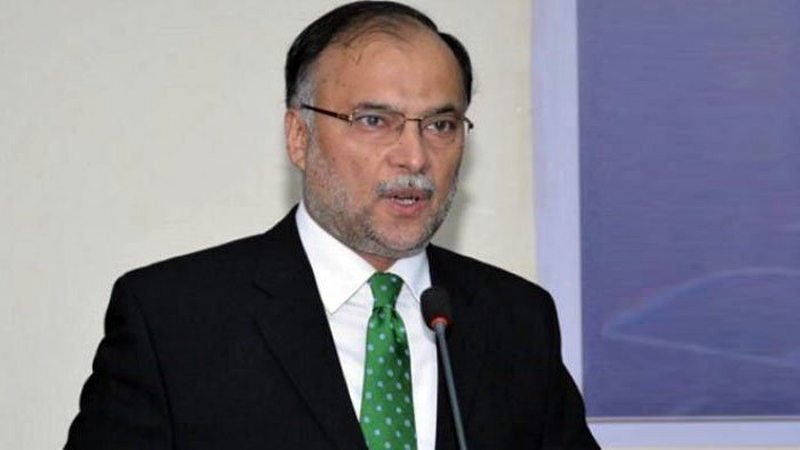
Speaking on the occasion, Interior Minister Ahsan Iqbal said there was once a time when madrassas produced leading scientists of the world. “It is now a collective responsibility of the Pakistani government and world powers to clean the mess of radicalisation. We must understand all the causes of militancy and radicalisation to find solutions accordingly,” he said, adding that the international community needed to come together for the cause of peace and stability.
National Security Advisor Lt. Gen. Nasser Khan Janjua held that the problem of radicalisation was essentially a problem of human resource development. “That is how it should be framed,” he said.
Janjua said that it needed to be considered that there were about 3.5 million children at 38,000 madrassas in the country. “They are also sons and daughters of Pakistan. We should want them back with open arms as productive members of society.” Janjua shared with the gathering that those working on madrassa mainstreaming had decided in principle that along with religious education, seminary students would also be made to study the syllabi being taught at conventional schools. He said the process of reforms was almost complete, and constitutional support for implementation was now being secured from the Parliament. He ended by stressing the need for willingness to approach the issue with a cooperative framework.
Presenting on behalf of CRSS, Zeeshan Salahuddin said that 544 interviews were conducted with families that send their children to madrassas. About 41.35 percent of the respondents gave religious reasons and 43.15 percent gave economic reasons for sending their children to seminaries. “Thus, finances were nearly as big a reason as religion. Interestingly, there is no significant correlation between parents’ education and number of children in seminaries. There was near equal access to schools and seminaries for respondents and families, on average, sent 1.78 children to each type of institution.”
Mr. Gul Dad, presenting on behalf of PICSS, shared that 93 percent of madrassa funding came from domestic sources, and only seven percent from foreign donors. Mandatory donations (Zakat, Ushr, Khums) comprised the bulk of these donations, along with animal hides. “People willingly donate to madrassas as they feel that it fulfills religious obligations. Money into madrasas comes through donation boxes, deposits into bank accounts, sums paid directly to madrasas, and collections made during Friday prayers.” Mr. David Vestenskov, a consultant for RDDC, stated that many in Afghanistan saw madrasas as a factor in radicalisation and promotion of religious extremism among youth. “Others argue that madrasas linkage with radicalisation and extremism was somewhat exaggerated,” he said, adding that it appeared that the public, particularly the youth, felt completely disenfranchised because of government’s policies and capabilities. Vestenskov said there was a third group that saw madrasas from an academic point of view, attributing the largely stagnant character of madrasas and their exploitation by non-state actors to the government’s inability to support and accommodate them.
The book ends with eight policy recommendations on the way forward. A softcopy of the book is available free of charge on the websites of the four organisations that collaborated to put it together. A hardcopy can also be collected, free of charge, from the CRSS offices in Islamabad.
Published in Daily Times, January 31st 2018.