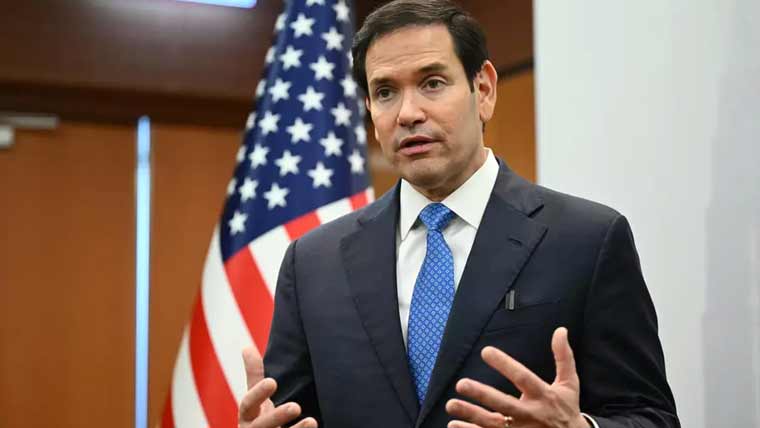
 US Secretary of State Marco Rubio has accused Iran of using the Strait of Hormuz as a tool of pressure, while saying Washington remains open to diplomacy if it leads to a genuine and workable agreement.
Read More: US seeks Hormuz reopening pledge from Iran
Speaking before departing for the ASEAN summit in the Philippines, Rubio said the United States was prepared to continue diplomatic efforts with Tehran but stressed that negotiations must be based on real commitments and compliance.
“If Iran is violating the terms of any understanding, then that agreement cannot remain effective,” Rubio said, adding that Washington had made several attempts to engage with Iran and would continue pursuing diplomatic options.
The US secretary of state claimed that Iran was using the strategic waterway as leverage amid ongoing tensions in the region. He said Washington would continue taking necessary measures to protect international shipping and ensure freedom of navigation.
Rubio also called on other countries to share responsibility for securing global maritime routes, saying support could come in the form of military assistance, resources, or financial contributions.
The Strait of Hormuz, located between Iran and Oman, is one of the world’s most important energy transit routes, with a significant portion of global oil shipments passing through the narrow waterway. Any disruption there has the potential to affect international energy markets and fuel prices worldwide.
The comments come as tensions between Washington and Tehran remain high following renewed military exchanges and disputes over regional security issues. Both sides have accused each other of escalating the situation, raising international concerns about the possibility of a wider conflict in the Middle East.
Analysts say the future of regional stability will depend heavily on whether diplomatic channels can remain open and whether both sides are willing to reduce military pressure.
Read More: US to Hold Direct Talks With Iran’s Revolutionary Guards in Doha
Rubio reiterated that while the United States prefers a diplomatic solution, it would continue protecting international shipping interests and responding to what it considers threats to regional and global security.