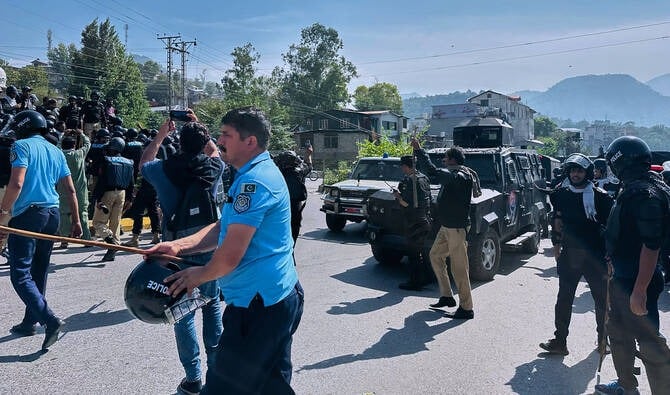
Azad Jammu and Kashmir Inspector General of Police Liaquat Ali Malik has ruled out any negotiations with anti-state violent elements, saying those involved in attacks on police personnel and civilians must face the law. He stressed that there could be no leniency for individuals accused of killing law enforcement officers or desecrating their bodies, describing such acts as unacceptable and beyond the scope of any dialogue.
Read more : Police Officer Killed After Vehicle in AJK PM’s Convoy Falls Into …
Moreover, the police chief firmly rejected calls for negotiations with violent groups, stating that it was impossible to hold discussions with people responsible for targeting fellow officers. He clarified that the police are responsible for maintaining law and order, while decisions regarding political dialogue or settlements rest with the country’s political leadership rather than law enforcement agencies.
Meanwhile, Malik alleged that anti-state elements had issued threats against security personnel, including warnings of attacks on law enforcement officials. He also claimed that these groups had carried out violent acts against ordinary citizens, creating fear among local communities and posing a serious challenge to public safety across the region.
Read more : AJK govt accuses banned JAAC of undermining peace ahead of polls
Furthermore, the inspector general referred to an incident in which a civilian travelling to attend his mother’s funeral was allegedly abducted and had both legs broken. He said such incidents demonstrated the violent nature of the groups involved and reinforced the need for firm action against those responsible for harming innocent people.
The police chief reaffirmed that the state would respond decisively to anyone involved in attacks against civilians or security personnel. He emphasised that protecting public safety remains the highest priority and said law enforcement agencies will continue taking legal action against violent elements to maintain peace, uphold the rule of law and ensure the security of the people.