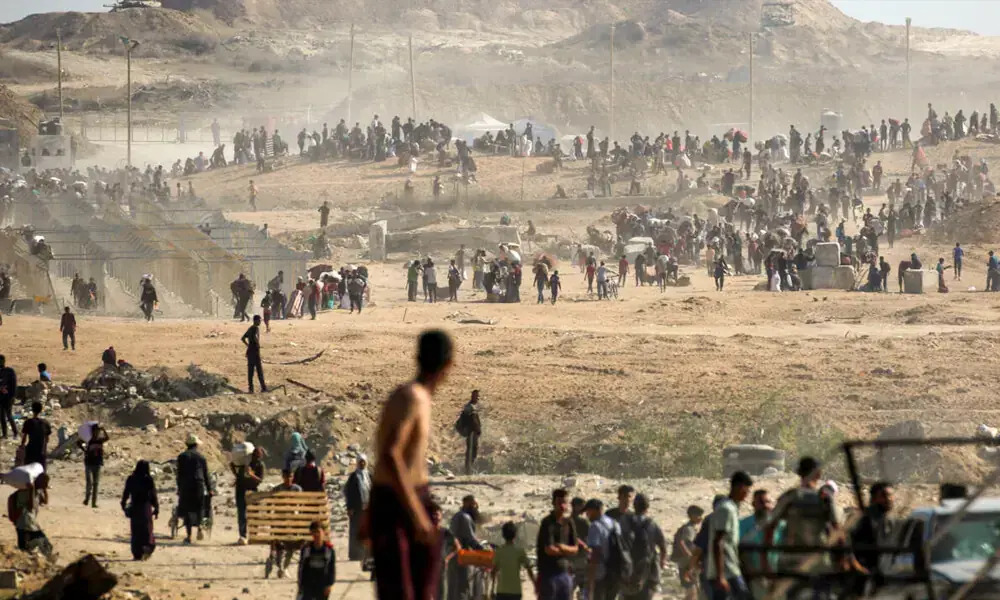
A US official said President Donald Trump’s Board of Peace is planning a pilot humanitarian zone in southern Gaza to accommodate vetted Palestinian civilians. The proposed project aims to support Gaza’s post-war transition and establish a starting point for civilian governance. The plan has sparked concerns among humanitarian groups over its compatibility with international law.
According to the official, the proposed zone would be located in Rafah and protected by multinational troops from the International Stabilization Force (ISF). The National Committee for the Administration of Gaza (NCAG), a Palestinian technocratic body established under the US-backed peace plan, would oversee screening procedures and manage civilian access. Officials said movement would remain open for unarmed civilians, while security measures would prevent armed groups from entering the area.
Read more: Trump calls Gaza board “irreplaceable,” pledges $10bn
The humanitarian zone is intended to serve as the first operational base for the NCAG, which has yet to begin governing inside Gaza despite months of diplomatic efforts. The proposal forms part of Trump’s 20-point Gaza peace initiative, designed to transition governance away from Hamas and restore civilian administration. Officials said construction has not yet begun, and the project’s final location remains under discussion.
However, diplomats and humanitarian organisations have raised serious concerns about the proposal. They argue that placing civilians inside controlled humanitarian zones could amount to forced displacement, restrict freedom of movement, and conflict with international humanitarian law. Critics also warn that such arrangements could undermine the neutrality of humanitarian operations during the conflict.
Read more: What Is Trump’s Board of Peace?
The Board of Peace was established earlier this year under the US-backed Gaza ceasefire framework endorsed by the UN Security Council. While Israeli forces currently control much of Gaza following months of conflict, international efforts continue to seek a political solution that restores governance, security, and humanitarian assistance for Palestinian civilians.