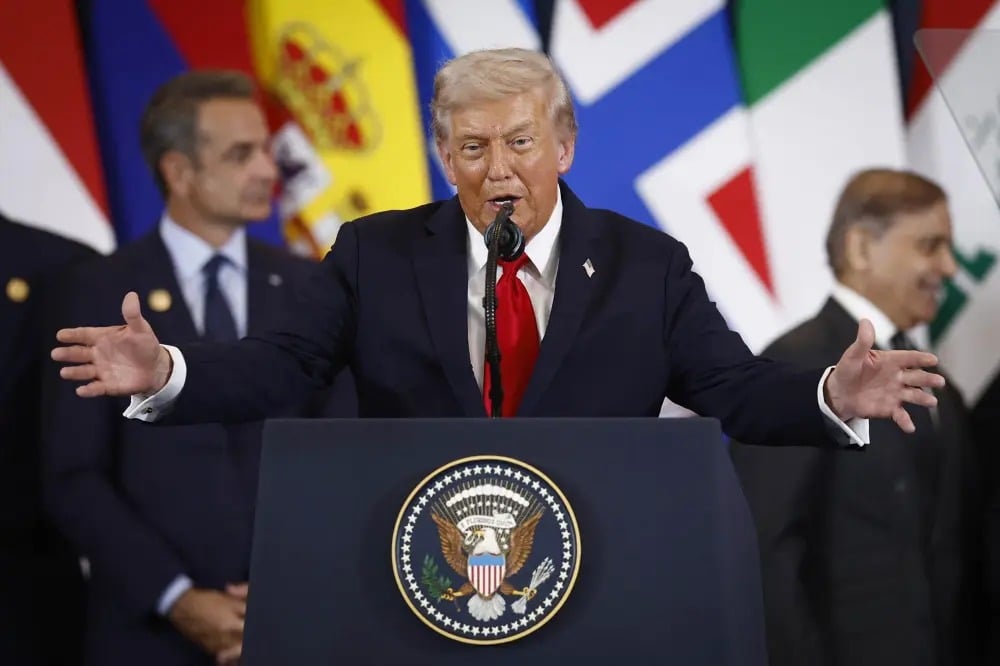
Fresh disagreements between the United States and Iran have cast uncertainty over the future of their recently signed peace framework, as both sides offered sharply different accounts of key commitments. President Donald Trump claimed Iran had agreed to allow international nuclear inspections indefinitely, while Tehran firmly rejected the assertion and insisted that no such concession had been made during negotiations held in Switzerland.
Despite the conflicting statements, Trump expressed confidence that discussions were progressing positively and said relations between the two sides were improving. Meanwhile, Washington eased travel restrictions on Iran’s World Cup football team, allowing players to arrive in Seattle two days before their next match instead of one. The move was viewed as a small confidence-building step amid broader diplomatic efforts.
However, divisions remain over several important elements of the agreement, including access to frozen Iranian assets, future control of the Strait of Hormuz and the ongoing conflict involving Israel and Hezbollah in Lebanon. The framework agreement ended active hostilities and launched a 60-day negotiation process, but many of the most sensitive issues were deliberately left unresolved for future talks.
A central dispute concerns Iran’s nuclear programme, which remains outside the immediate scope of the framework. Trump stated that Iran had accepted extensive inspections of its damaged nuclear facilities for the foreseeable future. Iranian officials, however, denied discussing nuclear matters during the negotiations and said they had not agreed to readmit inspectors from the International Atomic Energy Agency, highlighting a major gap between the two sides.
Meanwhile, the reopening of the Strait of Hormuz has brought relief to global energy markets. The strategic waterway normally carries around one-fifth of the world’s energy supplies, and renewed shipping activity has helped push oil prices lower. The United Nations is working to assist approximately 11,000 seafarers stranded during the closure, while Iran and Oman have pledged cooperation in managing maritime traffic through the channel.
Domestic political pressure is also growing in the United States as public support for the conflict weakens. A recent poll found that 35 percent of Americans believe the country is now in a weaker position regarding Iran, compared with 23 percent who see a stronger position. At the same time, both chambers of Congress backed a resolution calling for the withdrawal of US forces from hostilities, reflecting increasing concern over the war’s costs and long-term consequences.