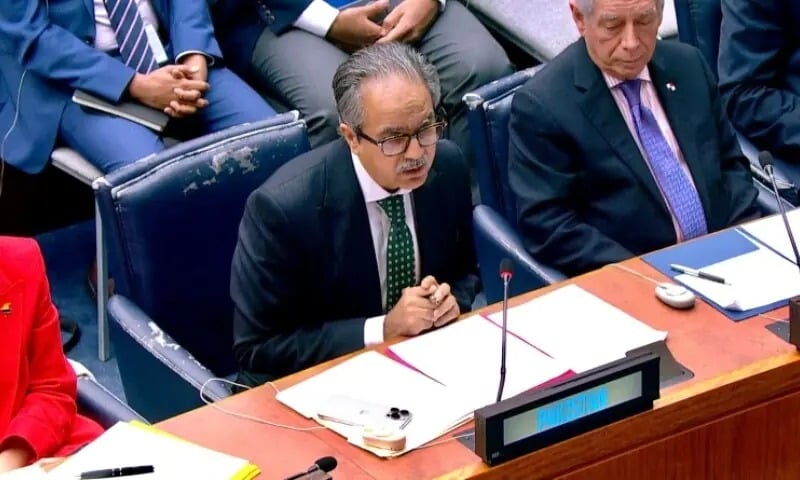
Pakistan’s Permanent Representative to the United Nations, Asim Iftikhar, has strongly criticized restrictions on humanitarian assistance in Gaza, describing them as a recurring feature of Israeli policy. Speaking during an emergency session of the UN Security Council, he stressed that civilians continue to endure immense hardship as aid deliveries remain severely constrained amid the ongoing conflict.
Highlighting the scale of the crisis, Asim Iftikhar said nearly two million people in Gaza are living under extremely difficult conditions. He noted that more than 90 percent of the population has been displaced from their homes, while only half of Gaza’s hospitals remain partially operational, limiting access to essential medical treatment and emergency healthcare services.
The Pakistani envoy also warned that severe hunger and food insecurity have reached alarming levels across the territory. He pointed out that daily meal distribution has declined significantly, leaving large numbers of families struggling to meet basic nutritional needs. At the same time, overcrowded shelters and inadequate sanitation facilities have increased the risk of disease outbreaks among vulnerable communities.
Furthermore, he emphasized the devastating impact of the crisis on children, stating that more than one million youngsters have been displaced. Many are living without reliable access to healthcare, education and other essential services, creating long-term challenges for an entire generation already affected by conflict and instability.
Addressing the Security Council, Asim Iftikhar argued that the central issue remains the obstruction and delay of humanitarian assistance. He described these restrictions as systematic measures that continue to worsen civilian suffering and prevent relief agencies from delivering critical support to people in urgent need across Gaza.
Pakistan also called on the international community to take immediate action to ensure uninterrupted humanitarian access. The country urged relevant stakeholders to uphold international legal obligations, facilitate the delivery of aid and work collectively to address the rapidly deteriorating humanitarian situation facing Gaza’s civilian population.