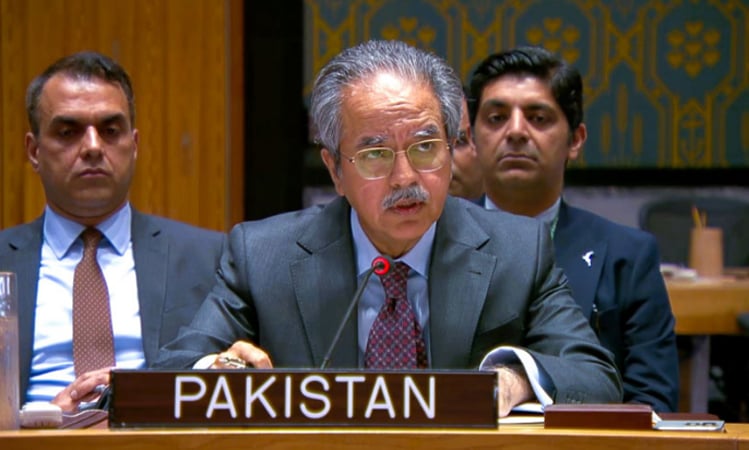
Pakistan has called on all parties involved in the escalating US-Iran conflict to exercise restraint and “give peace a little more chance,” as fresh rounds of hostilities threaten to further destabilise the Middle East.
Speaking at a United Nations Security Council (UNSC) session on Tuesday, Pakistan’s Permanent Representative to the UN Asim Iftikhar Ahmad said the situation in the region was deeply concerning due to renewed violence and rising tensions between major powers.
The statement came amid reports of US strikes on Iranian targets following claims that a US Apache helicopter was downed. In response, Iran reportedly carried out attacks on US-linked bases in the Gulf region, further intensifying fears of a wider regional escalation.
Ambassador Ahmad stressed that recent developments highlighted the fragility of the existing ceasefire and the urgent need for diplomatic efforts to succeed. He warned that continued hostilities could have “unbearable consequences” for regional and global stability.
He said Pakistan remained committed to supporting dialogue and peaceful resolution of disputes, particularly regarding the Iran nuclear issue, which he noted had been disrupted by the latest wave of violence. According to him, diplomatic breakdowns have also affected international monitoring efforts, including the International Atomic Energy Agency’s verification work.
The envoy reiterated that Pakistan has been actively engaging with various regional and global partners to encourage de-escalation. He said Islamabad had facilitated communication between Washington and Tehran and supported efforts aimed at bringing both sides back to the negotiating table.
He also highlighted Pakistan’s role in broader diplomatic outreach involving countries such as Saudi Arabia, China, Turkiye, Qatar, and Egypt, aimed at reducing tensions and restoring stability.
“Pakistan’s sincere efforts are meant to break the momentum of hostilities, save lives and give diplomacy a chance,” he said, adding that only sustained dialogue could resolve complex geopolitical disputes.
He concluded by urging all sides to continue pursuing peaceful solutions, stressing that diplomacy remained the most viable path toward lasting regional peace and security.