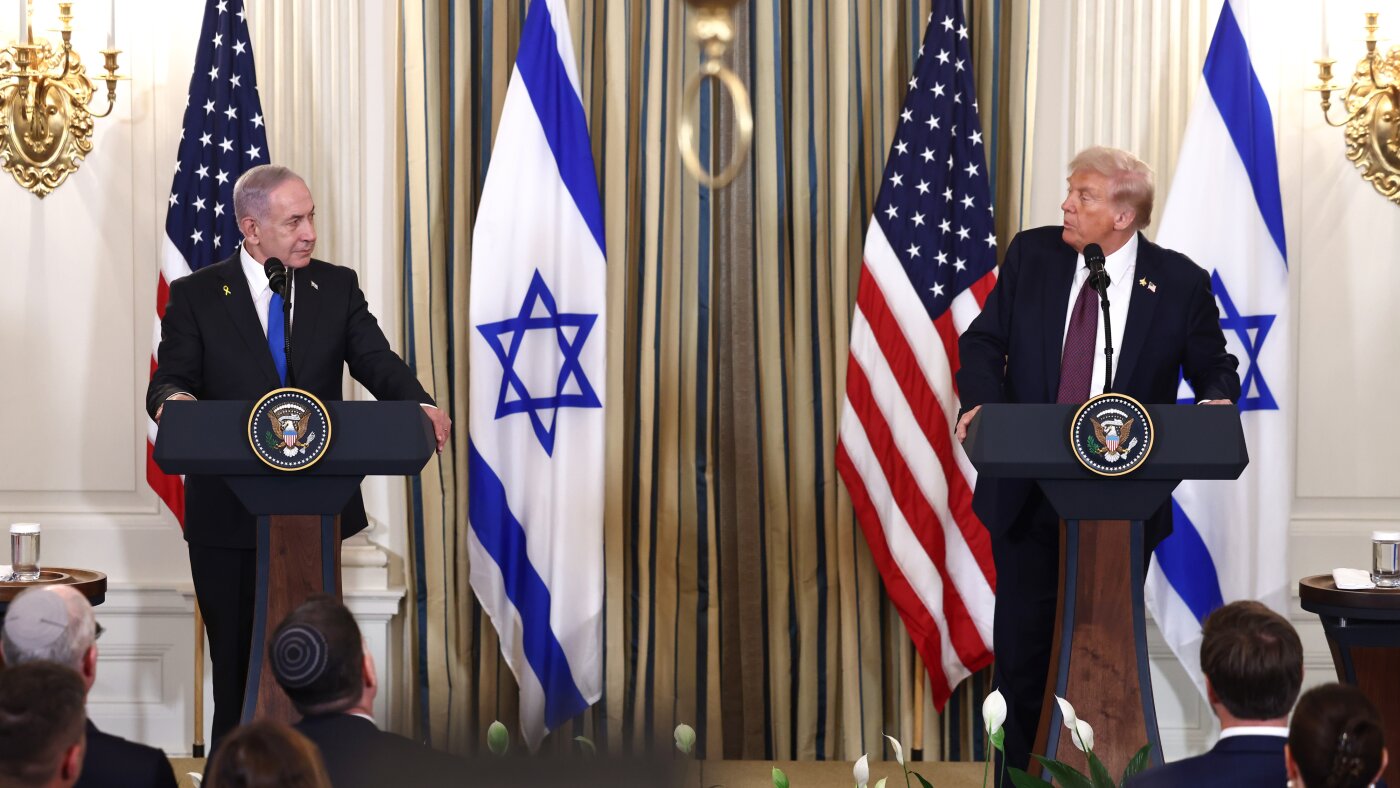
US President Donald Trump has strongly rejected claims that Israeli Prime Minister Benjamin Netanyahu influenced his decision to launch military action against Iran. Speaking during a podcast interview, Trump insisted that he made the decision independently and argued that preventing Iran from obtaining a nuclear weapon remained his primary objective. He maintained that the move reflected his long-standing security concerns rather than pressure from any foreign leader.
Addressing allegations that Israel pushed the United States toward confrontation with Tehran, Trump said the decision originated from his own assessment of the threat. He dismissed suggestions that Netanyahu manipulated him and emphasized that his administration had consistently opposed Iran’s nuclear ambitions. According to Trump, allowing Tehran to develop nuclear weapons would pose serious risks to regional and global security.
Read more : Trump says Iran wants a deal, but Washington splits on war or peace
Furthermore, Trump accused his political opponents of spreading what he described as a false narrative regarding his relationship with the Israeli leadership. He argued that critics were attempting to undermine his foreign policy decisions by portraying them as influenced by outside actors. The president said his position on Iran had remained unchanged for years regardless of political pressure or changing circumstances.
Trump also highlighted his decision during his first term to withdraw the United States from the 2015 nuclear agreement negotiated under former President Barack Obama. He argued that the deal failed to permanently prevent Iran from developing nuclear capabilities and therefore could not guarantee long-term regional stability. The withdrawal marked one of the most significant foreign policy decisions of his previous administration.
Read more : Trump rejected reports claiming that US and Iran talks have ended
In addition, Trump linked Iran’s nuclear programme directly to Israel’s security, claiming that Tehran could target Israel if it ever acquired a nuclear weapon. He described Israel as particularly vulnerable to any future escalation involving nuclear arms and argued that strong action was necessary to prevent such a scenario. His comments reflected the close strategic relationship between Washington and Tel Aviv.
Trump concluded with one of his most striking remarks on US-Israel relations, asserting that his policies played a decisive role in safeguarding Israel’s future. He claimed that without his leadership and support, Israel would face a far more uncertain security environment today. The statement is likely to fuel further debate over his Middle East policies and their long-term impact on regional stability.