 It was a dark and tense night on May 7, 2025, one year ago, when India opened an extensive military front against Pakistan, triggering one of the most significant confrontations in the region’s recent history.
A large number of Indian Air Force aircraft aggressively advanced towards the Pakistani eastern border while Indian media outlets simultaneously intensified a coordinated malicious propaganda campaign against Pakistan.
The eyes of the international community turned towards Islamabad, closely watching how Pakistan would respond to the aggressive posture of its much larger enemy. However, when Indian warplanes attempted to violate Pakistan’s airspace, they encountered a swift and highly professional response from the Pakistan Air Force (PAF).
Several Indian fighter jets including Rafale, were shot down, forcing the remaining aircraft to retreat hundreds of kilometres away from the border. International media organisations widely covered the aerial confrontation and confirmed shot downing of a highly sophisticated Rafale.
CNN reported that French-made Rafale fighter aircraft, previously considered nearly “invincible” in global defence circles, were among the aircraft downed during Pakistan-India air clash.
According to the Telegraph, the events of May 7, 2025, should not merely be viewed as an ordinary air battle but as a complete failure of India’s desire for air dominance.
Defence and diplomatic analysts across the world acknowledged the professionalism and courage displayed by Pakistan’s armed forces during the four-day conflict, which many observers described as ending in Pakistan’s favour. The conflict eventually prompted international diplomatic intervention. US President Donald Trump called for a ceasefire between the two nuclear-armed neighbours in an effort to prevent further escalation and safeguard regional peace and stability.
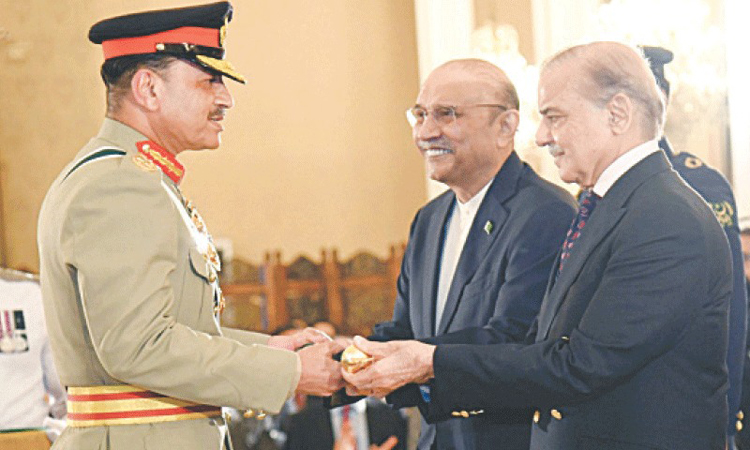
Speaking to APP, Professor Dr. Khurshid Ahmed of the International Relations Department at the University of Peshawar described Marka-e-Haq as a perfect model of cooperation between Pakistan’s civil and military leadership.
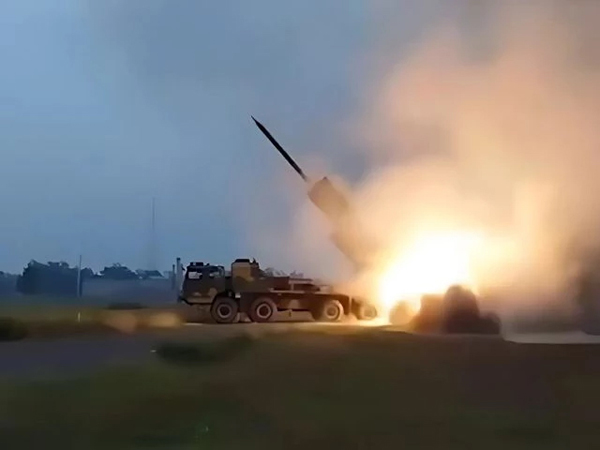
“Marka-e-Haq is a perfect model of cooperation of civil and military leadership that helped defeat an enemy three times larger on May 10 last year,” he said.
Dr. Khurshid emphasised that timely and effective decision-making by both political and military leadership played a decisive role in the success of the operation.
“The taking of right decisions at the accurate time by Pakistan’s civil and military leadership paved the way for the success of the operation against the enemy during Marka-e-Haq,” he added.
He said that the aftermath of the confrontation significantly enhanced Pakistan’s diplomatic standing on the global stage. According to him, many international observers witnessed Pakistan emerging not only as a capable military power but also as an influential diplomatic player advocating regional peace and stability.
Dr. Khurshid further said that diplomatic engagements following the conflict reflected growing international recognition of Pakistan’s strategic importance.
“US President Trump’s invitation to Prime Minister Muhammad Shehbaz Sharif to address the Sharm el-Sheikh conference in the presence of world leaders, and his remarks regarding COAS-CDF Field Marshal Syed Asim Munir, are clear proof of the success of Pakistan’s defence diplomacy,” he remarked.
He said Pakistan’s diplomatic role later became instrumental in facilitating dialogue during heightened tensions involving US-Iran, describing Islamabad’s efforts as a ray of peace in an increasingly volatile regional environment.
Referring to Pakistan’s role in hosting negotiations between the US and Iran, he stated “The whole world watched in amazement as Pakistan, the winner of the battle of truth, hosted the Islamabad Talks in its capital, where the United States held direct dialogue with Iran for the first time in four decades.”
Dr. Khurshid also highlighted the significance of Field Marshal Asim Munir’s visit to Tehran during a critical phase of regional tensions.
“At a time when the airspace of neighbouring Iran was dominated by foreign forces, Field Marshal Asim Munir’s courageous visit to Tehran demonstrated Pakistan’s defence confidence before the world,” he observed.
Calling Marka-e-Haq a defining chapter in Pakistan’s history, Dr. Khurshid said the event would remain etched in the nation’s collective memory for generations to come.
“I believe there are moments in history that transcend ordinary events and become part of a nation’s collective memory. Marka-e-Haq was one such defining moment that will be remembered forever,” he said.
He added that the success not only highlighted Pakistan’s military capability but also reinforced the national narrative of unity, harmony, and peace. “In my view, the Marka Haq’s first anniversary is also an acknowledgement of the undeniable fact that Pakistan is not just a geographical region but our beloved motherland,” he said.
Dr. Khurshid maintained that Pakistan’s armed forces have historically responded to aggression with professionalism and responsibility, adding that the country’s defenders remain vigilant against all external threats.
He also credited former prime minister Muhammad Nawaz Sharif for strengthening Pakistan’s defence foundations through strategic decisions taken in the past.
“Marka-e-Haq also reflected the political vision of three-time elected prime minister Muhammad Nawaz Sharif, who resisted international pressure and conducted nuclear tests that made Pakistan’s defence unconquerable,” he concluded.