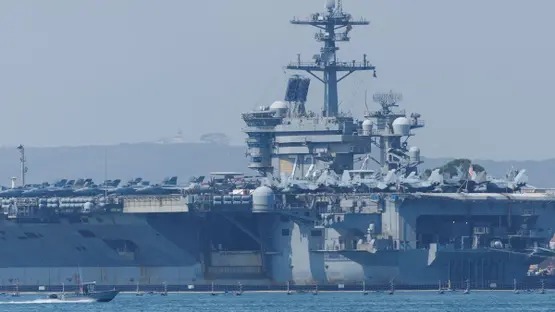
The United States military has intensified logistical operations in the Middle East, with naval vessels receiving fresh supplies as regional tensions continue to shape security dynamics. The move reflects ongoing efforts to maintain operational readiness and ensure that deployed forces remain fully equipped to handle evolving challenges linked to Iran-related developments.
The United States Central Command confirmed that ships in the region are being restocked with fuel, food, munitions, and other essential materials required for sustained naval operations. These efforts highlight the importance of continuous supply chains in maintaining a strong and responsive military presence in strategically sensitive waters.
Read more : Trump orders US navy to ‘shoot and kill’ mine-laying boats in Hormuz
Officials also shared visuals showing supplies being loaded onto the USS Delbert D. Black, which is actively supporting the USS Abraham Lincoln Carrier Strike Group currently operating in the region. This coordination underscores the scale and complexity of US naval deployments amid heightened geopolitical uncertainty.
Meanwhile, Pentagon chief Pete Hegseth informed the US Senate that the ongoing Iran-related conflict has already cost the US military approximately $25 billion. However, some independent estimates suggest that the total financial burden could be significantly higher, reflecting the extended nature of operations.
Read more : US Navy Secretary John C Phelan Resigns Suddenly Without …
Furthermore, analysts note that such resupply missions are critical not only for sustaining military readiness but also for signaling continued US commitment to its strategic interests in the Middle East. These actions often serve as both practical support measures and demonstrations of military capability during periods of heightened tension.
Overall, the ongoing replenishment of naval forces indicates that the United States is maintaining a vigilant posture in the region while closely monitoring developments. Authorities continue to balance operational demands with broader diplomatic considerations as the situation evolves.