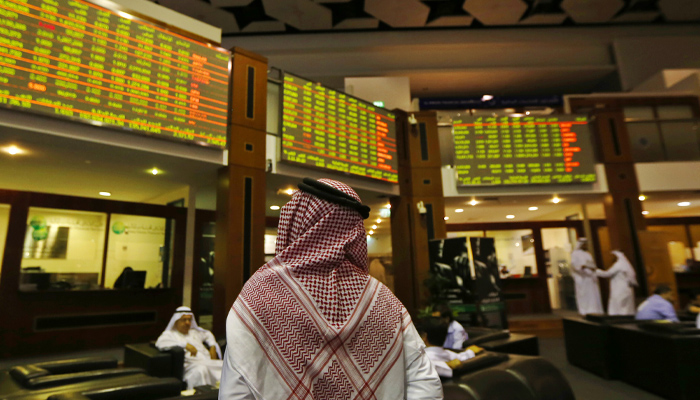
The Middle East conflict has erased $120 billion from Dubai and Abu Dhabi stock markets. Rising oil prices are hurting global economies and increasing financial pressure on businesses. Investors, consumers, and regional markets face growing uncertainty due to escalating tensions.
According to Arab media reports, UAE stock markets suffered massive losses since the conflict began. Dubai and Abu Dhabi exchanges experienced sharp declines as investor confidence weakened. Consequently, market volatility increased across Gulf financial sectors
Read more: Pakistan stocks rise on Middle East de-escalation hopes
Meanwhile, rising oil and gas prices have added economic strain worldwide. Consumers and businesses have already faced losses of 111 billion rupees due to higher energy costs. As a result, inflation risks are increasing in multiple economies.
In addition, concerns over crude oil supply continue to influence global markets. Brent crude oil reached $113 per barrel, while U.S. crude traded at $103. Therefore, energy-dependent industries are expected to face further cost pressures.
Read more: Pakistan stocks rise on Middle East de-escalation hopes
However, Asian stock markets showed mixed reactions to the crisis. Pakistan’s KSE-100 Index gained over 1.5%, closing at 148,743 points. In contrast, South Korea, India, and Japan markets recorded notable declines amid uncertainty.