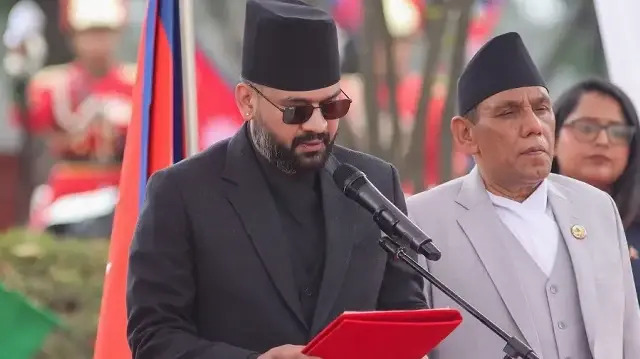
Balendra Shah has been sworn in as Nepal’s prime minister at age 35. His decisive election victory signals public frustration with corruption and elite politics. Shah’s rise reflects strong support among younger voters seeking reform and accountability.
Shah, formerly Kathmandu’s mayor, led the Rastriya Swatantra Party to a clear parliamentary majority. He defeated former Prime Minister KP Sharma Oli amid a political crisis following youth-led protests last year. His mandate is one of the largest in recent Nepali elections.
Read more: Pakistan extends felicitation as Nepali rapper Shah sworn in as PM
The new prime minister gained prominence through rap music and social media, appealing particularly to Gen Z and millennial voters. He ran on a platform emphasizing anti-corruption, transparency, and reform of entrenched political elites. Shah’s personal image as a reformer resonated widely across urban and younger demographics.
Former Prime Minister Oli has been taken into custody over allegations related to deaths during the youth protests. Analysts say Shah’s victory marks a major generational shift in Nepal’s politics, weakening traditional party dominance and elite networks.
Read more: Nepal’s rapper mayor leads prime minister race ahead
Shah’s ascent is seen as a turning point for Nepal, potentially redefining political priorities toward transparency and citizen-driven governance. Observers expect his government to face challenges balancing reform with entrenched bureaucratic resistance.