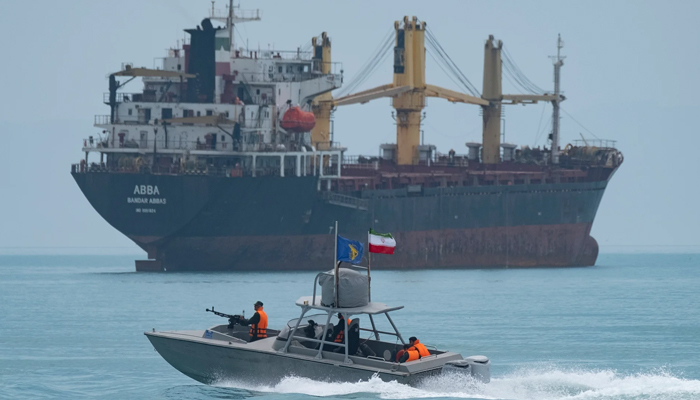
Tehran has implemented a new system requiring vessels to pay up to $2 million for safe passage through the Strait of Hormuz. The toll follows the U.S.-Israeli attacks on Iran, which disrupted maritime traffic and global energy routes. Shipping companies from China, India, and Gulf countries are primarily affected, along with vessels facing Western sanctions.
Before the conflict, about 135 ships passed daily through the strait, but only 116 transited between March 1 and March 25. Many vessels have now switched to Iranian territorial waters instead of traditional shipping lanes, and some are operating under “dark fleet” conditions to avoid detection. Pakistani flags are reportedly being used by third-country ships to facilitate passage.
Read more: Iran warns Gulf closure if coast attacked amid Hormuz standoff
According to Financial Times, Iran verifies each vessel’s paperwork, cargo destination, and crew nationality before granting clearance. Ships transmit an assigned code over international emergency frequency VHF 16 upon approaching the strait. Experts say this process involves government-to-government negotiations facilitated through embassies.
While payments pose challenges due to U.S. and EU sanctions, Iran has reportedly established covert networks to handle these transactions. Former U.S. Treasury official Clare McClesky confirmed Tehran maintains secret financial channels to receive fees. Some shipping companies, including Indian and Chinese firms, declined to comment, while Indian officials claim no payments were requested.
Read more: Iran sets conditions for Indian ships passage
Analysts note the toll system highlights the strategic importance of the Strait of Hormuz in global trade and energy security. Most cargo now avoids the U.S. and Europe, focusing instead on East Asia, Eastern Africa, and South America. Tehran continues to tighten control over this vital maritime route amid ongoing regional tensions.