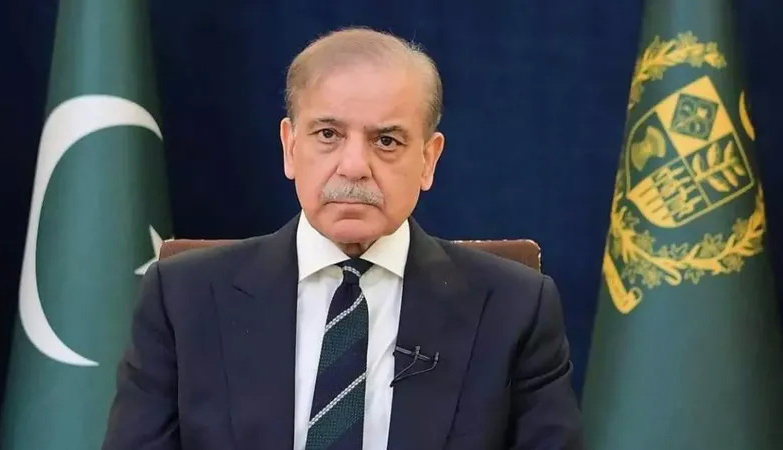
 Prime Minister Muhammad Shehbaz Sharif said the government of Pakistan made the elimination of tuberculosis (TB) one of its public health priorities and under a comprehensive strategy, measures were being taken to ensure early diagnosis of the disease, universal access to quality treatment, disease prevention, and patient care.
In a message on World Tuberculosis Day observed on March 24, he said for this purpose, the expansion of modern diagnostic facilities, improvement of the laboratory network, and strengthening of the surveillance system were being done and TB services were being integrated into primary health centers so that continuous treatment could be provided across the country.
He said, “Today, on World Tuberculosis Day, Pakistan, together with the international community, reaffirms its commitment to completely eliminate the treatable and preventable disease of tuberculosis.”
“Even in the present era, TB remains one of the leading infectious diseases and remains a serious health, social and economic challenge for many countries, including Pakistan,” he said adding, “The disease particularly affects the vulnerable and has health, social and economic impacts in the form of poverty, malnutrition and inequality.”
“World TB Day is observed every year to raise public awareness about the impact of the disease and to further intensify efforts to eliminate this epidemic,” he remarked.
He said public participation was essential for the complete elimination of TB. Community health workers, civil society organizations, researchers, and private sector medical institutions were helpful in eliminating social stigma, encouraging timely diagnosis, and ensuring continuity of treatment.
“However, international cooperation, technical partnerships, and sustained global funding are indispensable for the complete elimination of TB,” he observed.
He appealed to all relevant stakeholders, the federal and provincial governments, development partners, universities, private sector, media, and social leaders to further strengthen collective efforts to ensure that no person with TB was left untreated.
Marking World Tuberculosis Day 2026 on Tuesday, Pakistan urged immediate, coordinated and sustained efforts to eliminate tuberculosis, as the country continues to face one of the world’s highest disease burdens despite global commitments and ongoing interventions.
Tuberculosis (TB), a preventable and curable infectious disease, remains the leading cause of death from a single infectious agent globally. According to the World Health Organization, an estimated 10.7 million people fell ill with TB in 2024, while 1.23 million deaths were recorded worldwide.
The disease spreads through the air when an infected person coughs, sneezes or speaks. While it primarily affects the lungs, TB can also damage other organs, including the brain, kidneys and spine. Men account for 54 per cent of global TB cases, women 35pc and children 11pc, with experts warning that childhood TB remains largely under-addressed.
Pakistan continues to bear a significant share of the global burden, with approximately 670,000 new cases reported annually, representing around 6.3pc of total cases worldwide. Despite commitments made at international forums, including United Nations high-level meetings, progress in high-burden countries has remained slow.
Officials highlighted that Pakistan’s response has been strengthened through public-private partnerships. Mercy Corps Pakistan, in collaboration with the National TB Control Program and provincial programmes, and with support from the Global Fund, has expanded access to TB services, particularly in underserved communities, through Public Private Mix models.
Speaking on the occasion, Arif Jabar Khan said eliminating TB required more than clinical interventions.
“Ending TB demands community awareness and equitable access to services. While progress has been made through partnerships, stigma and misinformation continue to delay care-seeking and increase transmission,” he said, stressing the need for stronger community engagement, preventive treatment and uninterrupted healthcare services.
He added that the National TB Control Programme and provincial initiatives were playing a commendable role and expressed optimism about achieving national targets under their leadership.
Heads of partner organisations, including Dr. Akmal Naved, Dr. Muhammad Amir Khan, Dr. Syed Sharaf Ali Shah, Dr. M. Khalid Farough, Mervyn Lobo and Arifa Mazhar, underscored the importance of community-level action.
In a joint statement, they noted that TB was not only a health issue but also a social challenge linked to poverty, stigma and lack of awareness. They warned that delayed treatment due to fear and misconceptions was contributing to higher transmission and poorer health outcomes.
They called for bringing services closer to communities, promoting patient-centred care and strengthening awareness to ensure early diagnosis and successful treatment.
Stakeholders reiterated that eliminating TB was both a public health and development priority, requiring increased funding, stronger prevention strategies and a multi-sectoral approach involving government institutions, development partners and local communities.
Health experts emphasised that Pakistan could eliminate TB through sustained political commitment, increased domestic investment and stronger health systems. Expanding preventive treatment, ensuring uninterrupted medicine supply, boosting local pharmaceutical production and prioritising public awareness were identified as key steps.
As the country joined the global community in observing World Tuberculosis Day, stakeholders maintained that ending TB was achievable but only through collective action, sustained commitment and strengthened partnerships.