Devon is the sort of place that celebrates curiosity. You could begin your morning with sea air on the English Riviera, lunchtime wandering cobbled streets and independent cafés, a sunset walk along a windswept headland in the evening. The best part? Devon doesn’t believe in one “perfect” itinerary. Families after beaches, couples seeking slow scenery and good food, solo travellers content to clamber along the coast path until its view knocks them flat.
If you’re crafting a mini itinerary for your holiday, chances are you’ll be saving a set of opening hours, making note of parking ideas and popping screenshots from inspiration on your phone. What can tend to be forgotten is how to start turning all those little thoughts and moments ¬and memories into something you’ll actually make use of and share: a quick poster for the noticeboard in your cottage, a clean image so you can see what’s happening day by day, or even just a photo scrubbed up for the family group chat. This is where a light creative workflow comes in handy, particularly one that’s cross-device, so you can make small changes on the sofa after a long day away from home.
This guide focuses on Devon-first ideas—classic days out, easy “choose-your-own” routes, and practical ways to keep your trip organised—while also showing how travellers commonly use Dreamina (available on web, and usable from both PC and mobile browsers) to polish photos and create simple trip visuals without turning your holiday into a full-time project.
Start with Devon’s “three moods” and plan around them
Devon is easier to plan when you think in moods rather than miles. On some days, you’ll want coast. On others, you’ll want villages and food. And then there are the days that call for open space—moorland, woodland, or big-sky viewpoints.
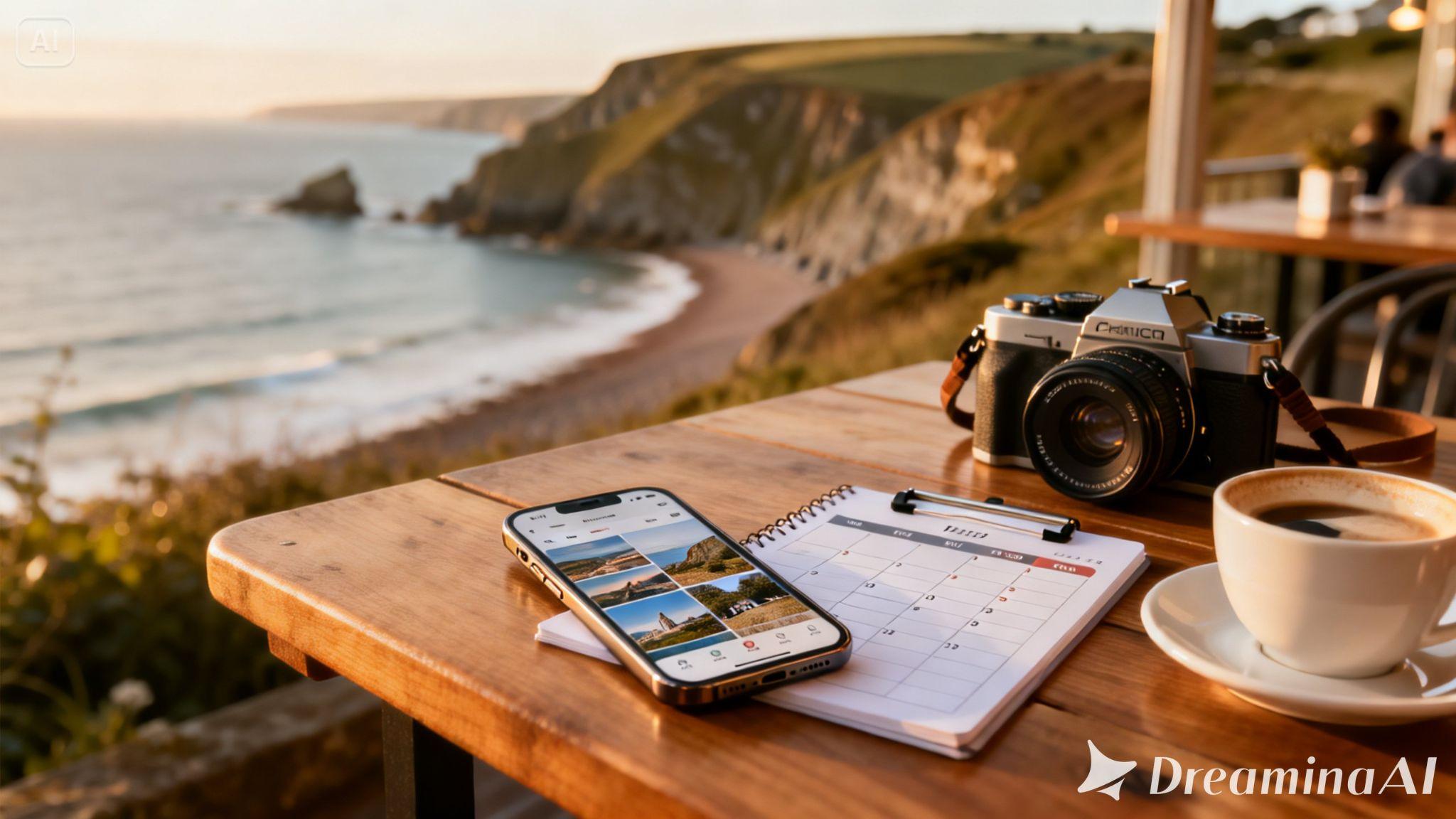
A day at the coast can be as active or unwound as you prefer. Often all you want is a morning beach walk, fish and chips stop, then lazy afternoon in a harbourside town. If you have kids with you, one anchor beach (pictured above) plus one nearby attraction for the day will keep things nice and easy. For couples, a less-hectic cove in the early going, then a scenic drive and a pub garden can feel like an actual break instead of just endless rushing.
A “town and treats” day is Devon at its most comforting. Think browsing local shops, warming up with coffee, and finding a bakery worth a second visit. It’s a perfect option if the weather turns. You’ll still get that Devon feeling, just with less wind.
And then there is the wide-open day: the sort when you throw on layers, let your cheeks go pink and return delightfully tired. I think Dartmoor is the obvious place for that, but Devon has a whole lot of countryside where you can go for a short walk and it feels like everything’s reset somehow.
Build one “anchor plan” for each type of day
The most flexible holiday plans are pretty much always the best, but flexibility works better once you’ve settled on a few anchors. For instance, for a day on the coast choose one beach and one view. And day trip the heck out of it For a town day, choose one market or main street and one cozy lunch place. On a moor day, choose one easy route and one scenic stop on the return drive.
Once you’ve got those anchors, everything else becomes optional. You’re no longer trying to “do Devon”; you’re simply choosing what fits your energy.
It can also help to maintain one visual plan that everyone can understand instantly, whether you are traveling with friends or family. A one-page itinerary for the accommodations is printed out by some, and a shared image on one’s phone is maintained by others. Either way, a simple layout can clarity instead of chaos to your plan.
If you want to create something tidy to share, you can use Dreamina to generate posters for your Devon week—think “Monday: Torquay & harbour walk” style, or a gentle “This week’s plan” sheet for the kitchen. Keep it simple: one headline, one photo, and a short line of text per day. The goal isn’t to impress anyone; it’s to reduce the number of “So what are we doing today?” conversations when everyone’s hungry.
Make the most of Devon’s photo moments without over-editing
Devon photographs beautifully, but it also throws a few classic challenges at your camera. Bright skies can wash out the sea. A grey day can turn a lovely village shot slightly dull. Backlit sunsets can make faces too dark. And if you’re snapping quickly, you might end up with a horizon that looks like it’s sliding into the Channel.
The key is not in so much “transforming” your photos as rescuing them toward what the actual moment felt like. Little adjustments are the ones that make a big difference, especially if you’re planning to include an image in a trip recap, on a scrapbook page, or in a social post for friends.
An easy solution is to choose a few favourite shots from each day and tidy them up quickly, rather than spend hours on each shot. If you snapped a photo of a sign on a coastal walk, for example, and wanted it to be sharper so that the text would be legible. If you took a family snapshot on the beach, you might seek slightly improved lighting without it looking artificial.
For those quick fixes, Dreamina’s AI image editor is commonly used to straighten, crop, and tidy up images so they look clean and intentional. Used lightly, editing is just a way to bring focus back to what matters: the coastline line, the faces, the detail in a cream tea, the colour of beach huts.
Keep your Devon memories crisp when the weather is moody
Devon weather has personality. Sometimes it’s all sunshine and glittering water. Sometimes it’s soft clouds and misty hills. Sometimes it changes three times before lunch. And that can be part of the charm—if your photos still look good enough to keep.
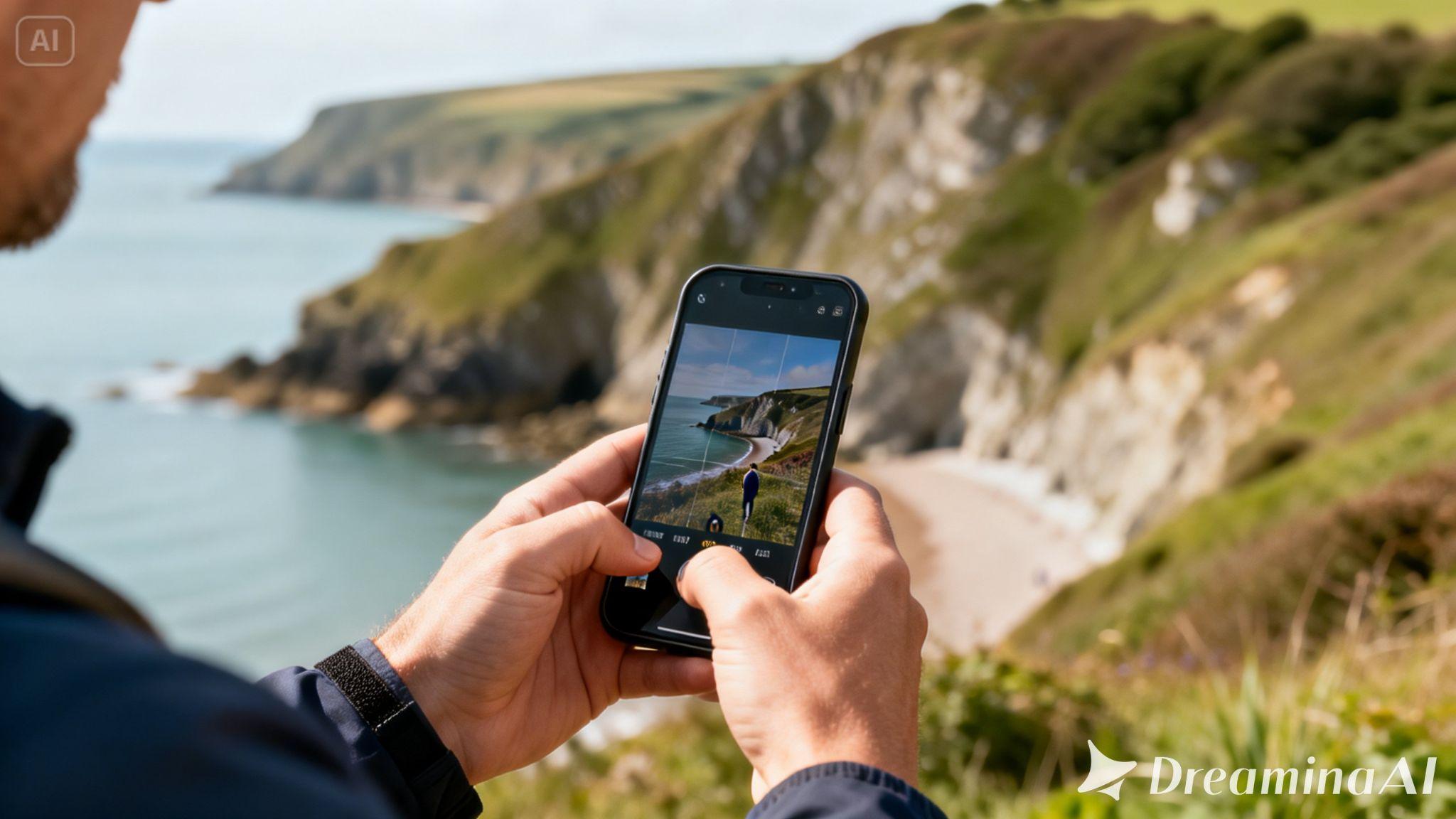
If you’ve ever taken an awesome pic on a walk somewhere, only for it to look a bit hazy when you reviewed your photos later, you’ll feel the pain. This is particularly true for sea spray, drizzle or that bright-but-flat light you see on overcast coastal days. Often, the most casual upgrade is a gentle clarity and detail booster, not an over-the-top remaster.
That’s where a dedicated photo enhancer can be useful. The aim is to make the image a touch clearer so it reflects what you saw, while keeping the natural Devon look. You’ll usually get the best results if you start with your sharpest photo and enhance it subtly rather than pushing it too far.
A Devon-friendly way to document your trip without turning it into work
There’s a happy medium between “I didn’t take enough photos” and “I spent the entire day behind my camera.” Best appreciated when you’re there, really: on cliffside walks and coastal viewpoints where the here and now matters more than getting the perfect shot.
The casual is to approach pictures with a mindset. One scene setter when you get somewhere, one detail shot you’ll never forget and one people shot if you’re with others or traveling with others. That’s plenty for a meaningful record of the day, and it keeps your phone in your pocket almost all of the time.
Later, when you’re back at your accommodation—maybe with a cup of tea and tired legs—you can quickly choose your favourites and do minimal clean-up. Because Dreamina works on the web and is usable from PC and mobile browsers, it fits this style well: you can do a quick tweak on your phone, or sit down at a laptop if you prefer more screen space. Either way, the workflow stays light, which is exactly what you want on holiday.
A final Devon tip: let the plan serve the day, not the other way around
Devon is a county that rewards moments of serendipity: the unexpected viewpoint, the beach you didn’t think you’d like, the pretty little town you stay statying in longer. Use your itinerary as a template, and then give yourself license to wander. Just keep a loose visual plan for the group and give a little spruce to some favourite photos each evening, and you’ll return from holiday feeling both easy and memorable.
With moderation, then, Dreamina could be a part of that rhythm: a shortcut to airbrushing a photo, or passing on the perfect day-out itinerary and keeping your Devon story as warm on screen as it was in real life — without becoming that annoying person who can’t put the phone down.