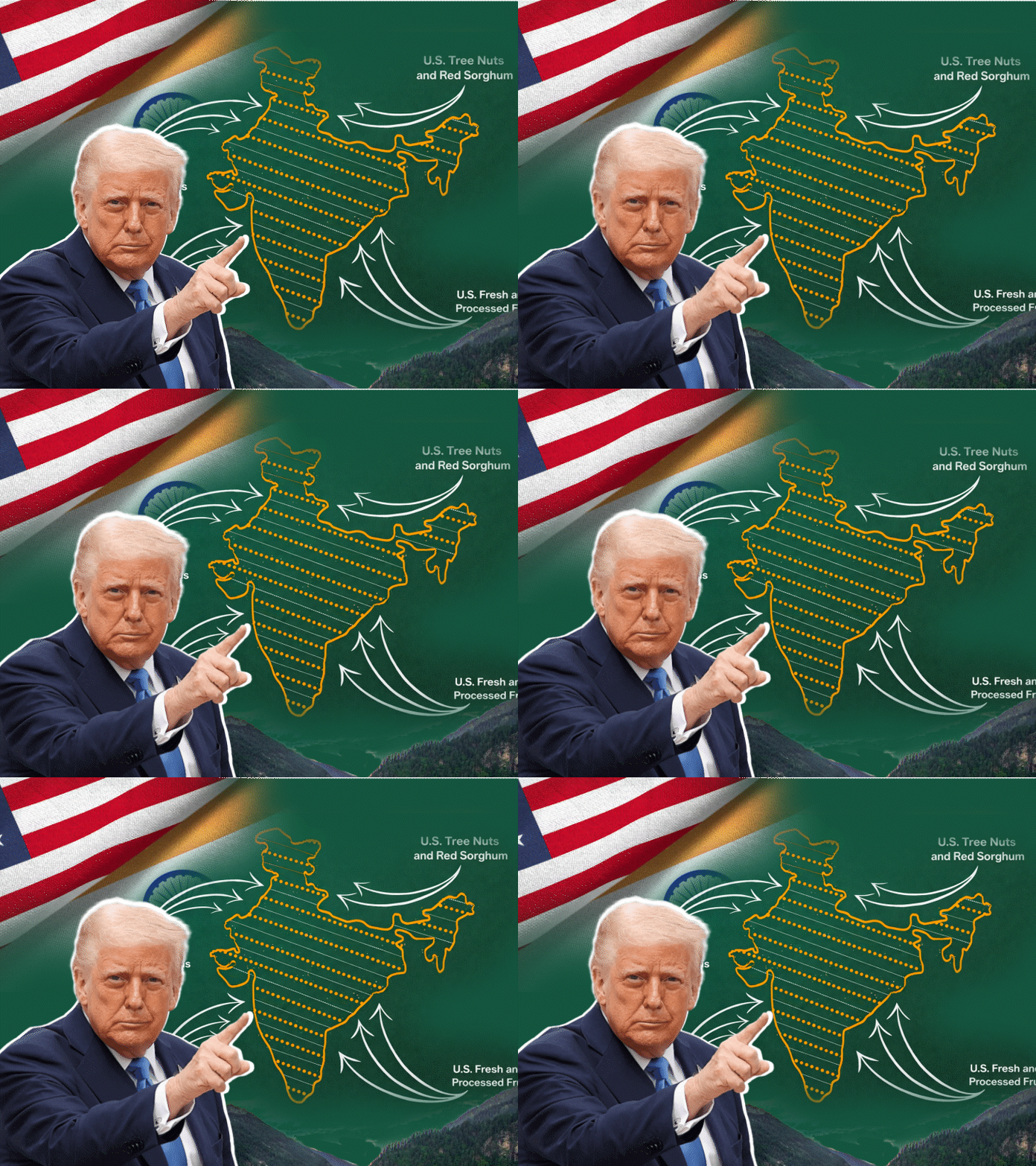
WASHINGTON: The United States Trade Representative (USTR) removed a map of India from its official X (formerly Twitter) account after Pakistan lodged a diplomatic protest over the depiction of disputed territories, officials confirmed. The map, shared alongside a press release on a framework for an interim US India trade agreement, showed Jammu and Kashmir — including Azad Jammu and Kashmir and Gilgit-Baltistan — as part of India, along with China’s Aksai Chin region.
Read More: Any aggression against Pakistan will be met with a full & resolute
Diplomatic sources said Pakistan conveyed its concerns to both the US Embassy in Islamabad and the State Department, emphasizing that the map contradicted the longstanding US position that Jammu and Kashmir is a disputed territory whose status must be determined according to relevant United Nations Security Council resolutions.
🚨White House Press Release
🚨The Modi govt has sold out India in front of the USA
🚨Modi’s resignation is now necessary for India’s national security.
🚨India will no longer purchase oil from Russia. Modi has accepted America’s directive and has ended relations with Russia. pic.twitter.com/SC5tUiq7F4
— Annushi Tiwari🇮🇳 (@Kussikhuelafn) February 11, 2026
Officials noted that the map appeared to have been sourced from Google Maps, similar to a map previously used by the USTR in a trade release on Bangladesh. While the map only showed territorial outlines without naming regions, Pakistani authorities stressed that any official US depiction carries diplomatic weight, particularly on the sensitive Kashmir issue.
The controversy escalated after Indian media portrayed the map as an implicit endorsement of New Delhi’s claims over the disputed territories. Pakistani officials said prompt action was necessary to prevent misinterpretation of the US stance. The USTR press release remains online, but the map itself has been withdrawn. By contrast, a map in a similar Bangladesh trade release remains unaffected.
The dispute coincides with the announcement of a bilateral trade framework between Washington and New Delhi, under which the US will reduce tariffs on Indian goods to 18 per cent, while reciprocal Indian tariffs are also expected to be lowered.
Read More: Govt seeking guidance from all stakeholders on Indian oppression
Pakistani authorities emphasized that any depiction suggesting Indian sovereignty over Jammu and Kashmir undermines the UN-recognized status of the territory. They also noted that including Aksai Chin within India misrepresents a separate unresolved dispute with China. US officials have not publicly commented on the removal, but Islamabad highlighted the need for vigilance on representations of such sensitive issues.