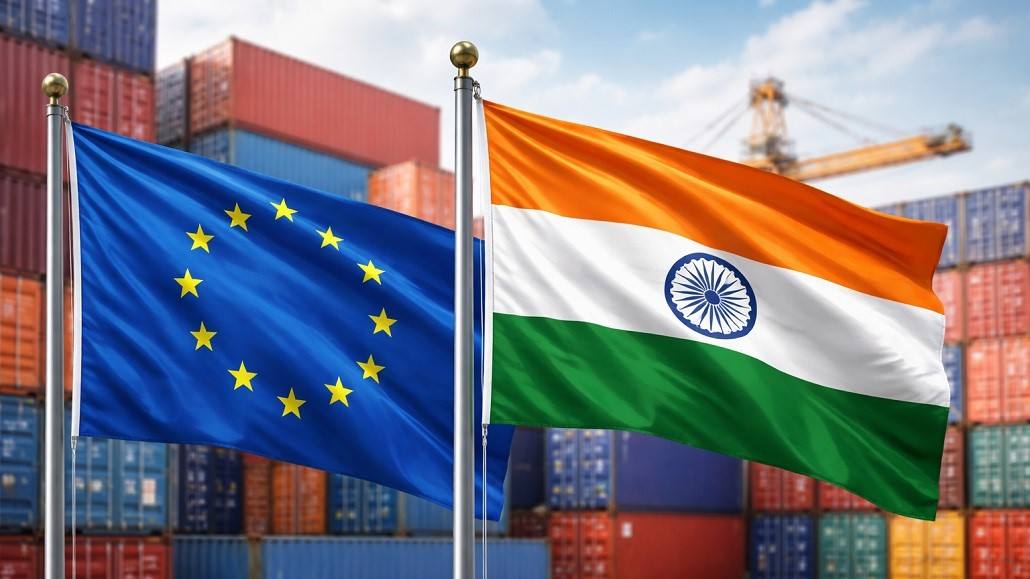
ISLAMABAD: Pakistan’s textile and apparel sector faces increased competition in the European Union (EU) following the conclusion of the EU-India Free Trade Agreement (FTA), analysts say. The deal effectively blunts Pakistan’s longstanding tariff edge, which had been supported by the GSP+ duty-free access scheme.
Read More: Merz hints at EU–India free trade agreement by January
The EU remains Pakistan’s largest export destination, absorbing $8.8 billion of exports in FY2025, with textiles accounting for nearly $7 billion. Under GSP+, Pakistan enjoys duty-free access on about 66% of tariff lines, giving it a meaningful price advantage over India, whose products previously faced EU duties of up to 12%.
The new EU-India FTA, concluded in January 2026, grants India immediate duty-free access on 100% of textile and apparel tariff lines, while Pakistan remains limited to 66%. The agreement covers yarn, garments, home textiles, and other apparel products. Beyond textiles, India now enjoys near-zero tariffs on electronics, leather, footwear, chemicals, gems, and seafood, enhancing its competitiveness across multiple sectors.
Trade experts note that the FTA not only removes India’s tariff disadvantage but also aligns it with EU regulatory, ESG, and technical standards, strengthening supply-chain credibility and investment certainty. Pakistan, by contrast, relies mainly on cost arbitrage, fragmented compliance systems, and low-to-mid value exports.
Industry sources warn that without structural reforms, Pakistan’s textile exporters could see shifts in EU sourcing patterns. Experts stress the need for cost reductions, particularly in energy and industrial tariffs, along with improvements in product quality, regulatory alignment, and higher-value manufacturing.
Read More: India nears historic trade breakthrough with EU
While Pakistan retains its GSP+ status until the end of 2027, trade officials say urgent lobbying and reforms will be essential to maintain competitiveness in the post-FTA EU market. Analysts caution that failure to adapt could gradually erode Pakistan’s market share against India and other FTA-enabled competitors.