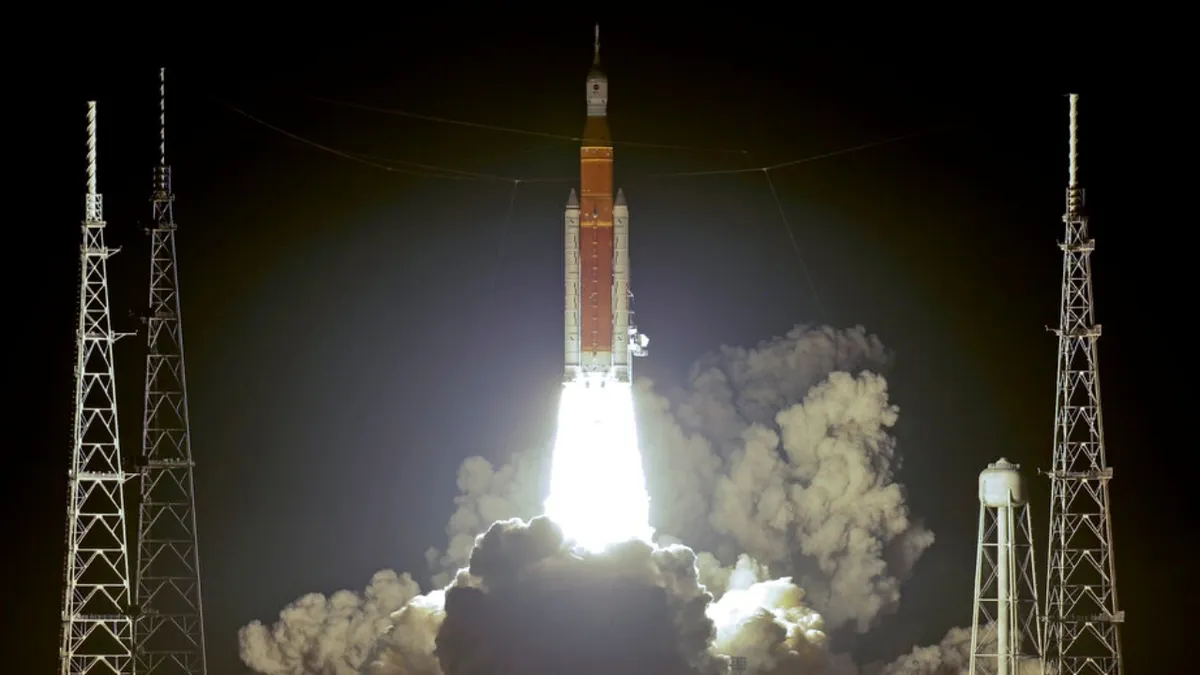
NASA is preparing to launch its long-awaited crewed lunar mission, Artemis II, with a target date set for early February 2026, marking a major step toward human deep-space exploration. The mission will send astronauts around the Moon for the first time in more than five decades, reviving ambitions last achieved during the Apollo era.
Artemis II is designed as a critical systems test, carrying four astronauts on a nearly ten-day journey around the Moon before returning safely to Earth. This mission will validate spacecraft performance, life-support systems, and navigation capabilities ahead of future lunar landings planned under the Artemis program.
Read more : NASA’s bold mission: Nuclear reactors on the moon by 2030
Through the Artemis initiative, NASA aims to land humans on the Moon again for the first time since Apollo 17 in 1972. Importantly, the program also seeks to place the first woman on the lunar surface, expanding representation in space exploration and setting foundations for sustained lunar missions.
In an official statement released on January 9, 2026, NASA confirmed that preparations are advancing steadily, with rollout activities approaching. Senior officials stressed that astronaut safety remains the agency’s highest priority as launch readiness milestones continue to be achieved.
Read more : NASA’s high-tech device detects human life beneath rubble
According to the approved schedule, Artemis II could lift off as early as February 5, 2026, with a launch window extending through April if technical adjustments are required. This flexibility allows engineers to address final checks without compromising mission safety or performance standards.
The mission unfolds amid intensifying global competition in space, as China has announced plans to send humans to the Moon by 2030. Additionally, Beijing aims to establish a permanent International Lunar Research Station by 2035, underscoring a renewed international race toward lunar dominance.