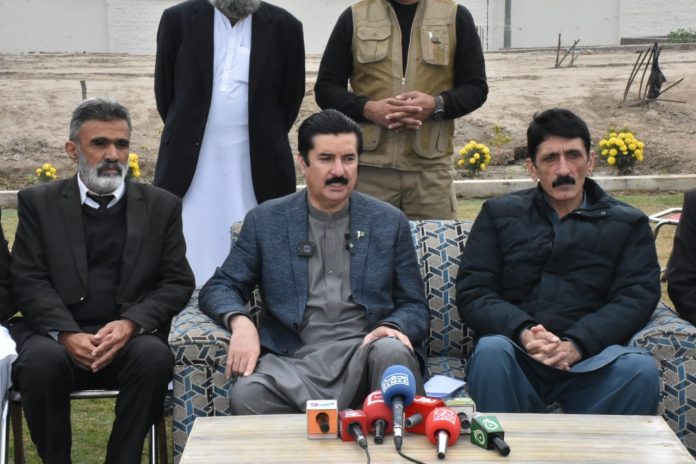
Khyber Pakhtunkhwa (KP) Governor Faisal Karim Kundi on Monday called for political dialogue without preconditions, warning that continued confrontations could push the country toward instability. Speaking at a news conference in Dera Ismail Khan, he said that negotiations require seriousness and responsibility from all parties, noting that even the prime minister had expressed willingness to engage with the PTI.
Read More: KP Chief Minister urges open dialogue to end terrorism
Governor Kundi highlighted the law and order challenges in the province, citing attacks on the Police Training School in Dera Ismail Khan and the FC Headquarters in Peshawar involving Afghan nationals. He reiterated the government’s stance on illegal immigration, emphasizing that Afghans are welcome to return legally with proper visas for business or employment.
On inter-provincial relations, Kundi said recent visits by the KP chief minister to Punjab and Sindh had been misrepresented. He expressed confidence that security arrangements coordinated with Sindh authorities would ensure no unrest during such visits. The governor praised KP police for their sacrifices and underscored the need for operations to restore peace.
He clarified that while the Constitution allows for the governor’s rule, there were no plans to impose it in the province. Kundi also announced several development initiatives, including the establishment of a Sindh Institute of Urology and Transplantation Hospital and a Danish School in Dera Ismail Khan, as well as progress on the Dera Ismail Khan International Airport project.
Additionally, the governor confirmed government efforts to ensure smooth gas and electricity supply in the district. On political prospects, he expressed confidence in the PPP’s future, predicting that Bilawal Bhutto-Zardari could become the next prime minister.
Read More: KP CM doubts govt’s talks offer, says efforts on to start street movement
During a ceremony, Kundi handed over Rs4.5 million in grants to local bar associations, praising lawyers for their historic role in Pakistan’s democratic evolution. He stressed the need for collective efforts to promote peace, brotherhood, and effective resolution of public issues in Khyber Pakhtunkhwa.