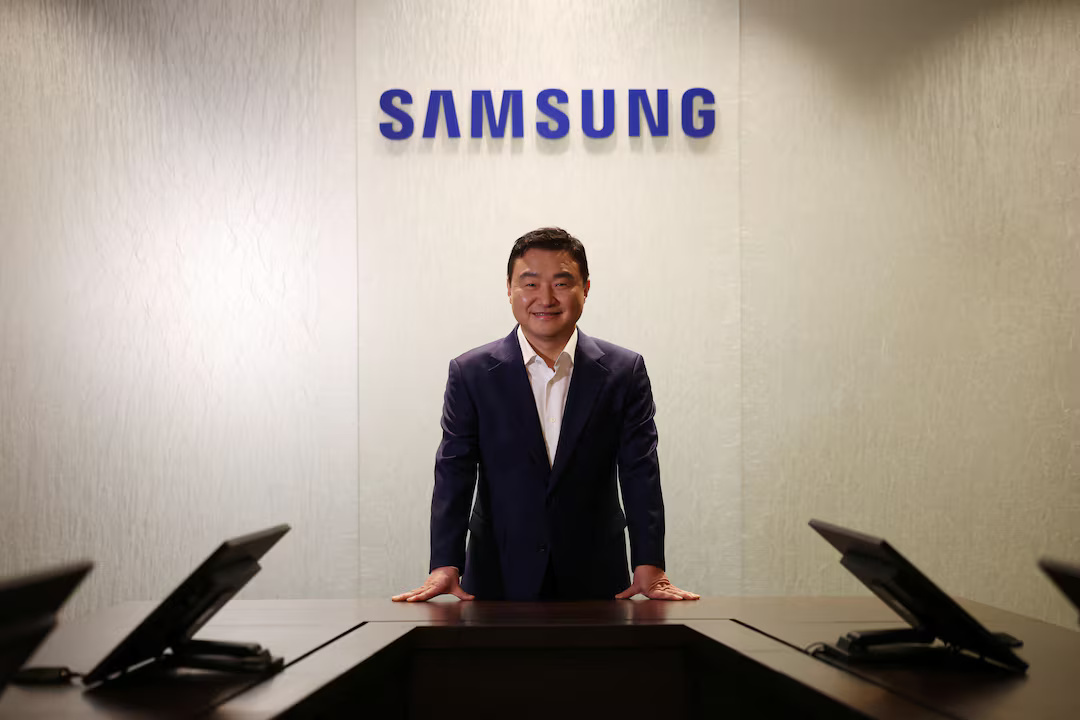
Samsung Electronics plans to double the number of its mobile devices powered by Google’s Gemini artificial intelligence to 800 million units this year, its co-CEO said. The move highlights Samsung’s strategy to expand AI features across its product ecosystem as global competition in artificial intelligence intensifies.
The South Korean company had rolled out Gemini-backed AI features to around 400 million devices, including smartphones and tablets, by last year. Co-CEO TM Roh said Samsung aims to rapidly integrate AI across all products, functions, and services.
Read More: Samsung unpacks galaxy Z Fold7, Flip7, and first budget foldable
Samsung’s expansion is expected to significantly benefit Google, whose Gemini model competes with AI systems developed by OpenAI and other firms. As the world’s largest supporter of Google’s Android platform, Samsung plays a key role in driving consumer adoption of Gemini-powered features.
Samsung plans to double the number of mobile devices running Google’s Gemini-powered AI features to ~800M in 2026 (from ~400M last year), per Reuters.
Co-CEO TM Roh: “We will apply AI to all products, all functions, and all services as quickly as possible.” pic.twitter.com/0OeRowdfdj
— Wall St Engine (@wallstengine) January 5, 2026
The company is also seeking to regain market share from Apple in the global smartphone market while fending off competition from Chinese manufacturers. Beyond mobile phones, Samsung plans to offer integrated AI services across televisions and home appliances overseen by Roh.
Roh said awareness of Samsung’s Galaxy AI brand has risen sharply, increasing to about 80 per cent from roughly 30 per cent within a year. He expects broader consumer adoption of AI features over the next six to twelve months.
While search remains the most widely used AI function on smartphones, Roh noted growing use of generative AI tools. These include image editing, productivity features, translation, and content summarisation.
Read More: Google to launch AI-powered smart glasses in 2026
Roh also addressed challenges from a global memory chip shortage, which benefits Samsung’s semiconductor business but pressures smartphone margins. He said no company is immune to the impact and did not rule out price increases, describing some effects as inevitable.
Market researchers have warned that rising component costs could shrink the global smartphone market next year. Meanwhile, Samsung expects foldable phones to gain wider acceptance within two to three years despite slower-than-expected growth so far.