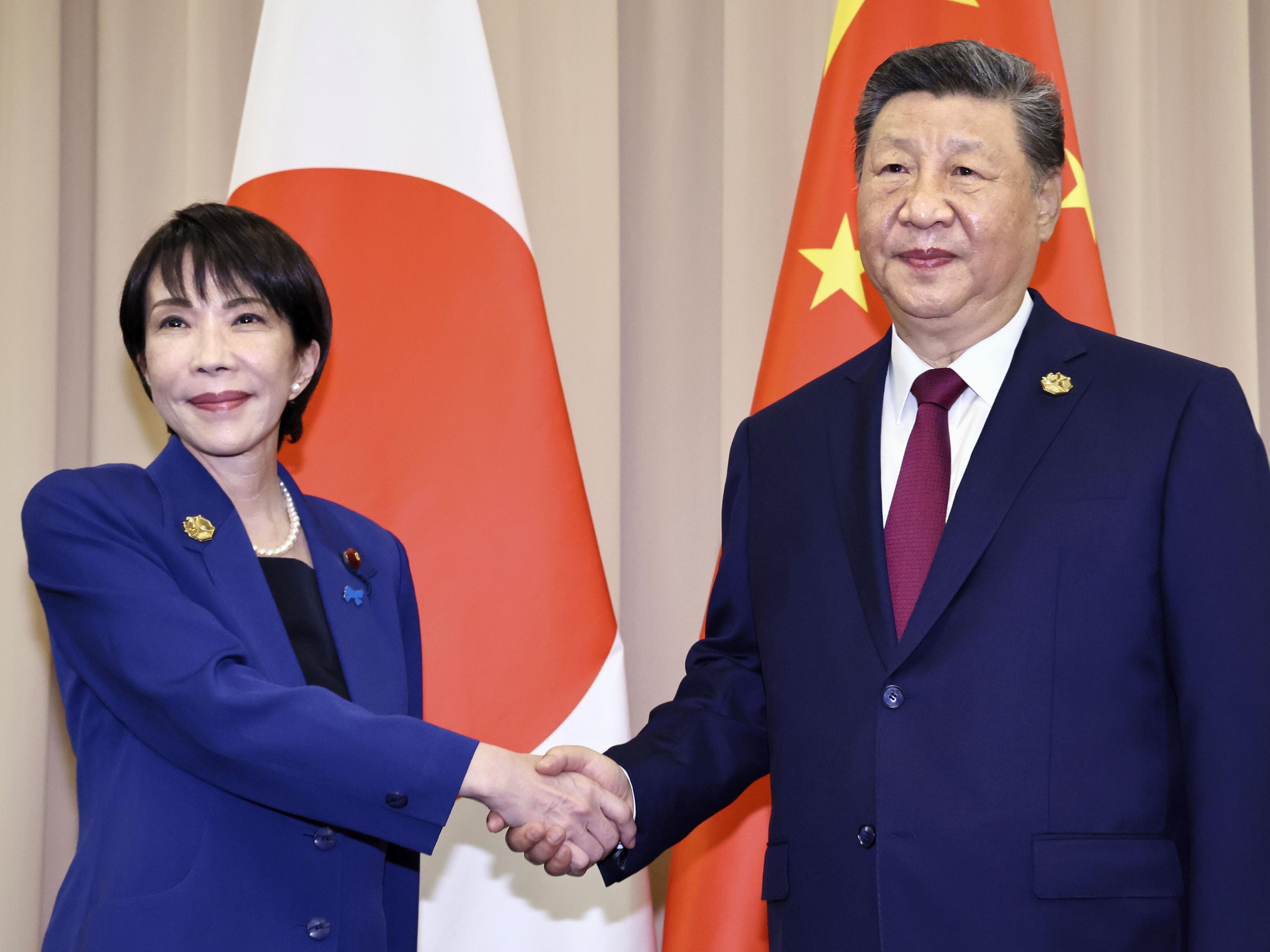
Japanese Prime Minister Sanae Takaichi triggered a diplomatic storm after suggesting that a Chinese military move against Taiwan could force Japan to respond militarily. Her remarks broke with Tokyo’s long-held strategy of avoiding direct references to Taiwan in security discussions, a stance historically shared with the United States.
Takaichi made the comments in parliament when asked about “survival-threatening situations,” a legal term that allows Japan’s leader to deploy the Self-Defense Forces. She said that attempts by Beijing to take full control of Taiwan using battleships and military force could meet the criteria, drawing immediate objections from China.
Read more : China warns Japan of “crushing defeat” over Taiwan –
She later added that attacks on US warships breaking a potential Chinese blockade of Taiwan could also require Japan to act in defence of itself and its key ally. Her remarks carry weight because Taiwan lies just over 110 kilometres from Japanese territory, and its surrounding waters are vital trade routes that Japan relies on.
The issue is especially sensitive due to Japan’s 2015 security law, which broadened the circumstances under which its military can operate internationally. Takaichi, a nationalist leader who recently took office, had already upset Beijing by publicising a meeting with a Taiwanese representative at a regional summit earlier this month.
Read more : Japan seeks dialogue amid China tensions
China reacted strongly, with its Consul General in Osaka posting a threatening comment on social media, which Tokyo condemned as “extremely inappropriate” before it was deleted. Beijing also filed an official protest, saying her remarks violated the spirit of the 1972 agreement in which Japan recognised the People’s Republic of China.
Japan’s government responded by reaffirming its commitment to peaceful dialogue while stressing that Takaichi’s statement was merely hypothetical. However, the exchange threatens to damage progress in Japan-China relations and adds new strain at a time when regional tensions are already rising.