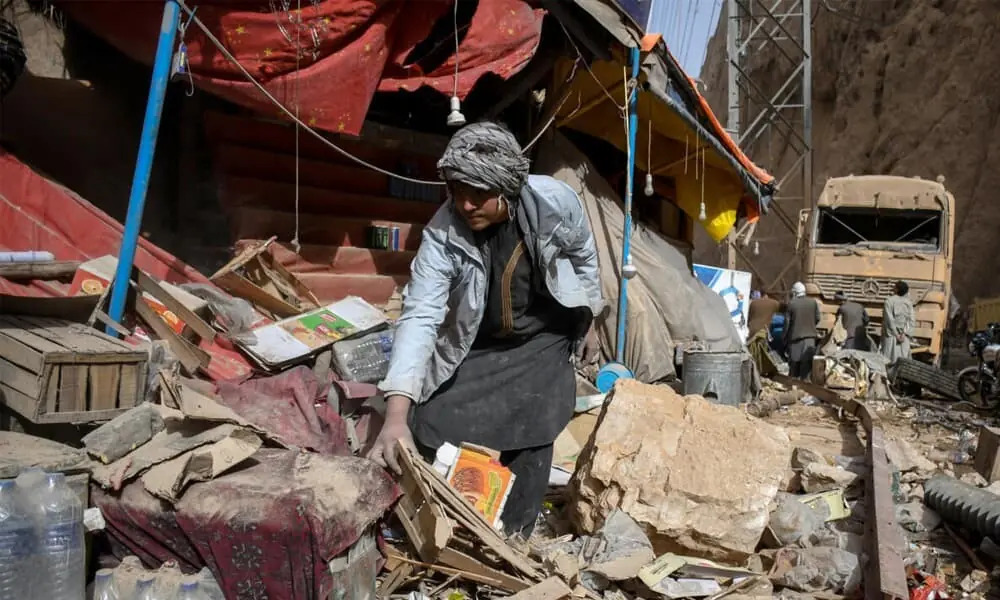
Residents in northern Afghanistan started cleaning up on Tuesday after a powerful 6.3 magnitude earthquake struck near Mazar-i-Sharif. The quake killed at least 27 people and injured nearly 1,000, authorities said. Though the epicentre was sparsely populated, many homes and buildings were destroyed, including the historic Blue Mosque.
The Afghanistan National Disaster Management Authority (ANDMA) reported that hundreds of houses were partially or completely damaged. Aid groups expressed concern about the approaching winter, when freezing temperatures could worsen conditions for affected families. Local residents began digging rubble and reinforcing structures to prevent further collapses.
Mohammad Yasin, a shopkeeper in Tangi Tashqurgan near the epicentre, said dozens of buildings were at risk. “If you go inside the shops, you feel afraid they might collapse any moment,” he said. Authorities warned that unstable buildings remain a serious threat to safety.
Read more: Deadly Afghanistan earthquake leaves over 1,100 dead
The disaster comes as Afghanistan’s Taliban administration faces multiple crises, including a deadly August earthquake, declining foreign aid, and deportations of refugees by neighboring countries. The United Nations, India, and China have pledged aid to support relief efforts.
Experts highlighted that rudimentary building techniques and mountainous terrain make earthquakes in Afghanistan particularly deadly. On average, earthquakes kill about 560 people annually and cause roughly $80 million in damages. ANDMA noted that the lower death toll this time was due to flatter terrain, a relatively higher building standard, and fewer people living near the epicentre.