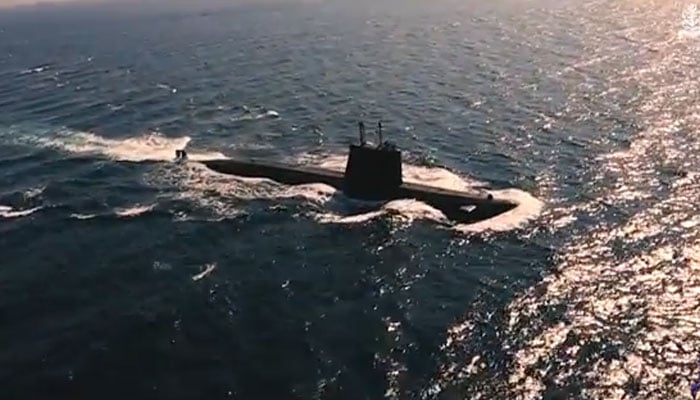
ISLAMABAD: The Pakistan Navy expects to induct its first Chinese-designed Hangor-class submarine into active service next year, Admiral Naveed Ashraf revealed in an interview with China’s Global Times on Sunday.
The deal, which will see eight submarines delivered by 2028, is reportedly worth up to $5 billion and aims to strengthen Pakistan’s maritime defense and strategic reach in the North Arabian Sea and Indian Ocean.
According to Admiral Ashraf, the program is “progressing smoothly,” with three submarines already launched into China’s Yangtze River from a shipyard in Hubei province. The first four submarines are being built in China, while the remaining four will be assembled in Pakistan to enhance local technical capabilities.
Read More: China-Pakistan submarines to join Pakistan Navy: Naval Chief
“Chinese-origin platforms and equipment have been reliable, technologically advanced and well-suited to Pakistan Navy’s operational requirements,” Admiral Ashraf stated, highlighting China’s growing role as Islamabad’s key defense partner.
He also noted that the Navy is exploring deeper cooperation with Beijing in emerging technologies such as artificial intelligence, unmanned systems, and advanced electronic warfare, reflecting the future of modern naval warfare.
The update follows reports that the Pakistan Air Force used Chinese-made J-10 fighter jets earlier this year in aerial engagements against Indian Rafale jets, sparking debates over the competitiveness of Chinese defense technology against Western systems.
Read More: Veni, Viderunt, Vulneror: India’s Imprudent Submarine Operations
Beyond defense, Beijing’s influence extends through the China-Pakistan Economic Corridor (CPEC) — a 3,000km infrastructure network linking Xinjiang to Gwadar Port. The initiative is a key component of China’s Belt and Road strategy, designed to secure trade routes and energy supplies from the Middle East.
Admiral Ashraf concluded, “This cooperation goes beyond hardware; it reflects a shared strategic outlook, mutual trust, and a long-standing partnership. In the coming decade, we expect this relationship to grow, encompassing not only shipbuilding and training but also enhanced interoperability, research, technology sharing, and industrial collaboration.”