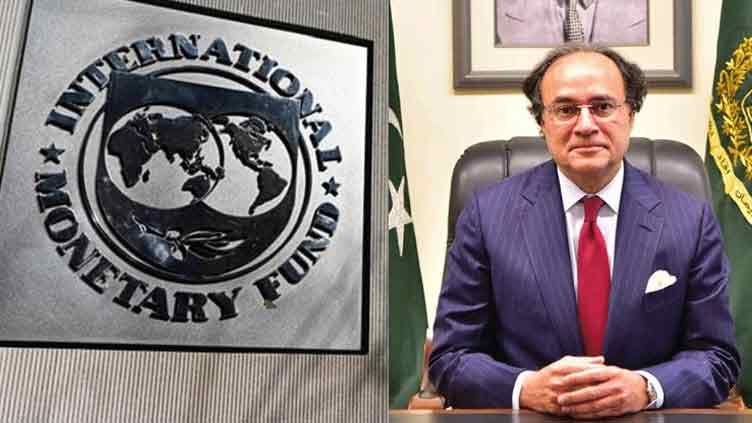
Finance Minister Muhammad Aurangzeb has departed for the United States to attend the annual meetings of the International Monetary Fund (IMF) and the World Bank (WB). His six-day visit comes at a crucial time as Pakistan seeks to finalise a staff-level agreement (SLA) for ongoing loan programmes worth $8.4 billion. The IMF mission recently concluded its review talks in Islamabad without announcing a formal agreement.
The finance minister expressed hope that the SLA would be reached during his stay in Washington. According to state media, Aurangzeb will represent Pakistan at the plenary sessions of both global financial institutions. He will participate in over 65 events, including meetings, forums, and high-level engagements. These meetings are seen as vital for shaping Pakistan’s economic path forward.
Read more: Aurangzeb aims to seal IMF staff-level agreement
During the visit, he will hold direct meetings with IMF Managing Director Kristalina Georgieva and World Bank President Ajay Banga. He is also expected to address the MENAP (Middle East, North Africa, Afghanistan, and Pakistan) forum as a keynote speaker. Other important engagements include a regional roundtable on FBR’s digital reforms and two events hosted by the World Economic Forum. The roundtable will focus on tax system reforms with participation from other countries.
Aurangzeb’s schedule also includes bilateral meetings with finance ministers from China, the UK, Saudi Arabia, Turkiye, and Azerbaijan. He will also meet senior officials from the White House, US State and Treasury Departments, and the International Development Finance Corporation. Discussions with global credit rating agencies, commercial banks, and investment banks—especially from the Middle East—are also planned.
Read more: IMF to Review Pakistan’s Flood Spending, Budget Plans
In addition, the finance minister will visit leading US think tanks such as the Atlantic Council and the Peterson Institute for International Economics. His meetings aim to boost investor confidence, secure international support, and promote Pakistan’s economic reform agenda. The outcome of his visit could play a critical role in shaping the country’s financial future.