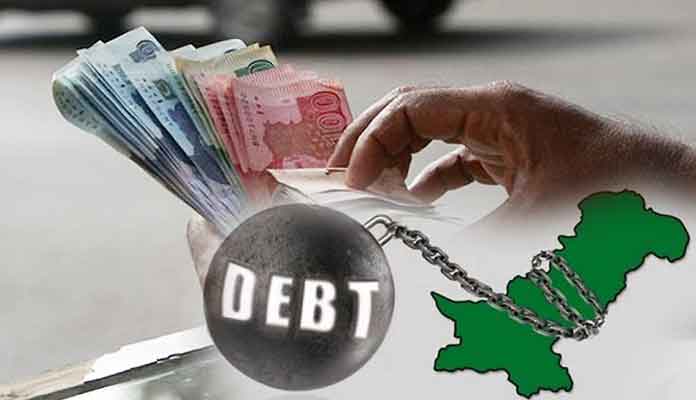
ISLAMABAD: Pakistan’s debt burden has risen sharply, pushing the country into what experts are calling a “dangerous debt trap,” according to a new report by the Economic Policy and Business Development (EPBD).
The report reveals that every Pakistani now bears a debt of Rs318,252, a steep rise from Rs90,047 a decade ago—more than a threefold increase. National debt has been growing at an average annual rate of 13 percent, effectively doubling every six years.
Pakistan’s total debt now stands at 70.2 percent of GDP, breaching the 60 percent ceiling set under the Fiscal Responsibility Act. By comparison, India’s debt-to-GDP ratio is 57.1%, Bangladesh’s is 36.4%, while Sri Lanka carries the highest burden in the region at 96.8%.
Debt servicing is becoming increasingly costly, with interest payments consuming 7.7% of the economy. The rupee’s steep depreciation—down 71% since 2020—has further inflated external debt by 88% in local currency terms, the report noted.
The EPBD cautioned that Pakistan’s shrinking fiscal space leaves little room for development spending or infrastructure investment. It argued that imposing more taxes on an already burdened population is not a solution and highlighted the need to expand the tax net while reducing the policy rate from 11% to 9%. The think tank said such measures could save the government Rs1.2 trillion in interest payments, create fiscal space, lower the cost of borrowing, and improve competitiveness for businesses.
“Without strict fiscal discipline and urgent reforms, Pakistan risks sliding into an even deeper economic crisis,” the report warned.