
 Pakistan’s 78th Independence Day on Aug 14, 2025, is both a celebration of a nation’s enduring journey, since 1947, and a moment for thoughtful reflection on the challenges that remain.
The creation of Pakistan was the result of a determined political movement led by the All India Muslim League under the visionary leadership of Quaid-e-Azam Muhammad Ali Jinnah. From the Lahore Resolution of March 23, 1940, to the birth of the country on Aug 14, 1947, this mass movement united millions of Muslims of the subcontinent behind the idea of a separate homeland where their political, cultural, and religious identity could be preserved. This achievement was more than a triumph of political negotiation; it was a testament to the resilience, unity, and shared purpose of a nation determined to define its destiny.
In the decades since independence, Pakistan’s political landscape has undergone significant transformation, yet the historical role of the Pakistan Muslim League-N remains embedded in the country’s national narrative. As the successor to the All India Muslim League, the PML-N has sought to carry forward the ideals of its founding leaders, translating them into the language of modern governance, development and public service. Over the past four decades, the Nawaz Sharif-led PML-N has played a defining role in shaping the country’s development trajectory. From the initiation of Pakistan’s motorway network to urban mass transit systems, from the strengthening of the energy sector to the expansion of higher education, the leadership has consistently sought to link infrastructure with economic opportunity. It is sanguine that PML-N’s focus on connectivity, industrial growth, and economic liberalisation, combined with social welfare measures, laid much of the groundwork for Pakistan’s development ambitions.
In 2025, this legacy is being reinterpreted for a new era under Chief Minister Punjab Maryam Nawaz Sharif. Representing both continuity and change, her leadership carries the institutional memory of her family’s development-centric governance while introducing a distinctly modern vision. Her policies reflect a forward-looking commitment to inclusive growth, with an emphasis on innovation, youth engagement, and social equity. Projects under her government have extended beyond brick-and-mortar infrastructure to embrace climate-resilient urban planning, renewable energy adoption, and a digital transformation agenda aimed at making government services more transparent, accessible, and efficient. She has positioned education not just as a social service but as a strategic investment, expanding scholarship programmes, upgrading schools, and promoting technical training to equip young Pakistanis for the demands of a globalised economy.
A deliberate focus on the human dimension of development has also marked Maryam Nawaz Sharif’s governance. Her initiatives to promote women’s participation in the economy, the Suthra Punjab program, support for youth start-ups, and strengthen healthcare delivery systems speak to an understanding that national progress is measured not only in GDP growth but also in the well-being of citizens. Public-private partnerships in agriculture and technology are being encouraged to modernise traditional sectors while creating new avenues for employment. In rural Punjab, programmes for clean drinking water, farm mechanisation, and small business support are aimed at reducing the urban-rural development gap.
By positioning Punjab as a hub of innovation, sustainable growth, and social inclusion, CM Maryam Nawaz Sharif has also contributed to strengthening Pakistan’s national image. International observers and development partners have taken note of her government’s emphasis on transparency, climate responsibility, and gender empowerment, seeing in it a reflection of a more confident, capable, and cooperative Pakistan. Such provincial progress not only uplifts local communities but also sends a powerful message abroad-that the country is ready to meet global challenges with creativity and resilience, while building bridges of goodwill and trade in the south Asian region and beyond.
The country’s accomplishments over nearly eight decades are notable. Pakistan is among the very few nations to have developed nuclear capability, a milestone that has played a decisive role in its strategic security. Its resilience in the face of regional instability, natural disasters, and global economic shocks has demonstrated a national capacity for survival and recovery. The agricultural sector remains central to the economy and a lifeline for rural communities. The Pakistani diaspora, through substantial remittances, continues to strengthen the national economy, while the country’s contributions to diplomacy, literature, music, sports, and cinema have enriched its identity on the global stage. Cities like Lahore, Karachi, and Islamabad have emerged as vibrant centres of commerce, education, and technological innovation, reflecting an adaptive and forward-looking national spirit.
Yet the vision of Pakistan’s founding fathers encompassed far more than political independence; it included the promise of social justice, economic self-reliance, and equal opportunity for all. A sustained commitment to expanding educational access, improving quality, and investing in teacher training is essential to unlocking the potential of Pakistan’s youthful population, which constitutes the majority of its citizens. Women’s empowerment presents another area of both progress and unfinished work. From the earliest days of independence, women contributed significantly to politics, education, and social reform. Today, greater numbers of women are found in universities, professional sectors, and public office than ever before. True empowerment will require not only legal reforms but also a cultural shift, where gender equality is recognised as a driver of national prosperity.
Economic self-reliance has long been a national aspiration, yet Pakistan’s economy remains vulnerable to external shocks and dependent on imports, foreign aid, and international loans. Investment in domestic industries, diversification of exports, and support for research and innovation are vital steps toward economic independence. It is in this context that Punjab’s composite development model under CM Maryam Nawaz Sharif acquires wider national relevance. Her government’s integration of environmental sustainability, technological innovation, and social protection offers a template that, if replicated nationwide, could accelerate Pakistan’s progress toward the long-elusive goal of economic sovereignty.
Pakistan’s 78th Independence Day is, therefore, both a commemoration of achievements and a call to action. The sacrifices of 1947 were made in pursuit of a vision-one that placed dignity, justice, and opportunity for all at the heart of the national project. In the 21st century, nation-building means translating that vision into tangible improvements in education, healthcare, environmental stewardship, innovation, and governance. The country’s resilience is undeniable, but resilience must be matched with long-term planning, public-friendly institutions, and holistic policies that prioritise national over partisan interests.
As Pakistan stands at the threshold of its next chapter, the legacy of its founders and the developmental contributions of the CM Maryam Nawaz Sharif-led Punjab government offer both inspiration and responsibility. The challenge is to rekindle the unity and determination that defined the independence movement, adapting it to the realities of a modern, interconnected world. If Pakistan can channel its youthful energy, cultural vibrancy, and strategic potential into a coherent national agenda, it will not only honour the sacrifices of its past but also secure a future where every citizen can thrive.
The flag that flies this Independence Day is a reminder of a promise-one that remains within reach provided the nation continues its journey with vision, resolve, and a shared commitment to progress.
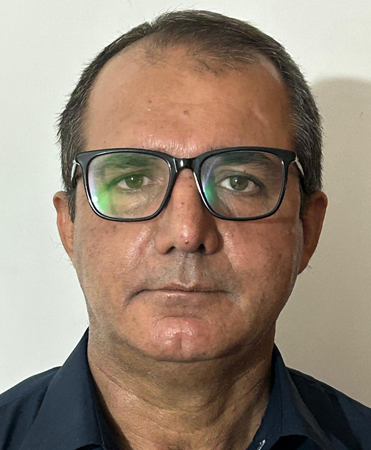
The writer is a Lahore-based public policy analyst who can be reached at [email protected]