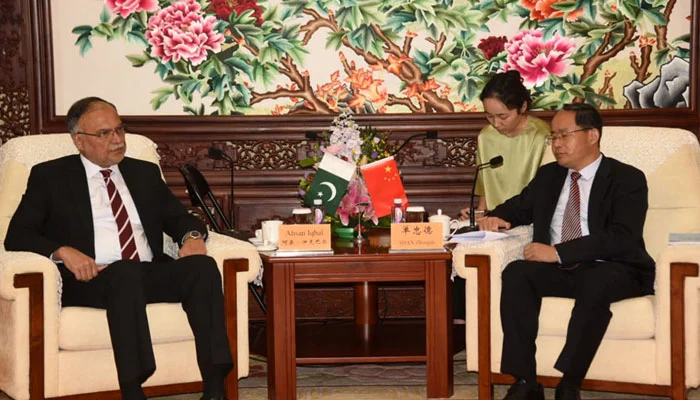
Pakistan is set to send its first astronaut to China’s Tiangong space station in 2026, according to Planning Minister Ahsan Iqbal. The mission will be carried out under the “Uraan Pakistan” initiative, which places special focus on space science and technology as a future national priority.
During his visit to Beijing, Ahsan Iqbal met with China National Space Administration (CNSA) Chairman Shan Zhongde. They discussed enhancing cooperation in space research and nuclear energy and aligning these efforts with Pakistan’s broader development goals. The minister said Pakistan had recently launched three satellites into orbit with China’s assistance, marking a milestone in bilateral technological collaboration.
He stressed that nuclear energy cooperation between China and Pakistan continues to expand, with operational projects like the K-2, K-3, and C-5 nuclear power plants. He noted that increasing climate threats make clean, reliable nuclear energy more critical than ever. Space and nuclear research, he said, must now be integrated into Pakistan’s long-term development planning.
Ahsan Iqbal highlighted the strategic importance of the China-Pakistan Economic Corridor (CPEC), which has deepened bilateral ties. He credited CPEC with removing barriers in key sectors like energy, transport, and communications. He also emphasized the importance of expanding cooperation into emerging fields such as aerospace, artificial intelligence, and green technologies.
The minister concluded that under Prime Minister Shehbaz Sharif’s leadership, Pakistan’s space program has been re-energized. Sending an astronaut into orbit will not only boost national pride but also inspire youth to pursue science and technology. The 2026 space mission will be a landmark achievement in Pakistan’s growing partnership with China and its entry into the global space community.