
I had first sensed a longing for Saddam’s dictatorial rule in Sydney from an Iraqi man who had lost his son in the 2003 war. He felt that Iraq, despite being home to many ancient civilisations, was no longer a country worth visiting, let alone living in.
The second time was in Chicago when a man from Mosul told me that Iraqis were longing for Saddam.
So I asked a friend in San Francisco who is from Iraq and he confirmed the longing. He said if you take the wrong exit off the highway in Iraq and ask for directions, you may be shot dead for belonging to the wrong sect.
Of course, this longing for the despot’s rule did not entirely surprise me, since the news media has been reporting about innocents being beheaded, stoned to death or thrown off buildings in the thousands for years now.
Iraqis are fed up with the massive lawlessness in their homeland, not to mention the lack of basic necessities such as water and electricity. They yearn for the days when they were governed by Saddam. He had put an end to sectarian strife. And as long as you did not take on the regime directly, life was normal.
The emergence of ISIS after the US victory not only ruined the lives of millions of Iraqis, it also created a platform for militant groups to project terror on a global scale that dwarfed anything that Al-Qaeda had been able to do
Even the man who had pulled down Saddam’s statue on the 9th of April, 2003 in Baghdad now regretted doing so.
Saddam blundered into war as much as the US. He underestimated the US capability to destroy him militarily. When the US attacked Iraq on the 20th of March, 2003, he imagined he would prevail.

He seemed to have forgotten that he had been kicked out of Kuwait by a US-led coalition of forces in the Gulf War of 1991. He must have also forgotten that he had earlier failed to defeat neighbouring Iran during eight gruelling years of combat.
He had begun making pronouncements about destroying half of Israel with weapons of mass destruction (WMD). If ever there was a clueless commander-in-chief in world history, it was Saddam. There was more to it than dressing up in a general’s uniform and brandishing a rifle.
John Nixon, a former CIA analyst, has published a book about Saddam that is rich with insights.
In his conversations, Nixon confirmed that Saddam’s knowledge of military affairs was rudimentary. He was prone to making bombastic pronouncements, such as fighting the ‘mother of all battles.’
After baiting the US into attacking him because he possessed WMDs, he had given his generals an impossible assignment. How were they expected to take on the world’s most advanced military in the open skies of the desert once their air force had been grounded and their radar taken out? How were they supposed to cope with the missiles which were being rained upon them from air, land, and sea?

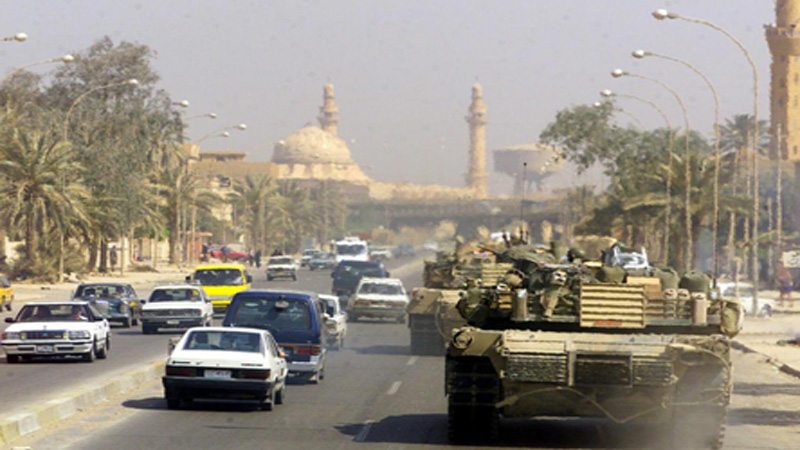
Saddam’s plans for Baghdad’s defense were rudimentary at best. US forces entered the city limits within three weeks after the initiation of hostilities. The hawks in the US military said they had put the ghost of Vietnam to rest.
On the 1st of May, a jubilant President Bush stood on deck of the USS Abraham Lincoln under a self-congratulatory banner and declared victory. Only a hundred American troops had died as of then. Today, in what has turned into Mission Impossible, the number stands at 4,500. The ghost of Vietnam lurks everywhere in Iraq.
Nixon calls the US invasion a preventable catastrophe; the US should have been willing to live with an aging and disengaged Saddam.
Iraqis have become nostalgic about life under Saddam, given the miseries that have befallen them on his removal. Nixon recounts the $3 trillion that the US spent has thus far spent on the war with nothing positive to show for it.
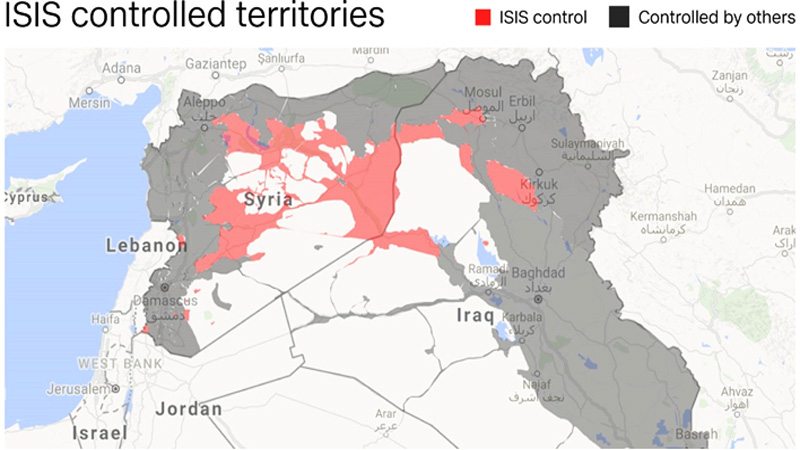
He argues that if the US had let Saddam stay in power, his army and his party apparatus would have stayed intact ensuring law and order. Removing Saddam led to the creation of ISIS. ISIS gained so much territory in Iraq and Syria because it was able to recruit trained ex-military personnel from Saddam’s armed forces who were seething with humiliation and anxious to wreak havoc on their enemy, domestic and foreign.
The US, concedes Nixon, made grievous errors in going to war in Iraq since “we knew so little about its political and sectarian arrangements.”
Saddam told Nixon that he did not admire Hitler, contrary to US propaganda. On his list were Nehru, de Gaulle, Lenin, Mao, Tito, and George Washington. He enjoyed reading Hemingway’s The Old Man and the Sea, Dostoyevsky’s Crime and Punishment and Naguib Mahfouz Cairo Trilogy.
Removing Saddam led to the creation of ISIS. Islamic State gained so much territory in Iraq and Syria because it was able to recruit trained ex-military personnel from Saddam’s armed forces who were seething with humiliation and anxious to wreak havoc on their enemy
Saddam said he was proud of “Building Iraq … from a country where people walked barefoot, illiteracy was 73 percent, small incomes, until the stage where we were so developed that the US considered us a threat. Schools everywhere, hospitals everywhere, and personal income was very high before the war with Iran. Before 1991 electricity was in every village, and we built many roads… Even Americans who entered Iraq were impressed by the development.” He conceded that invading Kuwait was a big mistake.
Talking about the future, Saddam said presciently that Americans “are going to find that it is not easy to govern Iraq…You are going to fail because you do not know the language, the history, and you do not understand the Arab mind.”
Saddam was eventually hanged in the dead of night, surreptitiously, in a basement in Baghdad. The rushed execution, which was videotaped on a smart phone and went viral, took its toll on Nixon: “For me, the final pillar justifying Operation Enduring Freedom had collapsed.”
He says that the Iraq War was a grievous mistake. By the time the US decided to attack, Saddam was busy writing novels and no longer running the government. The emergence of ISIS after the US victory not only ruined the lives of millions of Iraqis, it also created a platform for militant groups to project terror on a global scale that dwarfed anything that Al-Qaeda had been able to do.
Who won the war? The victor was Iran, says Nixon. The war proved to be a calamity for Iraq: “Iraq is now a failed state, pure and simple.” He says the debacle was caused by specious reasoning for going to war, invading with too small a force for governing Iraq, dismantling the Iraqi army and the Baathist Party, and having no plan for making the transition.
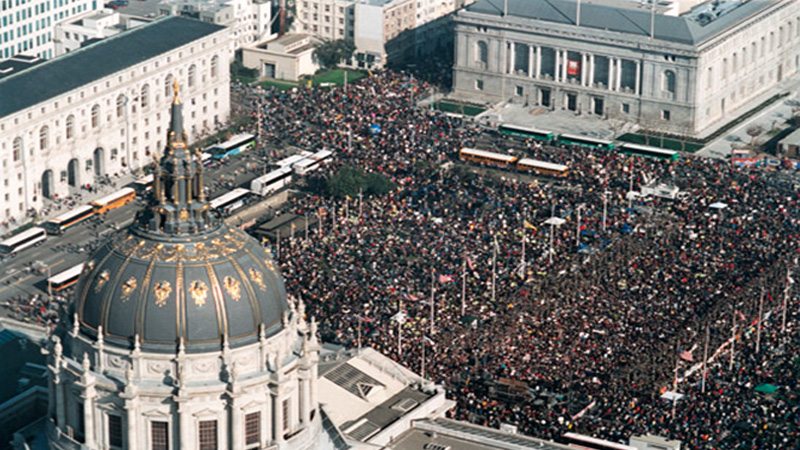
In my view, if the Bush administration had listened to the voice of the American people who were protesting the war in February, like this rally in San Francisco which drew a crowd numbering in the hundreds of thousands, the tragedy could have been avoided.
Today, no one in Iraq is going to deny that that Saddam was a cruel and vindictive leader who committed war crimes against his own people. What could be a stronger indictment of the US invasion than the fact that millions of Iraqis are now longing for the time when they were governed by such a despot?
The writer wrote Saddam Hussain as Military Commander for the Royal United Services Institution in the United Kingdom. [email protected]
Published in Daily Times, October 17th 2017.