
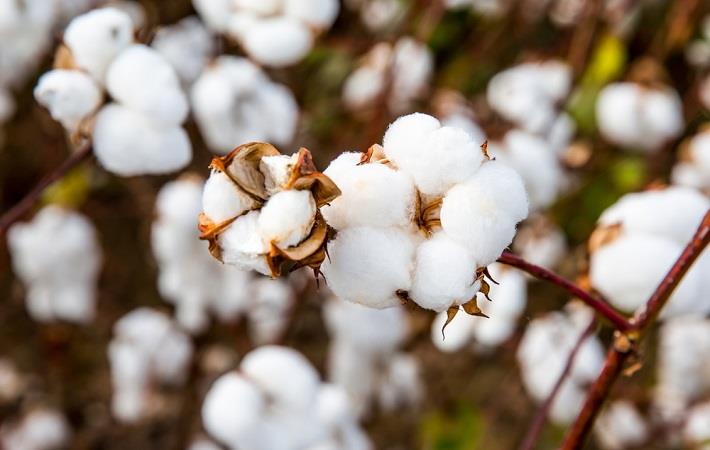
Pakistan’s cotton crop is in a melancholic state. The crop’s production has plummeted to a mere 5 million bales after producing a record 14 million bales in 2014-15, the fourth highest production in the world. Given the bleak situation, it is feared cotton areas may give in to some other instant cash crops.
Where did we go wrong?
Pakistan Cotton Ginners Association (PCGA) Chairman Dr. Jassu Mal lists a long set of reasons for this situation.
“The list of issues faced by the cotton sector is very long. Lack of support price, ineffective pesticides, absence of zoning laws, rising sugarcane production and changing weather patterns are some of the many issues that have reduced cotton output in the country over the last few years.”
As per PCGA estimates, around 60 percent of the country’s total population is directly or indirectly related to the textile industry bringing up concerns regarding mass level unemployment due to loss of output, putting the livelihoods of millions at risk.
Poor zoning laws
Due to lack of laws that would distinguish the boundaries for each crop and would force farmers to sow crops according to their geography, cotton faces immense threats due to the cultivation of other ones. Its micro-environment has been destroyed by the cultivation of rice, sugarcane, and corn in the adjacent fields.
Cultivation of water-heavy crops increases moisture in the air making the cotton crop more vulnerable to pest attacks. As a result, the area used for cotton production has reduced from 3.1 million hectares to only 2.2 million.
“There are no zoning laws in Pakistan. Anyone can sow any crop anywhere. There is no restriction on what you can sow in the fields because there are no zoning laws here,” says Mohammad Aslam, a cotton grower from Sanghar. He complains of the government’s lack of attention towards cotton producers.
Sanghar, a leading cotton producing district in Sindh, is facing the brunt of a loss of output. “Cotton sowing is done mostly by women in Sanghar while there are many ginneries where thousands of labourers are employed. Most have lost their jobs in the current season because there was significantly less output,” said Aslam.
Inefficient pesticides
“Market is flooded with poor quality pesticides. Farmers don’t know which pesticides to buy,” complains Aslam.
“Pest management is not done according to humidity and temperature. Every pest grows and survives at different humidity and temperature. Our [research] departments are totally ignorant and unable to deliver information to farmers that which pest is going to attack and increase in the coming days,” says Dr Mal.
Obsolete technology usage
Poor seeds are a huge setback in igniting crop production. Prime Minister’s Agriculture Working Group head Neil Foster has said that seed quality is not good in the country, which is causing decline in the cotton production.
The seed quality is very poor as it is not properly germinated. The field visits to various sites revealed that the cotton seed was mixture of varieties, which needed to be improved for desired production.
One-off seasonal effects
Aside from the long-standing problems plaguing the crop, record-low crop in the ongoing season was mainly due to onslaught from the monsoon rains in the southern Punjab and northern Sindh districts. In addition, the locust attacks were another bane on the crop.
“First it was the rains that flooded the fields just after cotton farmers planted seeds at the start of the season after which the locusts destroyed roughly 30pc of the cotton crop,” said Mohammad Din, a small cotton grower in the Mirpurkhas district.
The district’s output has fallen by more than 75 percent from 128,000 bales last year to just 30,000 in the ongoing season.
“We were not even warned about the incumbent locust attacks. Had we been informed; we would have taken defensive measures. I lost 50pc of my crop in just three days,” said Din.
Stakeholders are demanding from the government to announce a minimum support price immediately. In addition, introduction of latest technology (GMO) seeds and efficient ginning technologies will increase per acre yields and result in lower waste.
“There is utmost need to constitute an autonomous board which should be headed by relevant stakeholders under the direct supervision of the Prime Minister. The board should be responsible for formulating policies to boost the size of the cotton crop in the country,” demanded Dr Jassu.