• Skip to primary navigation
  • Skip to main content
  • Skip to primary sidebar
  • Skip to footer
Trending:
  • Kashmir
  • Elections
Friday, June 5, 2026

Daily Times

Your right to know

  • HOME
  • Latest
  • Iran-Israel war
  • Gilgit Baltistan Election
  • Pakistan
    • Balochistan
    • Gilgit Baltistan
    • Khyber Pakhtunkhwa
    • Punjab
    • Sindh
  • World
  • Editorials & Opinions
    • Editorials
    • Op-Eds
    • Commentary / Insight
    • Perspectives
    • Cartoons
    • Letters to the Editor
    • Featured
    • Blogs
      • Pakistan
      • World
      • Lifestyle
      • Culture
      • Sports
  • Business
  • Sports
  • E-PAPER
    • Lahore
    • Islamabad
    • Karachi

AFP

Germany’s colonial-era massacre of Namibia’s indigenous tribes

Published on: May 28, 2021 6:04 PM

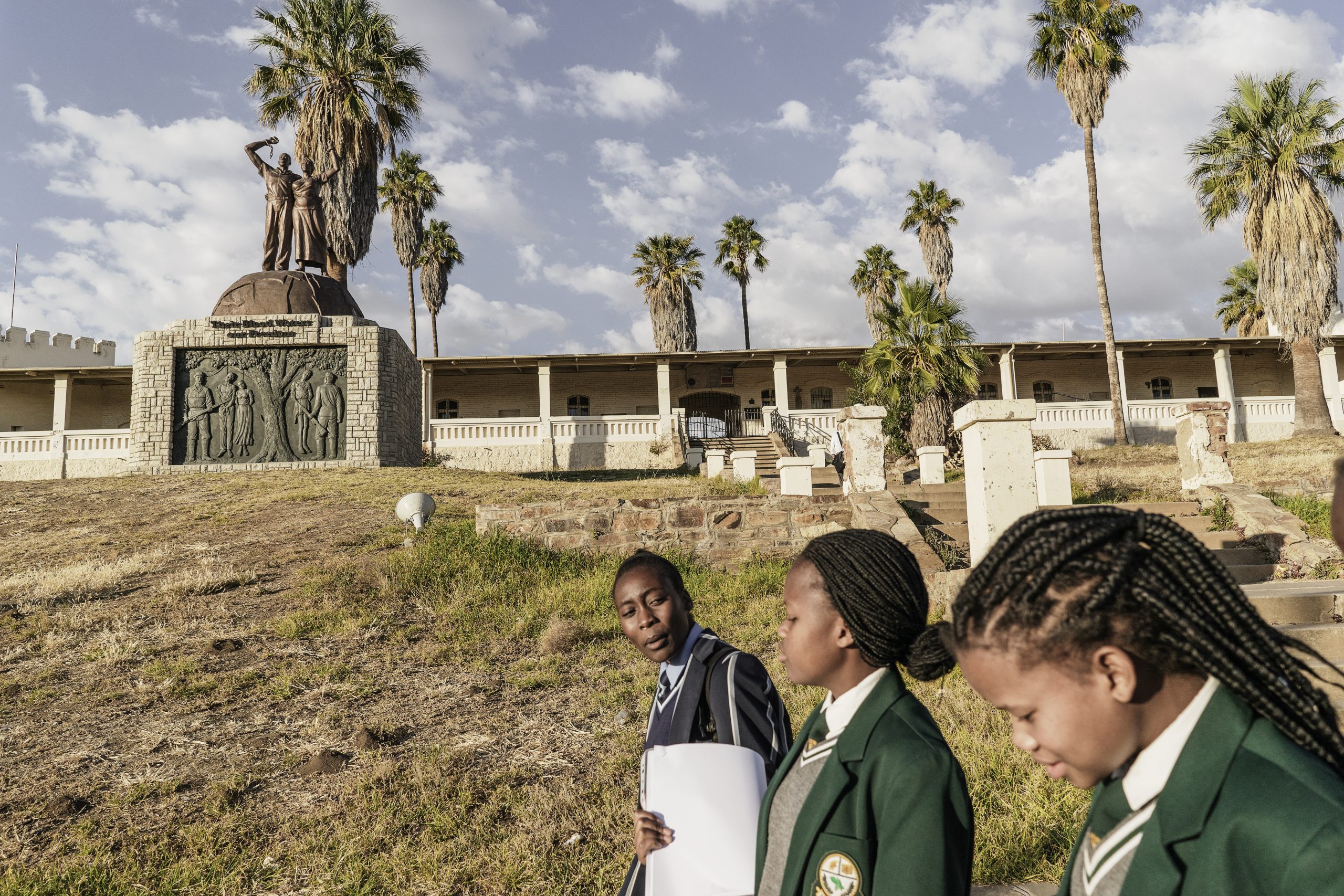
Germany on Friday took a historic step by acknowledging that the massacre of Namibia’s indigenous Herero and Nama peoples by colonial-era troops was an act of genocide.

Here is background into the event, which some historians describe as the first genocide of the 20th century:

– Rebellion –

Germany ruled what was then called German South West Africa as a colony from 1884 to 1915. Angered by German settlers stealing their women, land and cattle in their remote desert territory, the Herero tribe launched a revolt in January 1904. Its warriors killed 123 German civilians over several days. The smaller Nama tribe joined the uprising in 1905.

– Extermination order –

The Germans responded ruthlessly, defeating the Herero in a decisive battle at Waterberg, northwest of the capital city of Windhoek, on August 11, 1904. With German troops in pursuit, some 80,000 people fled towards Botswana, including women and children, across what is now called the Kalahari Desert — one of the most inhospitable environments on the planet. Only 15,000 survived.

In October 1904 German General Lothar von Trotha, under the direct command of Kaiser Wilhelm II in Berlin, signed a notorious “extermination order” against the Herero. “Within the German boundaries, every Herero, with or without a gun, with or without livestock, will be shot dead,” he said. Survivors were sent to concentration camps, decades before those in which Jews, dissidents and gays perished during the Nazi period. An estimated 60,000 Herero and 10,000 Nama people were killed from 1904 to 1908. From 40 percent at the start of the 20th century, the Herero now only make up seven percent of the Namibian population.

– Bones for ‘experiments’ –

Hundreds of Herero and Nama were beheaded after their deaths and their skulls handed to researchers in Berlin for since-discredited “scientific” experiments framed to prove the racial superiority of whites over blacks. In 1924 a German museum sold some of the bones to an American collector, who donated them to New York’s Museum of Natural History. In 2008 Namibia’s ambassador in Berlin demanded that the bones be returned, saying it was a question of reclaiming “our dignity”. Germany has since 2011 formally handed back dozens of the skulls, many of which were stored at universities and clinics.

– Recognition and reparations –

Germany long refused to take the blame for the episode, only accepting responsibility on the 100th anniversary of the massacres in 2004, when a government minister said the “atrocities… would today be called genocide”. Berlin also repeatedly refused to pay reparations to descendants of the Nama and Herero victims. Negotiations between the two countries to reach an agreement that combined an official apology and development aid began in 2015. In 2018 Germany returned bones of members of the two tribes, with junior foreign minister Michelle Muentefering asking for “forgiveness from the bottom of my heart”. On Friday, as it recognised it had committed genocide, Berlin also promised financial support worth more than one billion euros to aid projects in the African nation.

The sum will be paid over 30 years, according to sources close to the negotiations, and must primarily benefit the descendants of the Herero and Nama.

Filed Under: World Tagged With: AFP, colonial, Germany, world

Submit a Comment


Primary Sidebar


Latest News

Satirical ‘Cockroach Party’ plans protest in New Delhi

Naqvi urges joint SCO action against regional security threats

Traditional Turkish coffee seller becomes a tourist attraction in Istanbul

UP madrasa demolished amid renewed scrutiny of Muslim institutions

AJK sets July 27 date for general elections

Pakistan

Naqvi urges joint SCO action against regional security threats

AJK sets July 27 date for general elections

Two sons of tribal leader killed in Waziristan shooting

President, Prime Minister praise forces after anti-terror operations in KP

Gilgit-Baltistan election campaign reaches final stretch

More Posts from this Category

Business

Weekly inflation eases as prices of some essentials decline

Federal budget proposes funding for Karachi development projects

Gold prices recorded a modest decline across Pakistan

Oil falls on hopes of broader peace after Lebanon, Israel halt fighting

Meat exports grow by 4.16%

More Posts from this Category

World

Satirical ‘Cockroach Party’ plans protest in New Delhi

Traditional Turkish coffee seller becomes a tourist attraction in Istanbul

UP madrasa demolished amid renewed scrutiny of Muslim institutions

More Posts from this Category


Footer

Home
Lead Stories
Latest News
Editor’s Picks

Culture
Life & Style
Featured
Videos

Editorials
OP-EDS
Commentary
Advertise

Cartoons
Letters
Blogs
Privacy Policy

Contact
Company’s Financials
Investor Information
Terms & Conditions

Facebook
Twitter
Instagram
Youtube

© 2026 Daily Times. All rights reserved.

Manage Consent
To provide the best experiences, we use technologies like cookies to store and/or access device information. Consenting to these technologies will allow us to process data such as browsing behavior or unique IDs on this site. Not consenting or withdrawing consent, may adversely affect certain features and functions.
Functional Always active
The technical storage or access is strictly necessary for the legitimate purpose of enabling the use of a specific service explicitly requested by the subscriber or user, or for the sole purpose of carrying out the transmission of a communication over an electronic communications network.
Preferences
The technical storage or access is necessary for the legitimate purpose of storing preferences that are not requested by the subscriber or user.
Statistics
The technical storage or access that is used exclusively for statistical purposes. The technical storage or access that is used exclusively for anonymous statistical purposes. Without a subpoena, voluntary compliance on the part of your Internet Service Provider, or additional records from a third party, information stored or retrieved for this purpose alone cannot usually be used to identify you.
Marketing
The technical storage or access is required to create user profiles to send advertising, or to track the user on a website or across several websites for similar marketing purposes.
  • Manage options
  • Manage services
  • Manage {vendor_count} vendors
  • Read more about these purposes
View preferences
  • {title}
  • {title}
  • {title}
We use cookies to ensure that we give you the best experience on our website. If you continue to use this site we will assume that you are happy with it.