
COVID-19 is increasingly unfolding as a health and human tragedy worldwide. The impact of this deadly health crisis clearly shows that it is just not a health emergency anymore; the economic, social and environmental dimensions of the heath crisis have brought the world to its knees. As I write this piece, there are 3.8 million reported cases in some 210 countries with 264,674 confirmed deaths globally. Nearly one-third of all cases are in the US, so is the number of fatalities followed by some European countries like Spain, Italy, the UK, and France. The pandemic is now afflicting many countries in Asia and Africa transforming lives everywhere with cautionary tales, and yet with grueling uncertainty for our futures.
The pandemic has touched everyone in every corner of the world. A strange feeling often holds us as if the world has stopped! The outbreak seems to have changed our way of life everywhere and in every form – the way we live, work, interact, love and even grief for losses in these difficult times. The lockdowns, social distancing and other restrictions dictated by the unknowns imposed by the pandemic rule over our choices and preferences. Is COVID-19 going to change us forever? What is our future? Can we think of a pre-COVID-19 life we knew? Cities in many parts of the world are planning to re-open in a phased manner while the “beast” is still out there. Is there a way to going back to “normal” life in the near future? Or there would be a “new normal” as many people are calling it. What does that new normal mean?
We surely are missing our interactions with our families, friends and loved ones. A trip to coffee shop is almost a forgotten story
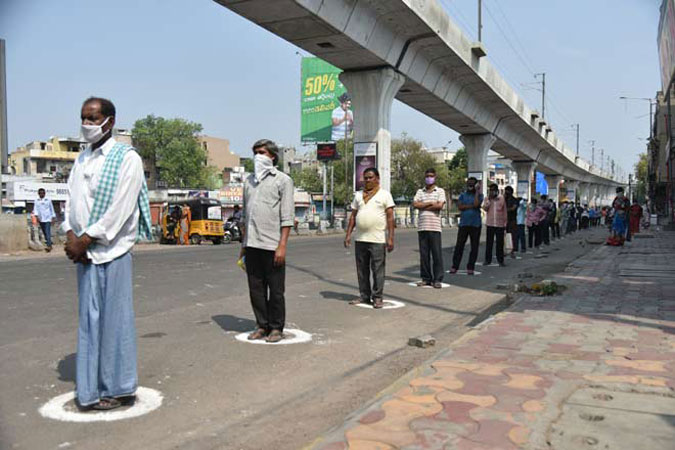
An estimated four billion people are now in some form of lockdowns for the past several weeks to reduce the threats of the terror virus and flatten the curve enabling effective management of the health crisis. However, the enforcement of the lockdowns has not been very helpful in many countries as people are indifferent to social and physical distancing. This is particularly difficult in countries that are vastly rural where community living arrangements are cultural characteristics or features among people in diverse societies in Asia and Africa. Social distancing or self-quarantine is impossible as most people live in large extended families consisting of seven to 12 members or more – often sharing a single room. In many instances, they often share same soap, towel, bed etc. and dine together with friend and relatives. So, self-isolation and distancing are challenges to traditional social life.
 The big challenge under the COVDI-19 environment is how to protect our lives and also hold on to our jobs and sources of livelihoods. This surely is a delicate task for our politicians and public health experts. According to the International Labor Organization, over 300 million jobs will be lost worldwide by mid-year. The impacts are already felt strongly in countries such as Bangladesh, Pakistan, India, Sri Lanka, Cambodia, Indonesia that are heavily dependent on earnings from garments export and migrant workers. The pandemic has laid bare the fragility of works and livelihoods for the urban poor. It is still unclear what waits for the poor garments and migrant workers in post-COVID-19 period. The lockdown also hard hit the informal economies and small businesses across the globe, particularly in the developing countries, igniting warnings from the World Food Program of pandemic of hunger.
How is the pandemic forcing us to change our lives? A group of tech experts already reported significant “shifts” beyond the “immediate fallout” of the COVID-19 outbreak. For instance, COVID-19 has resulted in the largest “work from home” experiment ever conducted before, including those by schools, colleges and universities. This will go down in history as a turning point for the way people work and learn. People will carry their learned experience from remote work back to their “new normal.” Due to travel restrictions people are increasingly turning to Skype, Bluejeans and Zoom for board meetings and for remote hiring. This will likely become the norms in the post-COVID period.
With the ongoing experience related to office and work, office managers reportedly are more comfortable with at least 25% of the staff working from home; this would mean fewer people in the office and perhaps the death of open-space office environment. For many, company “headquarters” will be located in the cloud, shifting how we protect and secure our data as we increasingly work from home. Thus, work and office will clearly change forever. Furthermore, education will be virtual as educators are now relying on Zoom, Canvas and Slack to teach and engage with students at all levels.
At the family front, faced with frightful and prolonged lockdowns, many are reportedly facing increasing impact on health and wellness with the trauma and grief caused by COVID-19. We surely are missing our interactions with our families, friends and loved ones. A trip to coffee shop is almost a forgotten story. Any celebrations such as birthdays and anniversaries for dear ones are more on Skype or a lot more on video. Travels for holidays with loved ones will likely wait for months, if not years. A meal with the family and friends is a far cry. The emerging online “ghost kitchens” are becoming vital to our communities and economy. So, we are experiencing changes in many fronts; some changes may have short-term impacts while others will likely continue in post-COVID-19 period, becoming what is called new normal.
The timeline for routine or regularity is still uncertain, and perhaps contingent upon finding a vaccine to treat COVID-19 cases, which is at least couple of years away for any mass production to end the pandemic. For now, all countries must commit to early case-finding, testing, isolating, caring for every case, and tracing every contact to rein in the pandemic. Given the vacuum in global leadership and ongoing dispute over the origin of COVID-19 – an electoral strategy by President Donald Trump to blame the pandemic on China and avoid any responsibility for belated efforts to confront the outbreak in the US – philanthropist Bill Gates called for global agreements on masks, treatments and vaccines to fight the pandemic. Thus, it is imperative that governments take the task for preventing social calamity and give highest priority to saving lives over anything else.
A key reminder from the COVID-19 experience is that we are all interconnected globally. Another positive outcome is the triumph of public health priorities, typically underfunded in all countries worldwide. We also find the rise of a sense of humility in an otherwise arrogant world. Thus, the pandemic is an unifying force and has enhanced our sense of the global village. So, our primary focus should be on health and human security for all across countries and cultures.
Mohammad Zaman, PhD, is an international development specialist and advisory professor, National Research Centre for Resettlement, Hohai University, Nanjing, China. Dr. Zaman lives in Vancouver, B.C., Canada (e-mail: [email protected])