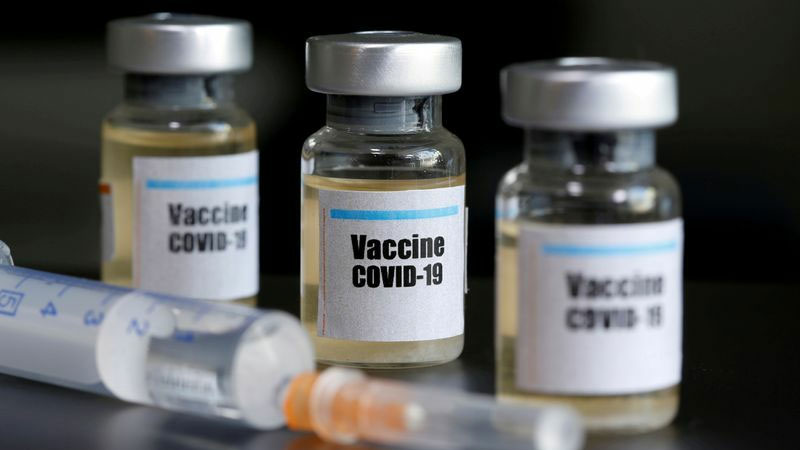
 Traditional vaccine trials take time. Scientists test a vaccine on thousands of people and wait months to see who does and doesn’t get infected. In the age of a global pandemic, some researchers are suggesting this is too slow, and to test potential COVID-19 vaccines we will have to deliberately infect healthy people.
As the global COVID-19 pandemic continues to spread, much of the world’s population remains in lockdown, subject to stringent stay-at-home orders. The frequent refrain from authorities suggests these profound social distancing behaviors could continue until scientists develop an effective vaccine.
Back in the 1950s, when a polio epidemic struck the United States, Jonas Salk led the development of a vaccine that presented one of the speediest medical science processes in human history. In the space of six years (from 1949 to 1955) the vaccine moved from “bench to bedside.”
Aside from the very real possibility we may never develop a vaccine for COVID-19, experts frequently point out a 12-to-18-month window as the best case scenario for producing a vaccine. Over 70 different potential vaccines are currently in the works, with three already having progressed to the first stage of human trials.
Generally, vaccines take years to develop. After an initial vaccine has been proposed, and animal safety tests conducted, there are three phases of human testing to move through before mass manufacturing and distribution can commence.
Phase 1 tests how safe the vaccine is in a very small cohort of healthy subjects. As well as introducing this novel compound into human bodies for the first time, researchers monitor each volunteer’s antibody production as a way to get an initial understanding of the vaccine’s efficacy.
Phase 2 in vaccine trials involves expanding the intervention to a larger cohort. During this stage the best dose is determined, and the ideal administration protocol is established. Again, efficacy at this stage is validated by measuring individual immune responses to the vaccine.
Phase 3 is the biggest stage of a vaccine study. Here, thousands of subjects are recruited and randomized into either placebo or vaccine groups.
Generally, just this last phase alone can take between six and 12 months. This is because the researchers must recruit a cohort of subjects deemed to be at a high risk of contracting whatever disease is targeted by the vaccine, and then follow those subjects for some time as they inhabit the real world.
After a period of time the researchers can then compare the amount of infections between the vaccine and placebo groups to determine what real-world efficacy the vaccine has in protecting a person from infection.
It is Phase 3 of a vaccine trial that presents the biggest challenges for researchers working to speed things up during a global pandemic. It is unethical to test the efficacy of a vaccine by deliberately exposing a subject to a virus.
However, what if there were a way to safely and ethically speed up the development of a COVID-19 vaccine?
A recent paper published in The Journal of Infectious Diseases suggests there is indeed a way to speed up vaccine development utilizing what is called a “human challenge study.”
“In a human challenge study, volunteers would receive either the vaccine or a placebo, and then would be exposed to the virus to determine the efficacy of the vaccine,” explains Peter Smith, co-author on the recent paper. “Participants are then followed for two weeks after the challenge to determine if rates of COVID-19 disease, which is usually mild in this age group, are lower in the vaccinated group than in the placebo group. Thus vaccine evaluation could be conducted in weeks rather than many months and efficacious vaccines could be made available considerably more quickly.”
Smith, with co-authors Nir Eyal and Mark Lipsitch, propose a study design for a COVID-19 vaccine human challenge trial that mitigates net risk to participants. The cohort would consist of young adults aged between 20 and 45 with no pre-existing health conditions. The cohort would also be selected from subjects living in high-transmission areas. The assumption being they are already at a higher risk of contracting the virus, so exposing them in safe medical environments could offer better protection than if they were naturally infected.
“Any volunteers in whom infection was confirmed would receive excellent care for COVID-19, including priority for any scarce life-saving resources, in state-of-the-art facilities,” the trio writes in the paper. “Throughout the trial and until infectiousness was ruled out, all participants would remain isolated in a secure and comfortable setting (eg, in settings converted from those used for influenza challenge studies).”
Eyal suggests that not only would this kind of trial strategy speed up the testing process, but current social distancing practices make traditional trial techniques somewhat unfeasible. After all, if thousands of people are given a vaccine and then sent out into a world of social distancing it would be difficult to get a quick grasp on how effective the vaccine actually is.
“… many people will try to be careful in this outbreak – self-isolate, say – and it will take a very long time until interpretable results emerge,” Eyal said recently in a Nature Q&A. “If, instead, one exposes all study participants to the pathogen, one can not only rely on far fewer volunteers but, more importantly, take a much shorter period to get results.”
However, there is debate in the research community over whether human challenge trials should be conducted in the development of a new coronavirus vaccine. Matthew Memoli, an immunologist who conducts these kinds of challenge studies for influenza, suggests too little is known about the new virus to safely conduct that kind of study. While younger people certainly on average suffer lower rates of hospitalization and death from COVID-19, the behavior of the virus is still quite unclear.
“Where you’re going to give somebody a virus on purpose, you really want to understand the disease so that you know that what you’re doing is a reasonable risk,” Memoli said recently to Science.
Northwestern University bioethicist Seema Shah has written extensively in the past on the ethics of human challenge studies. She suggests, for the benefits to outweigh the risks, there must be significant global coordination, with different teams of researchers sharing data and universal trial protocols established.
“We’re all looking for a Hail Mary, and it’s easy to see challenge studies as exciting and having a lot of promise,” Shah recently said to Vox. “But a lot of things need to fall into place to achieve that promise.” Regardless of the risks, there seems to be a large number of people willing to volunteer to be exposed to this novel coronavirus for the greater good. A team of researchers and activists recently launched a website called 1 Day Sooner, advocating for a COVID-19 vaccine human challenge trial.
Volunteers interested in taking part in a human challenge trial can register their interest through the website. At this stage the website only serves as a way to lodge one’s expression of interest in the process. So far, over 1,200 people from 44 countries have lodged an interest in exposing themselves to the novel coronavirus as part of a vaccine trial.