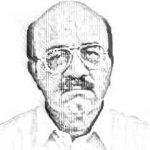
Zulfikar Ali Bhutto was a Pakistani politician who served as the ninth prime minister of Pakistan from 1973 to 1977. Prior to that, he was the fourth president of Pakistan from 1971 to 1973. He was also the founder of the Pakistan People’s Party (PPP) and served as its chairman until he was killed in 1979.
Bhutto was a strong advocate of empowering small farmers. He argued that if farmers were weak and demoralized, Pakistan’s agricultural strength would be fragile. He believed farmers would not feel psychologically safe unless the country achieved self-sufficiency in food production.
The last and crucial phase of his political career started in July 1977, after his government was overthrown in April 1979, when he was convicted for a murder in a highly controversial trial and later hanged by Zia-ul-Haq.
Elections were held on March 7, 1977. PPP won these elections but was accused by their opponent, Pakistan National Alliance, of rigging the elections. On March 14, 1977, the Alliance started a series of nationwide protests. Talks between the Alliance and the Bhutto government were held in June 1977 and an agreement was reached, but it could not be implemented.
Operation Fair Play was the code name for the military coup d’état conducted on July 5, 1977, by Pakistan Chief of Army Staff General Zia-ul-Haq. He overthrew the government of Prime Minister Zulfikar Ali Bhutto. The pretext for the coup was the failure of the ruling PPP and the opposition PNA in reaching an agreement regarding fresh elections. The code name “Fair Play” was intended to portray the coup as the benign intervention of an impartial referee to uphold respect for the rules and ensure free and fair elections.
While announcing the coup, Zia promised free and fair elections within 90 days. He arrested Z A Bhutto and his ministers, as well as other leaders of the PPP. He dissolved the National Assembly of Pakistan and all provincial assemblies; suspended the Constitution and imposed martial law. A four-member military council, which comprised of Chief of Army Staff General Zia-ul-Haq as Chief Martial Law Administrator; Joint Chiefs of Staff Committee Chairman and the Chiefs of Navy and Air force took over government operations in the country. Bhutto was persecuted on the charge of murder of political opponents.
For his supporters, Bhutto symbolises the best elements in politics: the struggle against poverty and inequality, and sacrifices for democracy and civilian supremacy
The Supreme Court of Pakistan Chief Justice Anwar ul Huq legitimatized the military response after issuing the doctrine of necessity orders. On October 24, 1977, the Supreme Court began the appeal trial against Bhutto on the charge of conspiracy to murder Nawab Muhammad Ahmed Khan Kasuri. Earlier, Lahore High Court Chief Justice Molvi Mushtaque Ahmed directly convicted Z A Bhutto and sentenced him to death. This case was not put on trial in the Session Court as required in law.
In 1977, the Supreme Court found Z A Bhutto guilty of the murder charge and awarded death punishment. Despite appeals of clemency sent by many nations, the government upheld the Supreme Court verdict and following the Supreme Court orders, Z A Bhutto was hanged on April 4, 1979. This was another black day for the country and lovers of Z A Bhutto, who still pay tributes to their leader 40 years later.
The promise of holding elections after 90 days was postponed indefinitely and hundreds of PPP workers were arrested and convicted by military courts. Human rights violations were committed, and punishment of lashes was used against PPP workers, which they faced bravely.
In 1985, General Zia announced a general election on a nonparty basis, with candidates standing as individuals rather than as representatives of a political party. PPP did not take part in nonparty elections. Later, Muhammad Khan Junejo from Sindh was made the Prime minister of Pakistan from that Assembly. In 1988, General Zia dismissed the Junejo Government on charges of corruption. In August 1988, Zia suddenly died when his aircraft crashed shortly after taking off from Bahawalpur Airport.
Pakistani investigation was unable to ascertain the cause of the crash. Bhutto family attributed it to an act of God. After his death, the Supreme Court announced that the election should take place on a party basis, rather than the non-party basis that Zia had desired.
The rule of martial law of 1977 ended with the death of President Zia ul Huq and many other key military administrators of his government. Following this event, the country returned to democracy and the PPP again came to power in 1988.
In 1999, Chief of Army Staff General Pervaiz Musharraf came in power and overthrew Prime Minister Nawaz Shareef. As a result, General Musharaf remained in government for nine years. The history of military takeovers in Pakistan is widely unacceptable in the democratic system of the country but even today, the military is the concealed partner in our democratic governments.
Zulfikar Ali Bhutto faced tough times with courage and conviction. He never budged under pressure from an oppressive military ruler.
For his supporters, Bhutto symbolises the best elements in politics: struggle against poverty and inequality as well as sacrifices for democracy and civilian supremacy.
History will never forget a personality like Zulfikar Ali Bhutto. He deserves to be called “Shaheed” for the cause of poor people, democracy and sovereignty of the country. Shaheed Bhutto remains a contentious figure in Pakistan’s history. His daughter, Benazir Bhutto, was twice elected as prime minister while his son-in-law and Benazir’s husband, Asif Ali Zardari, served as President. The nation still remembers Shaheed Z A Bhutto for his vocal voice for the supremacy of the country and advocacy for the Muslim cause.
The writer is a retired doctor of the Sindh Health Department