
This is the year of the general election. Political analysts and psephologists have already begun to forecast which party will get the largest number of parliamentary seats, and if it fails to secure a majority, the alliance partners it would seek to form a government. Men, women and even children will play this guessing game. Passionate discussion, intense arguments and mudslinging will soon become a national pastime. I confess that I too will be irresistibly sucked into it.
But for now, I will desist. Instead, I share with the reader my personal wish list of expectations from the new government, regardless of the party or coalition that forms it. Suspending personal preference, and keeping in view our collective interest, I ask what the country urgently needs in the immediate future.
I have deliberately pruned this list down to just five needs, not necessarily in order of importance.
Respect law, be humane:
First, the new government must enforce the rule of law. This means expelling arbitrariness from the exercise of power; political decisions must not be grounded in the caprice of a single individual or group. No matter how powerful or wealthy, no one must be above the law that must be applied even-handedly. There must not be one set of criminal laws for one group, and quite another for other groups. The rule of law must not be fractured by the diktat of a mob, as in recent cases of lynching. No criminal should be allowed to roam freely with impunity. Can the newly elected government for once side unambiguously with victims of collective violence rather than with perpetrators?
Regardless of the party or coalition in power, a list of what the country urgently needs in the immediate future
A related point: it is shameful enough that a civilised society discriminates on grounds of religion, language, race, gender or caste. But to target a group because of any one of these and kill, maim, oppress, or humiliate it is downright obnoxious. Will the elected government stop this abomination, do all it can to prevent any expression of hate or occurrence of violence, and build a more inclusive society?
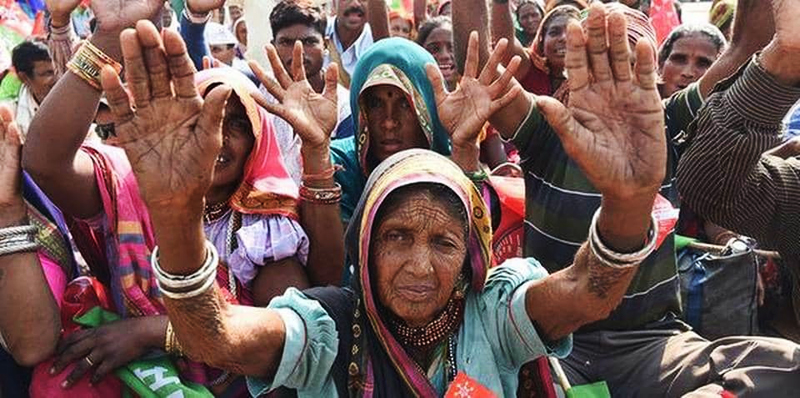
Second, a government is expected to provide relief to citizens in dire need of material help, say, to victims of cyclones and floods, or farmers in calamitous distress. Every government is also meant to undertake major structural reforms to alleviate chronic poverty. Underlying such efforts is the assumption of the impoverished as mere biological organisms who require food, nutrition, clean water and air. But a caring government must also view its beneficiaries as people who need and value friendship, family and community, who have the capacity to reflect and self-reflect, who need to tell stories about themselves and imagine new worlds. Will the new government design policies that look at human life in all its richness and complexity and support organisations that attend to the social and psychological consequences of material deprivations?
Respect institutions:
Third, our government must respect the independence of institutions. A society is sustained and nourished by collective effort. Nothing of significance is achieved by one group alone, but by apportioning tasks to different groups. As work is divided among groups with appropriate but different skill sets, each generates its own specific rules, norms and values.
Institutions are practices governed by domain-specific rules and norms. If a nation is to realise its goals, it is crucial that public institutions such as the university, the press, the judiciary, the Reserve Bank of India, the Election Commission, the police and investigative agencies remain in the hands of able, qualified personnel who possess a deep understanding of not only the point of these institutions but also how specifically each contributes to the overall functioning of society. Elected leaders must ensure that these institutions work in tandem to realise collective purpose; they must not capture and run them according to their whims.
They must facilitate their respective functions rather than arbitrarily interfere, misuse or abuse institutions. How can a government appoint someone to head an academic institution without a clue about norms of intellectual production and scholarship? How can the Sahitya Kala Parishad, Lalit Kala Akademi or the Film Institute be administered by one with little understanding of art, literature or cinema?
Listen to criticism:
Fourth, an elected government must listen to what ordinary people say about it – good or bad. It is even more duty-bound to pay heed to public-spirited intellectuals – all those whose entire social role is to assess, evaluate and criticise those who wield power or have the potential to cause systematic harm to ordinary people. Those who can’t stomach dissent or protest are unfit to rule.
Protect cultural heritage:
Finally, every society selectively remembers a part of its past to pass it on to future generations. For, if we don’t remember the past for the sake of the future, even our present is irrevocably destroyed. Indeed, no human society can grow unless future generations inherit the archives of the past. Our collective heritage is a usable past chosen to construct a collective future.
Such cultural heritage can be found in tangible objects such as monuments and intangible objects such as ideas, values and symbols. Rather than exploit this heritage for narrow political gains, we need a government committed to rescuing it from destruction, to connect traces of the past with a living present. I am told there are hundreds of thousands of old Pali and Sanskrit manuscripts decaying in different parts of the country, pedagogies of traditional learning on the verge of disappearance, oral traditions becoming extinct, hundreds of languages fading away. These are irrevocable losses. Will the new government focus on protecting this fast decaying heritage rather than spend its time in cursorily renaming streets and cities to suit its political agenda?
Published in Daily Times, January 13th 2019.