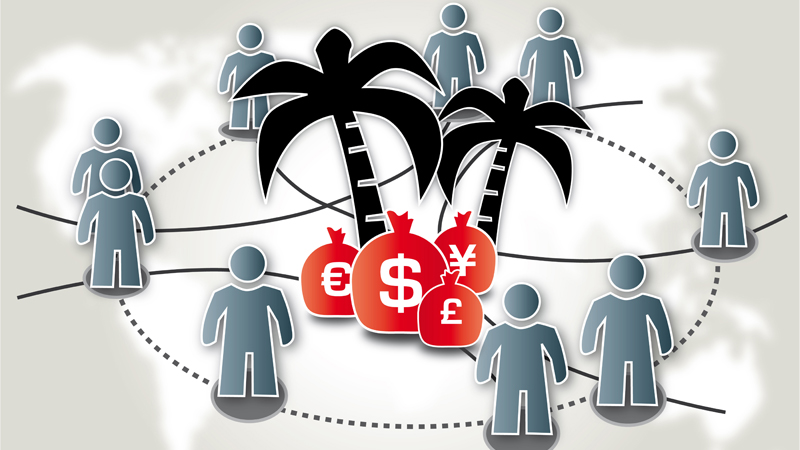
Some have called London the “Money Laundering Capital of the World” where corrupt leaders from developing nations use looted wealth from their people to buy expensive real estate and other assets. Private individuals and businesses from poor nations also park money in the west and other off-shore tax havens to hide their incomes and assets from the tax authorities in their countries of residence.
The multi-trillion dollar massive net outflow of money from the poor to the rich countries has been documented in the US-based Global Financial Integrity (GFI). This flow of capital has been described as “aid in reverse”. It has made big headlines in Pakistan and elsewhere since the release of the Panama Papers and the Paradise Leaks which revealed true owners of offshore assets held by anonymous shell companies. Bloomberg has reported that Pakistanis alone own as much as $150 billion worth of undeclared assets offshore.
Aid in Reverse:
In 2012, the latest year for which data is available, developing countries received $1.3 trillion, including all aid, investments, worker remittances, and other income from abroad. In that same year some $3.3 trillion flowed out of them. In other words, developing countries sent $2 trillion more to the rest of the world than they received, according to the data compiled by the US-based Global Financial Integrity (GFI) and the Centre for Applied Research at the Norwegian School of Economics and reported by the UK’s Guardian newspaper.
Laws in America and Europe allow the creation of anonymous shell companies. An anonymous shell company is a corporate entity that has disguised its ownership in order to operate without scrutiny from law enforcement or the public. These “phantom firms” can open bank accounts and wire money like any other company, making them a favorite tool for money launderers to hide their business and assets from authorities, according to the US-based Global Financial Integrity (GFI).
GFI estimates that developing countries have lost as much as $13.4 trillion through unrecorded capital flight since 1980. Bloomberg reports that Pakistanis own $150 billion worth of undeclared offshore assets, attributing this estimate to Syed Muhammad Shabbar Zaidi, a partner at Karachi-based A.F. Ferguson and Co. – an affiliate of PricewaterhouseCoopers LLP.
Impact on Economic Growth:
There’s a direct relationship between investment and GDP. Flight of capital reduces domestic investment and depresses economic growth in poor countries. Lower tax revenues also impact spending on education, healthcare and infrastructure, resulting in poor socioeconomic indicators.
In Pakistan, for example, it takes investment of about 4% of GDP to grow the economy by 1%. Lower levels of investments in the country have kept its GDP growth below par relative to the rest of South Asia. Any reduction in the outflow of capital to offshore tax havens will help boost economic growth in Pakistan to close the gap with its neighbours, particularly Bangladesh and India whose economies are both growing 1-2% faster than Pakistan’s.
Panama Papers Leak:
There is an entire industry made up of lawyers and accountants that offers its services to help hide illicit wealth. Mossack Fonseca, the law firm that made headlines with “Panama Leaks“, is just one example of companies in this industry.
Mossack Fonseca’s 11.5 million leaked internal files contained information on more than 214,000 offshore entities tied to 12 current or former heads of state, 140 politicians, including Pakistan’s now ex Prime Minister Nawaz Sharif’s family. Icelandic Prime Minister resigned voluntarily and Pakistani Prime Minister was forced out by the country’s Supreme Court.
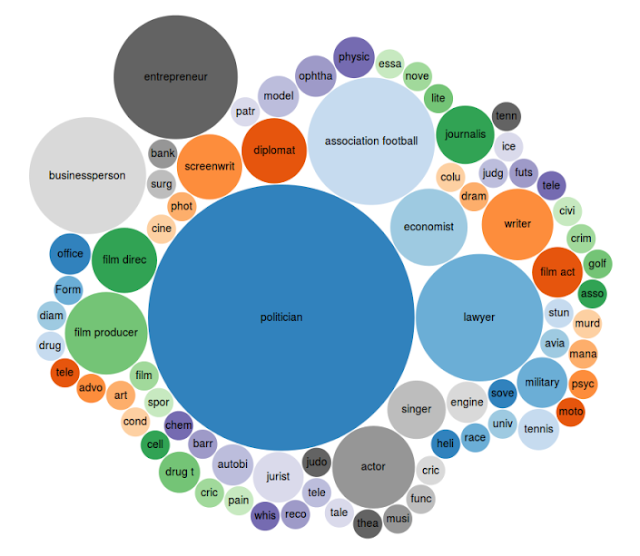
The Panama list included showbiz and sports celebrities, lawyers, entrepreneurs, businessmen, journalists and other professionals but it was heavily dominated by politicians.
War on Tax Evasion and Money Laundering:
Organization of Economic Cooperation and Development (OECD), the club of world’s rich industrialized nations, and some of its member states appear to be taking some steps to stem the global rising tide of tax evasion and money laundering.
OECD is promoting enhanced cooperation between tax authorities through AEOI (Automatic Exchange Of Information) to bring national tax administrations in participating countries in line with the globalized economy.
Several countries, including the United Kingdom, are working on legislation forcing the disclosure of the ultimate beneficial owners of the properties held by anonymous shell companies. The new laws will establish publicly accessible registry of beneficial owners of real estate.
Tax Amnesty Schemes:
Developing countries are offering tax amnesty schemes to bring back the off-shore wealth to help their economies. Argentina and Indonesia did this recently. Indonesia’s tax amnesty in 2017 saw $330 billion worth of assets declared. Pakistan is in trying to do the same to help build its dollar reserves and expand its tax base.
Under Pakistan’s announced tax amnesty, Pakistani citizens can declare previously undeclared foreign assets and still keep them abroad by paying 5% penalty for liquid assets and 3% penalty for real estate. Alternatively, they can declare and repatriate liquid assets to Pakistan by paying just 2% penalty.
The assets covered by the amnesty include “real estate, mortgaged assets, stock and shares, bank accounts, bullion, cash, jewels, paintings, accounts and loan receivables, beneficial ownership or beneficial interests or contribution in offshore entities and trusts.”