The Afghan government has expressed the willingness to recognize Taliban as a political entity at a recently held international conference in Kabul. The Afghan government has also offered opening up of a political office for the Taliban in Kabul (or any other cities), issuing passports to Taliban and release of Taliban prisoners. In response, Kabul wants rule of law and ceasefire.
The Taliban will also have to recognize the Afghan government. The Kabul conference was attended by delegates from more than 20 countries, including Pakistan, China, the US, Germany and India. The Afghan government at the international conference has conveyed it’s willingness to talk with Taliban.
The present state of affairs in Afghanistan having a democratic setup and an Afghan National Army can be seen as development from the past. However, when it comes to the security and control over the Afghan territory, the situation is still under chaos.
The war in Afghanistan has proved to be the US’s lengthiest and costliest (US spending $3.8 billion in security assistance in Afghanistan annually) to date. Presently, there are about 8,400 US troops stationed in Afghanistan.
But to operationalise the energy projects, the regional players need to adopt a coherent policy towards Afghanistan, aiming at ensuring peace in the country. Contrarily, the stakeholder’s divergent strategic outlook, and tactics to demean one another will put the peace talks on the back burner; the result being an unstable Afghanistan
As per the Special Inspector General for Afghanistan Reconstruction (SIGAR) report, ‘government of Afghanistan has uncontested control over only 57 percent of its territory.’ While the provinces such as Helmand, Kunduz and Uruzgan, are contested, and a third of the population, around 9.2 million Afghans, live in contested districts. The Taliban control over the Afghan territory is indicative of their political clout. To make Taliban a part of the peace process will offer the faction to become part of the democratic structure.
It will provide the faction an opportunity to exercise control within the parameters of law. It is still early to speculate the likely outcome, and the Taliban response to the political overture. However, the Kabul talks have made it clear that Taliban are a political force and their presence cannot be denied. So far the Taliban have not responded to the political offer, but the faction has shown interest for direct talks with the US. Meanwhile, the Afghan government’s political offers to the Taliban, what impact it can have on the peace process is yet to be seen.
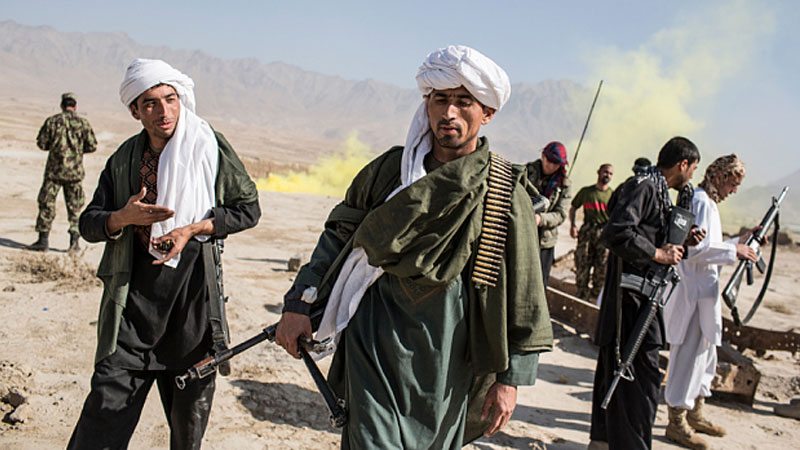
The Taliban have called the Afghan government a puppet of the US. In this backdrop, the diplomatic efforts, and the role of regional and global players to persuade Taliban to talks will be a test. Meanwhile, the past practices of tackling the extremist factions coercively did lead to marginalisation of terrorist outfits but the collateral damage inflicted during the war provoked extremist tendencies. This, in turn, was exploited by the terrorist groups. The Taliban statement over coercive approach: ‘military strategies which have repeatedly been tested in Afghanistan over the past 17 years will only intensify and prolong the war.’
The Afghan government’s softening of stance towards Taliban and opening up for talks is a shift from the past coercive attempts. It appears that the realization to employ political means has gained strength, the option to hold dialogue with Taliban is the experience earned over the past years of war. President Ghani has also showed readiness to start dialogue with Pakistan.
Principal Deputy Assistant Secretary of State for South and Central Asia Alice Wells during the Kabul conference said: “Pakistan has a very important role to play in the Afghan peace process… to facilitate talks and to take actions that will put pressure on and encourage the Taliban to move forward towards a politically negotiated settlement.” Such statements from the US officials, other than the usual mantra to do more, and criticism over Pakistan’s counter terrorism efforts indicate that Pakistan holds significance in the regional context.
The situation in Afghanistan cannot be seen in isolation, as the instability has regional ramifications, thereby, a regional approach needs to be enforced. The Taliban coming to terms with Afghan government, what kind of setup will be in place.
What will be the status of women? The Taliban had banned the girl’s education (during 1995-2001). Besides this, what about President Ghani’s call to Pakistan for support in dealing with Taliban? Will Islamabad’s concerns over the use of Afghan soil against Pakistan be ever addressed? In addition, to ensure that force will not be employed, how the Afghan government will react to the US led ‘campaign of airstrikes’ to push the insurgents to negotiations.
These are some of the thorny questions that need deliberation by all the stakeholders. The regional connectivity projects, like TAPI (Turkmenistan-Afghanistan-Pakistan-India) have set the stage for peace and progress. But to operationalise the energy projects, the regional players need to adopt a coherent policy towards Afghanistan, aiming at ensuring peace in the country. Contrarily, the stakeholders divergent strategic outlook, and tactics to demean one another will put the peace talks in back burner; the result being an unstable Afghanistan.
The writer is Researcher in Islamabad Policy Research Institute (IPRI)
Published in Daily Times, March 11th 2018.