I heard about a recently concluded Forensic seminar at the Punjab Judicial Academy which trains judges. It made me think about the state of Forensic science in Pakistan; this has come a long way despite significant hurdles, but the journey has not been easy or will be in the future. We have generally paid lip service to Forensics traditionally, but that now seems to be changing, spurred no doubt on by the cases such as Kasur which highlight the utility of Forensics as an investigative tool which cannot be ignored. However, much more needs to be done.
An authoritative report by United states Institute of Peace had documented that many, if not most, cases in Pakistan have tended to pay lip service to forensic evidence. Forensic reports, as traditionally considered, were not much more than serological, chemical and postmortem reports, presented as a corollary to eyewitnesses evidence at most. To understand the levels of forensic utilisation, the example of ‘blood stained earth’ is illustrative. Police officers have traditionally been making parcels of this for a long time in cases of murder, when it was required to distinguish between animal and human blood. This is a carryover from pre-colonial times, when litigants in rural areas ‘prepared’ false cases by dousing an area with blood of animals. This was to falsely portray a crime occurrence of murder or injury to falsely implicate rivals, and needed to be distinguished from a real crime scene, which was done by sending this blood stained earth to the laboratory.
Another type of testing, ABO blood typing, has traditionally also been done in murder cases, even though this typing technique has become redundant all over the world as a forensic tool. However, investigators in Pakistan scrupulously make parcels of blood stained earth, even in terrorism cases, and send these to chemical examiners who only give one verdict; whether the blood in question is of an animal or human.
This is notwithstanding the fact that such terrorism crime scenes have multiple blood stained bodies lying around, with many horrific scenes of blood of victims splashed all over the scene picked up by media. In such cases it is apparent that victims are all human, but Police will still make parcels of blood stained earth and dispatch to laboratories, to get a verdict on whether the blood was human or not. These reports are then scrupulously presented in courts, the utility of which, especially in terrorism, does not make sense.
There are signs that the Kasur incident has made us realise that that ocular evidence may not be good enough. The judiciary seems to understand this as well, evidenced by a seminar held recently. Let us all hope, for the good of the criminal justice system that this trend catches on
These ‘forensic’ devices could easily be termed as ‘exercise of habit’, since their utility is debatable, but investigators will still keep going through these motions. The system does not actively discourage this, so these redundant practices are self-perpetuating. These redundant quests for reports clog up the system at the expense of many serious cases, not to mention the delays caused in proceedings.
Things have changed; we have faced the brunt of terrorism, forcing Police to divert from crime to countering terrorism. For a long time there have been disconnects between the severity of attacks Pakistan has been facing, and the low capacity of the investigators struggling to cope with forensic evidentiary value of the same. Law enforcement has been gradually evolving to counter this challenge, but traditionally, forensic capability regarding terrorist attacks utilising high explosives has been low. As being illustrative, there are cases in which local bomb disposal ‘experts’ have demonstrated the material under consideration to be explosive in nature, by ‘setting a quantity of it on fire’. Even more surprisingly, this opinion was accepted in court or at least not actively discouraged.
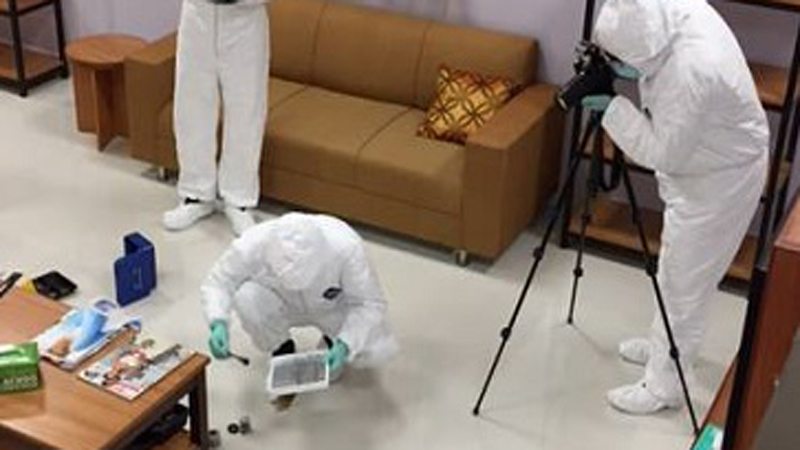
Despite the limited forensic capability, there is a certain minimum onus on prosecution to prove their recovery items by forensics. This implies showing that a certain object, for instance, is a live hand grenade or the ‘powder’ seized is actually explosive in nature. These basic tenets are also not complied with in cases, but where attempted properly, and chain of evidence is consistent, convictions have resulted. However, as per routine in many cases, investigators don’t seem to comprehend that they have to ‘forensicate’ a bombing crime scene, and thus gross irregularities occur. These could be as basic as explosive material or traces thereof not recovered as evidence in bomb explosion cases, which precludes any forensic examination of the same.
Other types of modern evidence are also given little importance. DNA evidence in particular seems to have a hard run in Pakistan, coming up against entrenched socio-cultural and religious views. This was highlighted in a rape trial, when a criminal court rejected a DNA report incriminating suspects, while acquitting them based on eyewitnesses evidence.
This is the traditional mindset of the courts and their worldview on the supremacy of eyewitness evidence, even to the exclusion of DNA evidence. Even though the trends seem to be changing, notably due to the state of art forensic laboratory in Punjab much needs to be done.
DNA evidence has gradually been gaining traction in Pakistan since then, but a lot more needs to be done. No comprehensive database of DNA currently exists in Pakistan to match samples from terrorism crime scenes against stored evidence. Also, results from DNA evidence takes time to mature, and the courts are sometimes hasty in asking for these. Reports required by far flung areas which don’t have developed forensic capability reach courts even later. Most of the DNA evidence now seems to reach an island of excellence in Pakistan’s otherwise barren forensic landscape, the Punjab forensic science authority.
Set up in Lahore, Punjab, this laboratory, one of the best in Asia, has become the gold standard of forensic examination in Pakistan. Meticulously maintained facilities with state of the art equipment, foreign trained scientists, and proper accreditation and control procedures in place, the PFSA is indeed laudable. However, there are signs that it is already getting overburdened.
As the USIP report highlights, undercurrents of capacity gaps of the police in handling modern evidence currently run deeper than even one of the best laboratories is the world, the PFSA, can cure. Police are innately skeptical about the usage of modern devices and methods of investigation, premised in no small part by the widespread usage of ocular evidence. Since the courts ostensibly seem to be preoccupied with eyewitness evidence, the signal that the law enforcement presumably gets is that such evidence reigns supreme, to the exclusion of any other type of evidence.
Policing has never been reorganised on modern lines, despite years of lip service being paid to it, and Police remain largely oblivious to the need for such. Even traditionally followed practices by police are not up to the mark. Chain of custody of forensic evidence seized is not satisfactory, with evidence either not being sealed properly or kept with police pending dispatch. Then there are instances when the evidence is actually lost in police custody. A disconnect clearly appears between the undoubtedly world class ability of the PFSA to analyse evidence, and the comparably much poorer capacity of the Police to process such evidence. Unless both processes are synchronised, the Police may keep sending irrelevant evidence without regard to maintaining credible evidentiary chains for such, or not send evidence to the laboratory at all. Without properly maintained ‘throughput’, even the PFSA might start struggling to retain its standards.
There are signs that Kasur incident has made us realise that that ocular evidence may not be good enough. The judiciary seems to be taking this on board too, evidenced by the seminar held recently. Let us all hope for the good of the criminal justice system that this trend catches on.
The writer is a retired inspector general of police and ex head of Pakistan’s national counter terrorism authority
Published in Daily Times, February 18th 2018.