
Imran Khan and Sheikh Rasheed have received their fair share of flak in the wake of their unfortunate remarks cursing an important organ of the state, i.e., the Parliament, by the lawmakers cutting across party affiliations, totally oblivious of the government and opposition divide on display in Lahore.
There have been strong jibes, bordering to the extent of invectives, hurled at these opposition leaders and other PTI lawmakers who followed the suit that this is an indirect insult to the citizens of Pakistan who vote the lawmakers into the assemblies. Mr Khan, on his part, has been as steadfast and tenacious as ever, further enraging and infuriating the parliamentarians. Recently, the prime minister has also thrown down gauntlet to ‘those cursing the parliament’ to move a no-trust motion in the National Assembly, dissolve provincial assemblies and face decision of the masses in the general elections.
A weird sense of déjà vu for a true constitutionalist indeed! The ruling party, led by the former PM himself, has left no stone unturned at ridiculing and insulting another very important organ of the state, i.e., the judiciary, ever since the July 28 verdict disqualifying Nawaz Sharif.
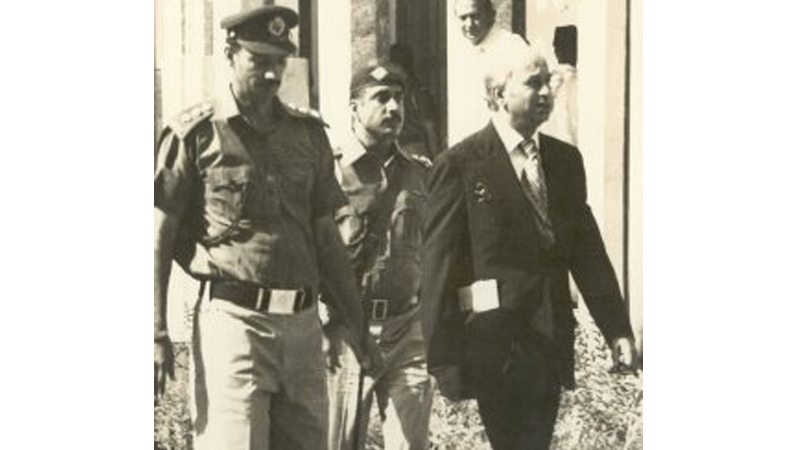
In curbing its instinct, the judiciary may have been mindful of its dark history, including providing much-needed legitimacy to Pakistan’s frequent military dictatorships and the judicial murder of ex-Prime Minister Zulfikar Ali Bhutto
“Five people cannot disqualify a leader elected by millions”, Mr Sharif has been contemptuously stating ever since. One may say that by this logic, the recently defeated cricket team of Pakistan — by a similar margin of 5-0, as was in the July 28 decision against Nawaz Sharif, should also not accept their defeat and instead pronounce to go the general public. Nevertheless, the counter-narrative of being ousted on ‘Iqama’ and not on ‘panama’ is nothing but an indirect slur at the judges. Such is the potency of this anti-judiciary campaign that political analysts are now prophesying PML-N’s victory in the upcoming elections.
However, much to the chagrin of everyone, no reaction has been forthcoming from the judiciary in the shape of the once-rampant contempt of court notices, except indirectly through its subsequent judgments and occasionally through ill-advised statements by the Chief Justice of Pakistan in the public gatherings.
This has nothing but emboldened Mr Sharif and co, including his twitter-savvy daughter, to indulge in further propaganda against the judiciary. The chief justice, on the other hand, has chosen the path of taking actions against the maladministration of the government, threatening, at one stage, to stay the development projects like Orange Line Train service by the Punjab government, if it did not divert its attention and resources to the uplifting of the social sector.
Not to forget the lack of professionalism, total apathy and sheer indecisiveness of the government/executive itself, which constitutes the third organ of the state, and the strong reaction of the general public in the shape of violent public protests aimed at securing their fundamental rights of life, education, health, among other sectors.
The recent incidents of murder-cum-rape across the country, including that of a seven-year old girl in Kasur and the extra-judicial murder of Naqeeb Mahsud are only a tip of the iceberg of inaction and procrastination on part of the executive. However, when the public agitates against this high handedness, all they get is further brutality by the government, in shape of incidents like killing of innocent protesters in the aftermath of the Kasur incident.
One may ask that whether one organ of the state is more sacred than the other? Double standards at their peak, by the people propounding to be democrats and having taken an oath to uphold and protect the Constitution, which gives equal sanctity to all organs of the state, i.e., parliament, judiciary and executive. What more, one must acknowledge different responses from various organs of the state, when the people affected by them decide to make their voices heard.
In curbing its instinct, the judiciary may have been mindful of its dark annals of history, including providing the much-needed legitimacy to the frequent bouts of martial laws in Pakistan and the judicial murder of ex-Prime Minister Zulfikar Ali Bhutto, apart from its total lack of interest in providing the elusive justice to the poor litigants. However, in showing their belligerence, the Parliament/politicians and the government have totally forgotten their not-so positive role ever since the establishment of Pakistan, including the help they provided to civilianise the military coups, now-proven plots to oust the opposing political parties from power, and above all, their inaction in performing their core functions of lawmaking and governance.
One may also like to briefly appraise the performance of the self-proclaimed fourth organ of the state, i.e., media, in this regard, and its relationship with other organs and the general public. The mushroom growth of the electronic media in last decade and a half and the lack of accountability thereof has led to the media divide of pro and anti-government, not so prominent in the pre-electronic media era.
The government, on its part, encourages its ‘media partners’ and chooses the heads of the media regulatory body amongst them; and discourages and disparages the other section of the media through, inter alia, the control it administers over the distribution of the advertisement revenues. The people, depending on their political affiliation, also prefer the respective section of the media. Amidst this divisive culture, the only sufferer is journalism and its true spirit of acting as the mirror and the watch-dog of the society.
 All in all, there is no cavil to the proposition that the state of Pakistan, despite its geographical position and the abundance of natural and human resources, is on the decline. The reason being that the different organs of the state, instead of focusing on their performance, have chosen to pass the buck to other organs, resulting in a culture of blame-game and finger pointing — the government blames the judiciary and the opposition for all that ails Pakistan.
The opposition points towards the government and the parliament; whist the judiciary considers the government responsible for the lack of a just and even-handed society. Therefore, the need of the hour is to ignite the flames of constitutionalism, democracy and institutionalisation in the respective organs of the state themselves, which can only happen if, for starters, the people of Pakistan learn to utilise the power of their vote, in order to bring the right leadership into power, based only on its credentials and ability to deliver.
The writer is a constitutional lawyer based in Lahore; and can be reached at [email protected] and @naumanqaiser on twitter
Published in Daily Times, January 28th 2018.