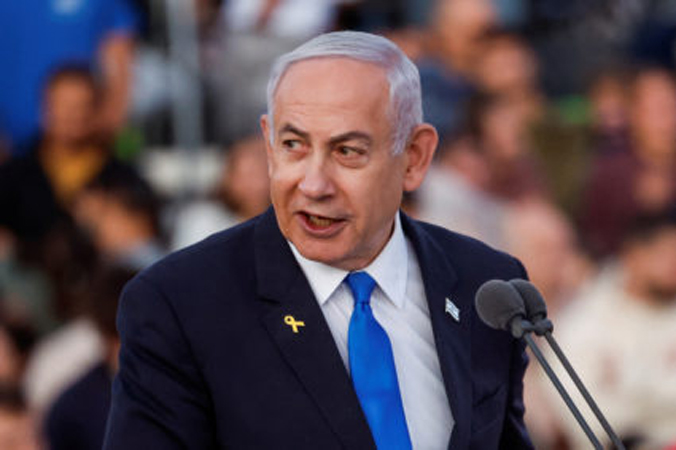
 Israeli Prime Minister Benjamin Netanyahu said on Sunday he had ordered troops to move further into Lebanon in the battle against Hezbollah, despite a ceasefire announced more than six weeks ago. The fighting in Lebanon has been the broadest spillover of the Iran war, displacing more than 1.2 million Lebanese through Israeli strikes and evacuation orders since March 2, when Hezbollah began firing rockets and drones into Israel to back its ally Iran.
The incursion has so far killed more than 3,370 people, according to the Lebanese government. Israel says 24 of its soldiers and four civilians have been killed over the same period. Tens of thousands of Israelis ?in the country’s north have also been displaced by Hezbollah rockets and drones.
In the latest advance, Israeli troops seized the 900-year-old Beaufort Castle and a strategic ridge in southern Lebanon, the military said, a day after one of the heaviest days of Hezbollah fire toward northern Israel since the April ceasefire, prompting school closures and restrictions.
“I instructed the (military) to expand its ground manoeuvre in Lebanon,” Netanyahu said in a statement.
Israeli troops and Hezbollah have continued to trade fire since the mid-April ceasefire, with Hezbollah resorting to the use of cheap, easy-to-assemble kamikaze drones that are hard for air defences to thwart and that have killed several Israeli troops in southern Lebanon.
The Israeli military already controlled territory up to the Litani River in Lebanon, but troops are now pushing to the Zaharani River, around 10 km north. Netanyahu said his aim is to “deepen and expand our grip on the places that were under Hezbollah’s control”.
Naftali Bennett, a key challenger to ?Netanyahu in an upcoming election, said he seeks stronger action in Lebanon, including hitting the suburbs of Beirut. The military on Sunday issued a fresh evacuation warning for Southern Lebanon residents south of the Zaharani. The advance into Beaufort Castle has granted ?Israeli troops a vantage point over much of southern Lebanon and northern Israel, from which attacks have been launched towards Israeli residential areas. It was the first time Israel had held the site since May 2000, when Israel withdrew its troops from southern Lebanon after 18 years.
Meanwhile, France’s foreign minister described Israel’s military operations in Lebanon as “extremely concerning” and said Paris had requested an emergency meeting of the United Nations Security Council (UNSC) to address the situation. Jean-Noel Barrot told BFMTV that he had “requested an emergency meeting of the UNSC” focused on Israeli military operations in Lebanon. “Nothing can justify the prolongation of military operations in Lebanon and its increasingly deep occupation of Lebanese territory,” Barrot said, calling the situation “extremely concerning.” He added that Israel’s actions amounted to “a major mistake.”
The comments reflect growing French concern over escalating regional tensions as Israel continues military activity beyond its border with Lebanon. Barrot also urged Iran and the United States to reach an agreement to reduce tensions, saying “the situation is unsustainable.”
“The consequences of the blockage of the Strait of Hormuz are felt every day, at the gas pump, and more generally through its impact on the global economy and the French economy,” he said.
The French minister added that plans for a mission aimed at safeguarding freedom of navigation through the Strait of Hormuz remain under consideration, with planning work advanced and discussions ongoing with both Tehran and Washington.