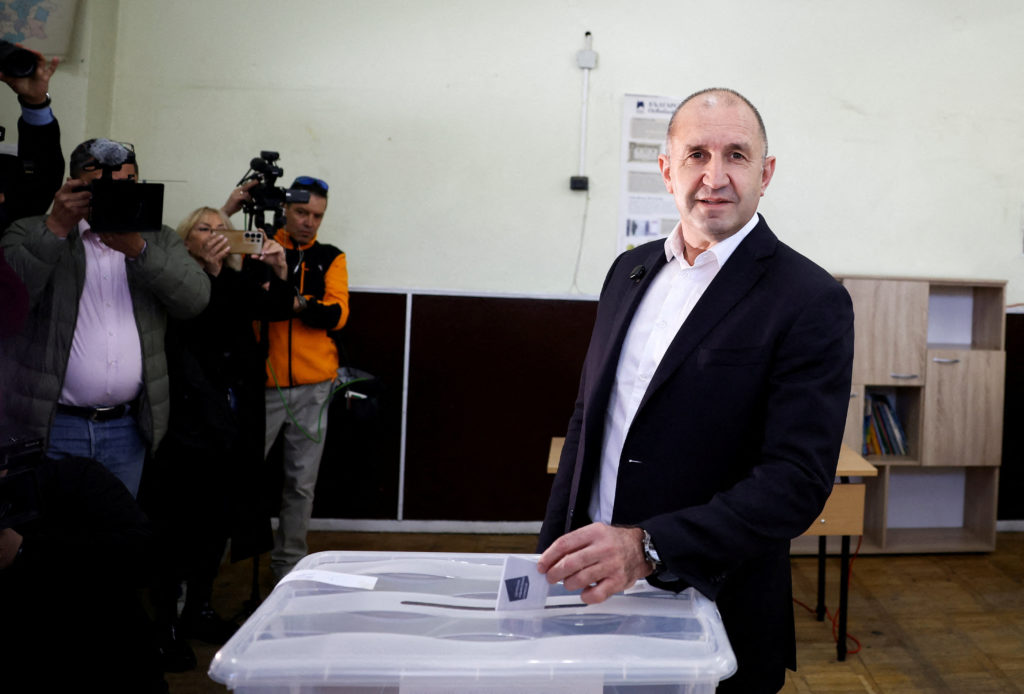
An exit poll in Bulgaria suggests that former president Rumen Radev is set to win the country’s parliamentary election, marking a potential shift in its political landscape.
Read More: Bulgaria votes again in a bid to end political deadlock
According to the survey conducted by Trend research group, Radev’s center-left Progressive Bulgaria coalition secured 39.2% of the vote, significantly ahead of the center-right GERB party led by Boyko Borissov, which is projected to receive 15.1%.
🗳️ Bulgarie: la coalition démocratique de l’ex-président Roumen Radev est arrivée largement en tête des législatives dimanche avec 38% des voix selon des sondages publiés à la sortie des urnes.
➡️ https://t.co/jr7TnzmLA5 pic.twitter.com/pCR1FQClSr— Agence France-Presse (@afpfr) April 19, 2026
Despite the strong lead, analysts note that Radev may still face challenges in forming a government, as the results are unlikely to give him an outright majority. Coalition-building is expected to be necessary, with multiple parties projected to enter parliament.
The exit poll also indicated a voter turnout of 43.4%, with at least six parties surpassing the 4% threshold required for parliamentary representation. This points to a fragmented legislature, continuing a pattern of political instability in the Balkan nation.
Sunday’s vote marks Bulgaria’s eighth election in five years, reflecting a prolonged political deadlock. The latest snap election was triggered by the resignation of a conservative-led government following widespread protests last December. Demonstrators, many of them young citizens, called for reforms to tackle corruption and strengthen judicial independence.
Radev, a former air force commander, stepped down earlier this year from the presidency to contest the election as a candidate for prime minister. He has campaigned on promises to overhaul governance and dismantle what he describes as entrenched corruption and oligarchic influence.
If confirmed by official results, his victory could signal a shift toward a more left-leaning political direction, though his perceived pro-Russian stance and Eurosceptic views remain subjects of debate among voters.
Read More: Bulgaria’s largest opposition party votes to quit parliament
Observers say the coming days will be crucial as negotiations begin to determine whether a stable governing coalition can be formed.