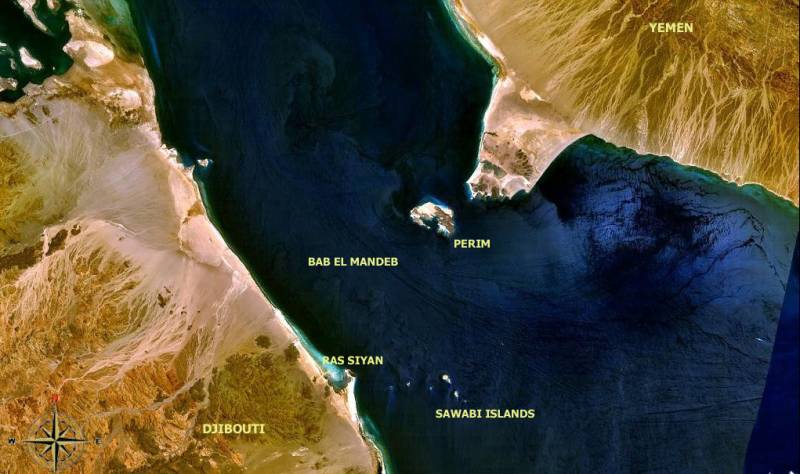
Yemen’s Houthi movement issued a strong warning that it may close the Bab al-Mandeb Strait if political pressures and ongoing conflicts continue, raising global concerns over maritime security and trade routes. The warning came from the deputy foreign minister of the Houthi administration in Sanaa, who linked the threat to wider regional tensions involving the United States. He stated that continued obstruction of peace efforts could push the group toward blocking one of the world’s most critical shipping passages. The statement intensified fears as global powers already monitor disruptions across key Middle East waterways.
Read more : Houthis escalate Iran war as US Marines deploy regionally
The official, Hussein al-Ezzi, posted a direct message on social media platform X, claiming that if Sanaa decides closure, no force would be able to reopen the strategic waterway. He urged the United States and its allies to change their policies and respect what he described as the rights of the Yemeni population. His remarks reflected growing frustration over stalled peace talks and ongoing military and political pressure in the region. Meanwhile, international observers view such statements as escalation amid already fragile maritime stability.
Bab al-Mandeb Strait serves as a vital link between the Red Sea and the Gulf of Aden, making it essential for global shipping routes toward the Suez Canal. The narrow waterway spans roughly 29 kilometers at its tightest point, forcing vessels to pass through two controlled shipping lanes. Any disruption in this passage could significantly affect global trade, energy transport, and supply chains across multiple continents. Therefore, even verbal threats from armed groups raise alarm among shipping companies and governments worldwide.
Read more : Houthis join war by striking Israel as attacks on Iran continue
The strait already holds strategic importance due to its role in connecting Europe, Asia, and Africa through one of the busiest maritime corridors. Analysts warn that instability in this region could increase shipping costs, delay oil transport, and create wider economic pressure on global markets. In recent months, tensions in nearby waters have already led to rerouted shipping and heightened naval presence from multiple countries. As a result, security agencies continue to monitor the area closely for any potential escalation.
At the same time, diplomatic efforts remain limited as conflicting parties struggle to find common ground for long-term stability in Yemen and surrounding regions. The Houthis continue to link maritime threats with political demands, while international actors push for de-escalation and negotiation. However, lack of progress in talks keeps the situation uncertain and vulnerable to sudden shifts. Consequently, the Bab al-Mandeb Strait remains a potential flashpoint with global implications if tensions further intensify.