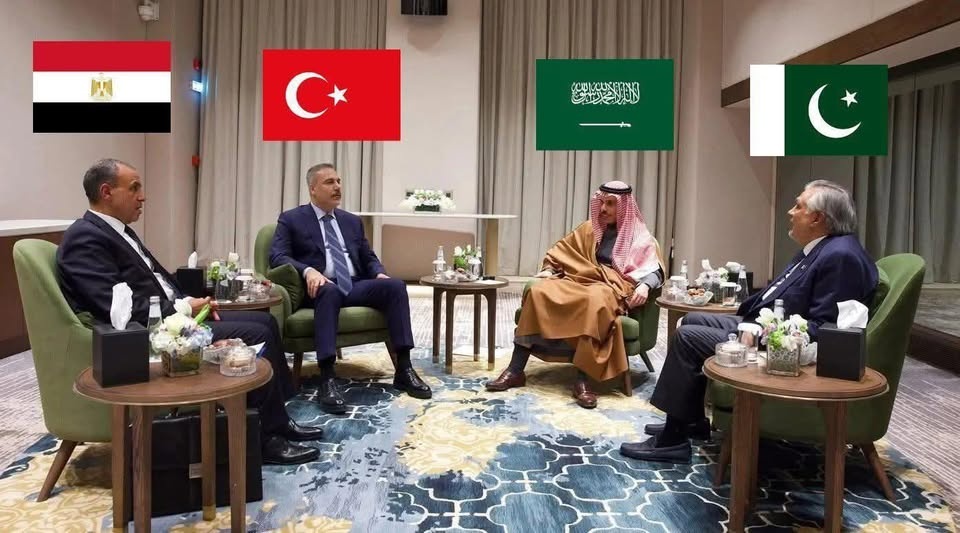
ISLAMABAD – Pakistan will host a four-nation meeting of foreign ministers from Saudi Arabia, Türkiye and Egypt on March 29-30 to discuss efforts to de-escalate the ongoing conflict involving Iran, the United States and Israel.
Read More: Pakistan, Turkey, Egypt mediate US-Iran tensions
According to the Foreign Office, the meeting will be chaired by Deputy Prime Minister and Foreign Minister Ishaq Dar. The visiting dignitaries include Saudi Foreign Minister Prince Faisal bin Farhan Al Saud, Türkiye’s Foreign Minister Hakan Fidan and Egypt’s Foreign Minister Dr Badr Abdelatty. The ministers are also expected to call on Prime Minister Shehbaz Sharif during their visit.
🔊PR No.7️⃣7️⃣/2️⃣0️⃣2️⃣6️⃣
Foreign Ministers of Saudi Arabia, Türkiye, and Egypt to Visit Islamabad for Consultations
🔗⬇️https://t.co/ehLoO2Av8I pic.twitter.com/3UIAKm2zwm
— Ministry of Foreign Affairs – Pakistan (@ForeignOfficePk) March 28, 2026
The discussions will focus on diplomatic initiatives aimed at reducing tensions in the Middle East and exploring pathways toward a ceasefire. Pakistan has increasingly positioned itself as a mediator, facilitating indirect communication between Tehran and Washington.
Recent developments suggest momentum toward dialogue, with reports indicating that Iran has conveyed a response to a US proposal through Islamabad. Meanwhile, US envoy Steve Witkoff has expressed optimism that talks between the two sides could take place soon.
Pakistan’s mediation efforts have drawn international attention, with diplomatic engagement extending to multiple stakeholders, including regional and global powers. The initiative gained further visibility after US President Donald Trump signalled support for Pakistan’s role as a potential venue for negotiations.
Read More: Saudi Arabia hosts Arab-Islamic ministers on Iran war
Officials say the Islamabad meeting reflects a coordinated push by key regional players to prevent further escalation and stabilise the situation. As the conflict continues to impact global energy markets and regional security, the outcome of these talks could play a significant role in shaping future diplomatic efforts.