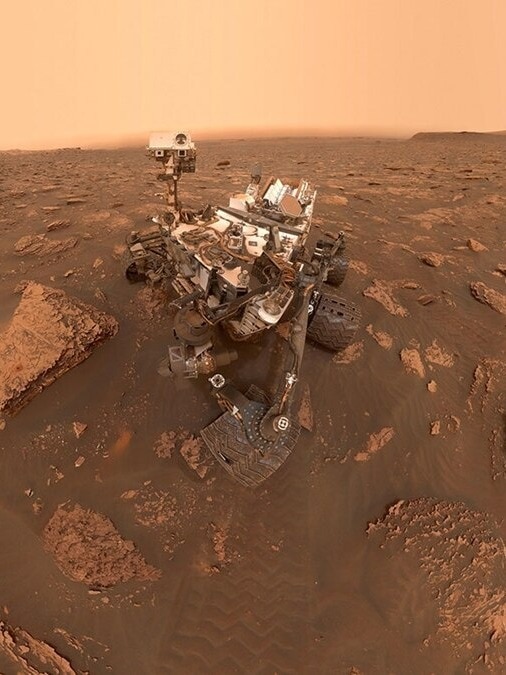
NASA’s Perseverance rover has revealed one of the oldest known signs of water on Mars, detecting an ancient river delta buried up to 115 feet underground in Jezero Crater. Using its ground-penetrating RIMFAX radar, the six-wheeled rover mapped subsurface geological features while traversing 3.8 miles of terrain, providing a three-dimensional view of sediments and eroded surfaces characteristic of a delta environment.
Read More: Artemis II — Nasa’s historic Moon mission set for lift-off
Researchers estimate that the delta formed between 3.7 and 4.2 billion years ago, making it older than a nearby surface feature known as the Western Delta, which dates to 3.5–3.7 billion years ago. On Earth, river deltas are prime locations for microbial life, concentrating sediments and preserving biosignatures, chemical or physical indicators of past life.
View this post on Instagram
“From the features mapped by RIMFAX, we believe Jezero Crater hosted an ancient water-rich environment, capable of biosignature preservation prior to the formation of Jezero’s Western Delta,” said UCLA planetary scientist Emily Cardarelli, lead author of the study published in Science Advances.
The discovery builds on earlier findings, including a Perseverance rock sample that suggested potential biosignatures dating back 3.2–3.8 billion years. Scientists believe that during this period, Mars had a thicker atmosphere and a warmer climate, enabling liquid water to flow on its surface.
Co-author David Paige added, “It’s very exciting that RIMFAX was able to provide such a detailed view of these deposits, helping solve the puzzle of their origin.” Similar evidence has also been reported by China’s Zhurong rover, which detected buried sediments resembling ancient Martian shorelines.
Read More: Nasa rolls out Artemis II rocket for Moon mission
As rovers continue to explore the Red Planet, each mission uncovers new insights into its wet past, shedding light on the early development of Mars and its potential to have supported microbial life.