 Under the Bharatiya Janata Party (BJP) government led by Prime Minister Narendra Modi, human rights organizations and international observers have reported a significant and systematic increase in the persecution of religious and social minorities, particularly Muslims and Dalits. This trend is widely attributed to the rise of Hindutva, a majoritarian ideology that seeks to redefine India as a “Hindu Rashtra” (Hindu Nation). Muslims, India’s largest religious minority at roughly 14-15% of the population, face what researchers describe as “institutionalized Islamophobia” in the form of Violent Cow Vigilantism, Legal marginalization, Bulldozer Justice and hate Speech. So is the case with low caste community. Despite constitutional protections, Dalits (formerly “untouchables”) continue to suffer from deeply embedded caste based violence and discrimination.
An Eye-Opening Book- Saga of Persecution & Discrimination
A recently published french book titled “J’avais un rêve indien: Dans l’enfer de la prison de Gorakhpur” (I Had an Indian Dream: In the Hell of Gorakhpur Prison) by French filmmaker and author Valentin Hénault has provided eye-opening facts about the plight of minorities and scheduled castes ie Untouchable Dalits.

Arrest of The Author
Hénault traveled to India in 2023 on a business visa to film a documentary about caste discrimination and the plight of Dalit women. In October 2023, he was arrested by police in his hotel during a peaceful land-rights march under the Foreigners Act in Gorakhpur, Uttar Pradesh. He spent approximately one month in Gorakhpur Central Jail, an overcrowded facility designed for fewer inmates than the 3,000+ it held. He describes being placed in the “pavillon des fous” (ward for the mentally unstable), where he endured filth, torture, and severe sleep deprivation due to lack of space.
Book Review
Chapters 1-2 (Arrival and the Shattered “Indian Dream”)
Valentin Hénault arrives in India in August 2023 with a deeply romanticized “Indian dream,” envisioning a mystical escape filled with sadhus, spiritual drifting, and the absolute- much like others chase the American dream of success. He initially contemplates a documentary on “India syndrome,” the psychiatric affliction striking Westerners, and the ascetic lives of hermits who wander holy cities, sustaining themselves on herbs and contemplation of maya as illusion. However, this idealism crumbles almost immediately upon encountering raw exploitation: children magnet-fishing coins from sacred rivers, elderly men dragging heavy gas cylinders like animals, hotel staff bowing desperately for tips, impoverished kids hauling sacks of plastic waste larger than themselves, and women rendered largely invisible in public life. Stark contrasts emerge between affluent urban families employing generational servants across castes and the grinding poverty of the marginalized, leading him to dismiss spiritual clichés as childish or repulsive and to recognize layered dominations-rich over poor, upper castes over lower, men over women-as the true face of the country.

Chapters 3-4 (Turning Toward Caste Injustices and Dalit Struggles)
Disillusioned with mysticism, Hénault shifts his focus to the enduring horrors faced by Dalit women, the so-called Untouchables, who endure routine beatings, rapes, murders, and systemic exclusion rooted in centuries of discrimination. He critiques how modern “progress”-such as four-lane highways- serves only the elite while leaving the poor without roads, schools, or access to government jobs, reinforcing dependency and humiliation. The narrative builds a scathing portrait of caste as “internal colonialism,” where upper castes maintain supremacy through economic control and violence, and he begins documenting these realities with growing urgency, abandoning any lingering romanticism about India’s spiritual allure.

Chapter 5 (Encounter with Seema Gautam)
The story gains momentum with the introduction of Seema Gautam, a fierce young Dalit activist in her thirties, marked by almond-shaped eyes, long black hair, and an almost palpable intensity born from personal tragedy-her own mother murdered by upper castes over land disputes. Seema becomes the emotional and political heart of the early sections, channeling grief into relentless organizing against oppression, embodying both vulnerability and unyielding defiance as she draws Hénault deeper into the Dalit resistance movement.
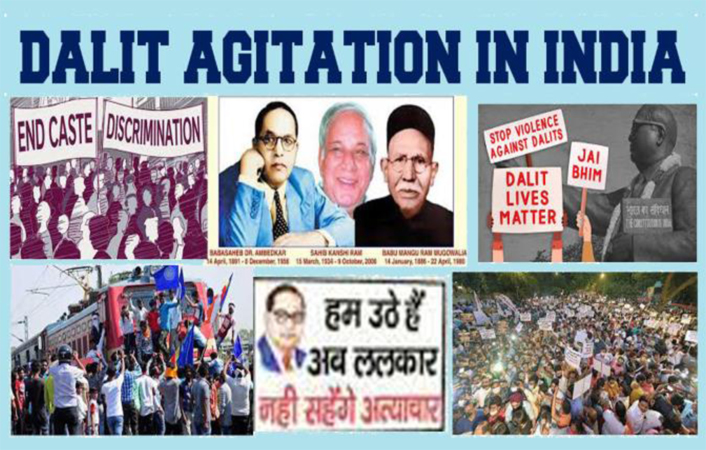
Chapters 6-7 (Rallies, Speeches, and Mobilization in Villages)
Hénault accompanies Seema to village courtyards packed with landless peasants-women in vibrant saris at the front, men standing silently behind- where she delivers electrifying speeches condemning exploitative wages of 35 rupees a day, landlessness as modern slavery, and the exclusion of Dalits from any meaningful share in India’s development. She demands one acre of land per family, mocks useless infrastructure like highways that bypass the poor, and rallies women by sharing her own story: “If Seema Gautam can fight as a woman, why not you? Fight for your rights!” The crowds respond with growing fervor, and Seema calls for massive participation in the Ambedkar People’s March in Gorakhpur on October 10, 2023, transforming despair into collective action and hope.

Chapter 8 (Village Tours and Everyday Caste Humiliations
Through tours of typical Dalit hamlets-goat-filled huts, naked children, thatched roofs, sporadic hand pumps, and rare electricity-Hénault witnesses the grinding routine of poverty and exclusion. Women toil for pennies while men are often absent; caste insults abound, as when Balram, the village’s first graduate, must avert his eyes and endure being called a “rat-eater” by upper-caste men on motorbikes. These encounters underscore how even small gains in education fail to dismantle deep seated hierarchies, amplifying the sense of systemic entrapment.
Chapter 9 (Examining Files of Atrocities Against Dalit Women)
In a stark office setting, Seema shares dossiers detailing horrific crimes: a 16-year-old girl blackmailed and raped via hidden video, later found hanged with her murder disguised and evidence tampered by police; a 14-year-old assaulted by a sarpanch during COVID, her family tortured for 22 days after complaining; inter-caste marriages ending in stabbings; a 7-year old raped in a public park by a Brahmin elder. Police complicity- ignoring complaints, torturing families, hiding bodies, and using blackmail-emerges as a pattern of impunity that deepens the trauma and fuels outrage.
Chapter 10 (Visits to Victims and Growing Despair)
Hénault accompanies Seema to meet survivors like 15-year old Kavita, raped and sequestered by a mayor, her father tortured in custody, and her mother hidden in shame amid groans from the ordeal. In bare, darkened homes, the narrator feels helpless, buys futile sweets as gestures, and grapples with his outsider role, questioning why he subjects himself to such pain while contrasting it with his former comfortable life in Paris.
Chapter 11 (The March and Sudden Violent Arrest)
Tension builds toward the peaceful Ambedkar People’s March on October 10, 2023-a sit-in by Dalit women and farmers demanding land rights- only for police to storm Hénault’s hotel and arrest him violently under the Foreigners Act for allegedly engaging in prohibited political activity on a tourist visa. Chapter 12 (Escalating Accusations and Media Smears) Charges inflate wildly to include fomenting unrest, espionage, foreign interference, or even coup plotting, with local media running kompromat-style stories labeling him a terrorist to discredit the Dalit movement as externally manipulated. Denied prompt access to a lawyer or family, Hénault faces isolation and fabricated threats. Chapter 13 (Entry into Gorakhpur Central Jail) Transferred to the overcrowded Gorakhpur Central Jail housing over 3,000 inmates, Hénault is placed in the “pavillon des fous” (ward for the mentally unstable), plunging into immediate sensory assault: extreme filth, unrelenting noise and smells, inmates forced to sleep sideways due to lack of space, and the raw shock of deprivation.
Chapter 14 (Daily Brutality and Survival in Prison)
The memoir graphically details relentless physical beatings, torture, agony, and the struggle to endure unsanitary conditions amid constant chaos, capturing the dehumanizing grind of prison life where survival demands adaptation to endless horror. Chapter 15 (Caste and Religious Hierarchies Within the Prison) The jail replicates India’s external divisions: upper castes occupy central, better positions, Dalits and lower castes relegated near toilets or in the darkest corners, Muslims segregated entirely; the Indian Constitution holds no sway, supplanted by ancient discriminatory codes like the Manusmriti. As a white foreigner, Hénault receives slight privileges (reduced direct violence) but becomes a tool for exploitation and targeting to undermine local Dalit causes.
Chapter 16 (Secret Notes, Inmate Testimonies, Release, and Final Reflections)
Risking severe punishment, Hénault secretly scribbles notes on hidden scraps, vowing “shame on me if I forget,” and records poignant testimonies from mostly innocent, poor undertrials jailed for blackmail, “love jihad,” silencing, or minor offenses- stories blending heartbreak, fraternity, and systemic injustice. After bail delays and trial limbo, he departs India in May 2024, returning to France haunted; the closing reflections sharply critique Western cultural relativism and romanticized views of Indian spirituality, exposing caste violence, prison failures, and the enduring resilience of the marginalized in a powerful, unforgettable close.